


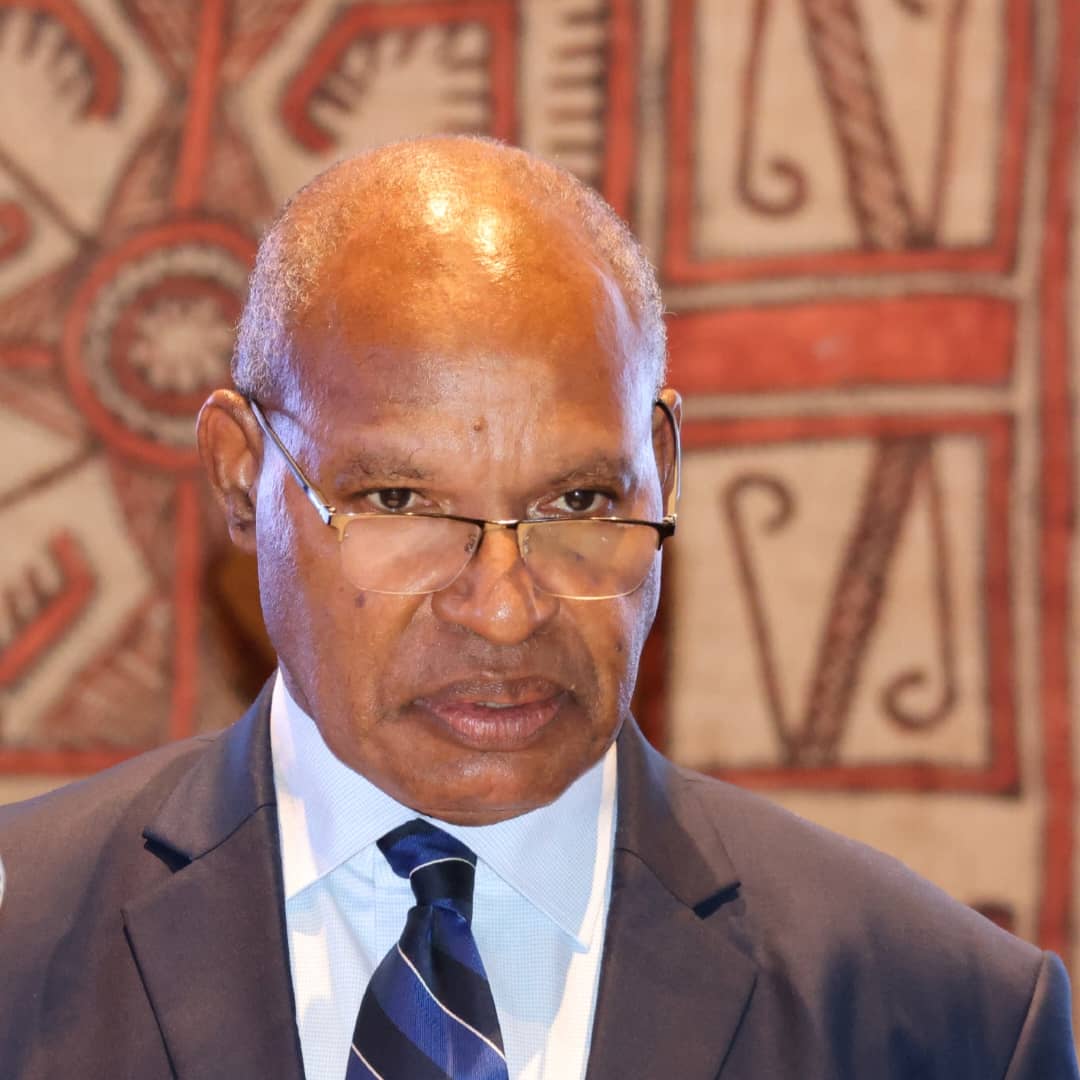
Port Moresby, January 8, 2024- The attack on the Government’s policy of Special Economic Zones (SEZs) and its decision to establish SEZs cannot go unchallenged, says the Minister for International Trade and Investment, Hon. Richard Maru. Minister Maru said this in reference to comments made by Paul Barker, the Director of the Institute of National Affairs as published in page 2 of today’s edition of The National with the headline ‘Special economic Zones encouraging corruption’.
“If the SEZs are encouraging corruption, then why have countries like China, Bangladesh, Indonesia, and the Philippines chosen SEZs as the major driver for sustainable and inclusive economic growth and continue to invest in SEZs right throughout their countries? If that is the case, then why are all these corruptions unheard of in these countries? These countries have proven that SEZs is a very successful vehicle for transformation of countries and creation of thousands of jobs. Where is the literature and your facts to prove this? You cannot just make a broad attack on SEZs,” said Minister Maru.
Minister Maru said Barker’s unproductive observations were reflective of a bygone colonial era.
“Your comments are unproductive and reflect a colonialist and condescending tone that has no place in Papua New Guinea Can you imagine if the land at Paga Hill was not acquired to be used for an SEZ? Do want Port Moresby to have major settlements on the prime land of the city ramping petty crimes instead of creating jobs? Is that what you want for this city, or do you want this city to be transformed? By the time the whole Paga Hill SEZ is put together this one development will transform the city with 12, 000 new jobs and millions of Kina in GST and personal income tax. We are working to build a great nation and a great city. This is our Capital, and you are asking us to go backward. Where is your alternative to the transformation of this city? Is your alternative just having settlements in Paga Hill like it used to be before? You have never given us an alternative. You should be ashamed of the very insensitive comments you have made,” said Minister Maru.
Minister Maru added that SEZs was a signature policy of the Marape-Rosso Government.
“We have a very good SEZ Act that was passed in 2019 and we are just finalizing the final draft of the new SEZ Foundation Policy. PNG’s SEZ Legislation provides a rigorous framework for evaluating potential SEZ Projects, as well as tightly monitoring their ongoing operation and fulfilment of stated objective. Barker’s comments that SEZs somehow encourage corruption or establish an uneven playing field for companies are ridiculous and have no basis in fact. Governments around the world frequently implement short-term incentives and even preferential treatment, such as allowing skilled migration for selected in-demand professions to address needs and achieve strategic objectives. PNG SEZs are no different. This Government is determined to implement the SEZs on the back of the success of many other countries and learning from best practice right throughout the world,” said Minister Maru.
Minister Maru further added: “If there is any corruption in the implementation of our SEZ Policy then please provide us the facts so we can deal with such claims or refer such allegations to the appropriate authorities. The Marape-Rosso Government has nothing to hide and we have no self-interest in the discharge of our responsibilities in driving SEZs as the main driver of economic growth in the non-resource sector. In the MTDP4 we plan to create 1 million new jobs over the next five years and based on the experience of so many countries we are certain SEZ will be the major creator of new jobs. A classic example is the Philippines Economic Zone Authority that now has 420 SEZs since its inception in 1995 with over 4, 000 locator companies nationwide and it has recorded an investment of P4 trillion (over K201 billion), over USD 900 billion (about K3 trillion) exports, created direct employment for 1.7 million people, and contributed to 16 per cent of the Philippines’s GDP in 2021.”