


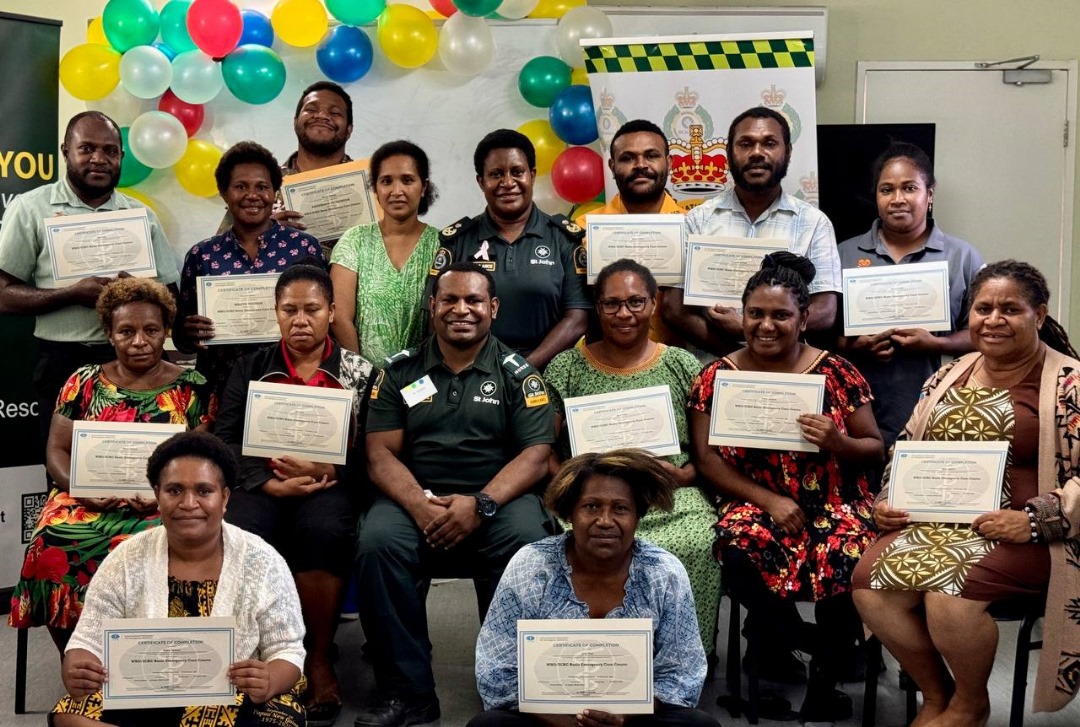
Clinicians from the National Capital District the Provincial Health Authority (NCDPHA) have completed a Basic Emergency Care (BEC) training through the ongoing support of Sir Brian Bell Foundation (SBBF) project and community engagement initiative of upskilling clinicians in NCD and Central Provinces.
The BEC course can be facilitated and delivered through two models; the hybrid course, which incorporates 10 hours of online learning and comprehension testing that is later complemented by a two-day face-to-face classroom-based application and demonstration of practical skills that have been learnt in theory.
The alternative model is the classic course which is entirely classroom-based lectures, teaching and practical skills testing that is run over 4 or 5 days.
This training was held at the NStJA Taurama Aquatic Centre training room, over four days from 27-30 October.
The program aims to strengthen frontline healthcare workers’ ability to manage traumatic and medical emergencies effectively and save lives.
This training is a significant milestone for the Clinical Education team of the National St John Ambulance.
All four facilitators of this course are the successful certified trainers that has been a critical objective of the Regional Emergency and Critical Care Systems Strengthening Initiative (RECSI) project.
RECSI has been gaining momentum in capacity building across the country, through the accomplishment of certified trainers across PNG who will, in their own capacities, through their PHAs, keep passing this mantle of Basic Emergency Care to health care professionals.
The expected resultant effect is dissemination of these skills to the district and sub-district levels.
The training was jointly facilitated by Dr Martin Waieng and Sr Samantha Maison from the Port Moresby General Hospital along with Mr. Ippy Noppy and Sr Idana Enai from the Clinical Education Team of the National St John Ambulance.
They guided participants through hands-on exercises and simulations designed to improve their response to trauma, shock, and other critical emergencies.
The BEC course, developed to suit low-resource settings, provides practical tools and a structured approach to identifying and managing life-threatening conditions.
Chief Medical Officer of the NStJA, Dr Mangu Kendino, who supported the training, thanked the SBBF for their vision of training higher skilled healthcare professionals.
This is achieved through funding the roll-out of the BEC courses across NCD and Central PHA facilities, and added that the initiative was a vital step in improving the quality of emergency care across health facilities.
“The Basic Emergency Care course gives clinicians the confidence and competence to act quickly and effectively in emergencies. This is about empowering our frontline health workers to provide timely care that saves lives.”
Participants expressed appreciation for the opportunity to enhance their skills, describing the training as practical, engaging, and relevant to their daily work.
The teamwork and knowledge shared during the course had inspired a renewed sense of confidence in handling critical cases.
“In closing, we thank all the employing health institutions who are the real determinants for the success of these short courses. Their critical role is demonstrated through the authorisation for staff to be accorded time for continued professional development.”