


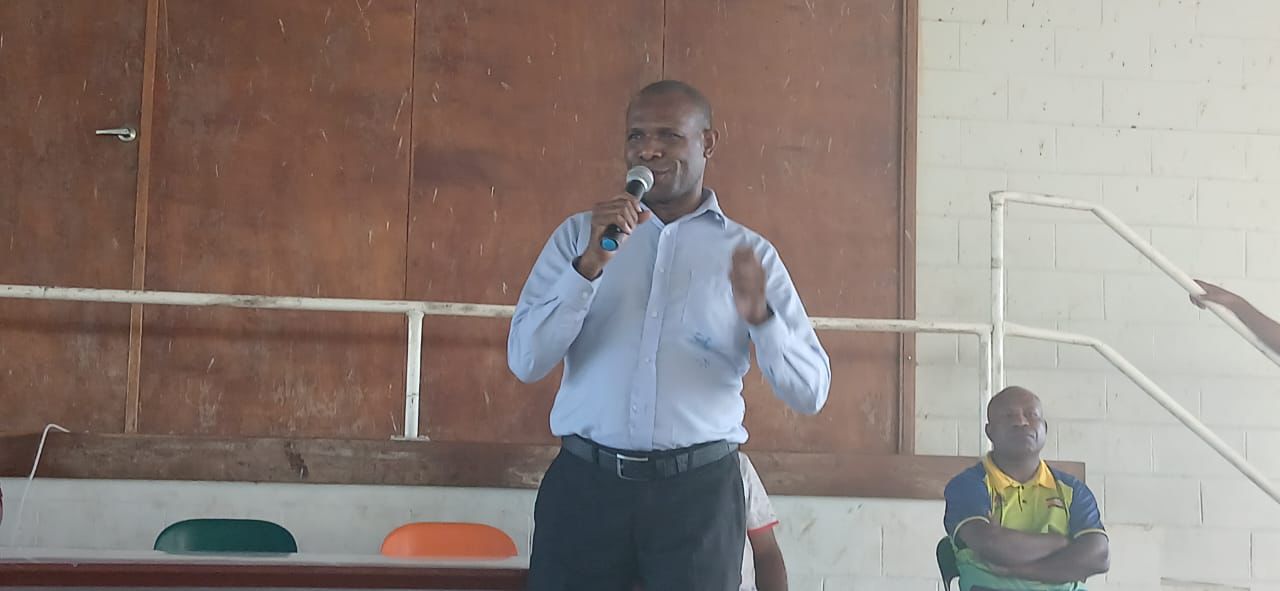
The Huon Gulf District Development Authority (HGD-DDA), in partnership with the Department of Community Development, Youths and Religion, proudly marked the graduation of 327 participants from the Informal Sector Financial Literacy Training during a special ceremony held on Sunday, 8 March 2026 at Nari Hall, 10 Mile, Wampar Urban.
The four-day training program focused mainly on budgeting and savings, equipping informal sector participants with the necessary financial knowledge and skills to properly manage their income and make informed financial decisions.
Participants were drawn from various communities across Wampar Urban and Rural areas, including 5 Mile to 11 Mile, and Munum to Nazab.
A total of:
123 participants attended the training at Nari Hall, 145 participants attended the training at the Nazab Wampar Chamber, and
59 participants from West Taraka, who completed the same training last year, attended the ceremony and received their Mama Bank passbooks.
Participants from Nari Hall and Nazab Wampar Chamber will receive their Mama Bank passbooks at a later date once all account processing requirements are completed with Mama Bank. The passbooks will then be delivered to them.
All participants received certificates during the graduation ceremony, which were personally presented by Hon. Jason Peter, Member for Huon Gulf and Minister for Community Development, Youths and Religion.
To support the participants in starting their savings journey, the Huon Gulf District Development Authority will provide K500 as startup capital for each participant, which will be deposited directly into their Mama Bank passbook accounts once the accounts are fully processed.
The Informal Economy Team from the Department of Community Development, Youths and Religion will also monitor the progress of participants’ bank accounts, with the aim of identifying individuals who may later be supported to transition into Small and Medium Enterprises (SMEs).
Statement by Hon. Jason Peter
Member for Huon Gulf & Minister for Community Development, Youths and Religion
Hon. Jason Peter, who attended the ceremony to officially present certificates and passbooks, encouraged the participants by sharing his personal life stories and experiences growing up in the informal sector.
“I stand before you today not only as a member of Parliament and Minister, but as someone who understands the struggles of the informal economy because I came from it.”
Hon. Peter told the participants that he grew up in West Taraka in a broken family, where his family relied heavily on selling at the market to survive.
“Even today, although I am now a Member of Parliament and a Minister, my mother still sells at the West Taraka market. That is where I was raised and brought up.”
He explained that his journey into business did not start with big capital.
“I did not start with K1,000 or even K500 like what many of you will receive today. I started very small in the informal sector by selling ice blocks and peanuts at the West Taraka market.”
Through dedication and discipline, Hon. Peter said he gradually saved and grew his small business.
“When my savings finally reached K1,000, I moved into selling chickens. From there, I worked hard and slowly built my capital up to around K10,000.”
He later registered his own business, which eventually grew into a successful company generating thousands of kina.
“That is how I became a businessman before I entered politics. So I want you all to understand that every big success begins with a very small start.”
Hon. Peter encouraged participants to use the training and the K500 support wisely, emphasizing that discipline in budgeting and saving will help them grow their small activities into larger businesses.
“If you take budgeting and saving seriously, one day some of you here can become successful business people, just like how my journey began from the market.”
Statement by Ms Cecillia Wrondimi
Assistant Director – Informal Economy, Department of Community Development, Youths and Religion
Ms Cecillia Wrondimi highlighted that the training program is specifically designed to support people operating in the informal sector.
“This training is very unique and has its own important space within the informal economy. Informal sector participants must learn how to budget, save their money, and make proper financial decisions.”
She said the program is aimed at building financial discipline and economic independence among participants.
“When people learn to save consistently and manage their money properly, they open opportunities not only for themselves but also for their families and communities.”
Ms. Wrondimi added that the department will continue to monitor the progress of participants’ savings accounts, and those who demonstrate strong financial discipline and business potential may be supported to move up to SME level.
The Department of Community Development, Youths and Religion together with the Huon Gulf District Development Authority reaffirmed their commitment to empowering the informal sector through financial literacy, savings culture, and economic opportunities for grassroots communities.