


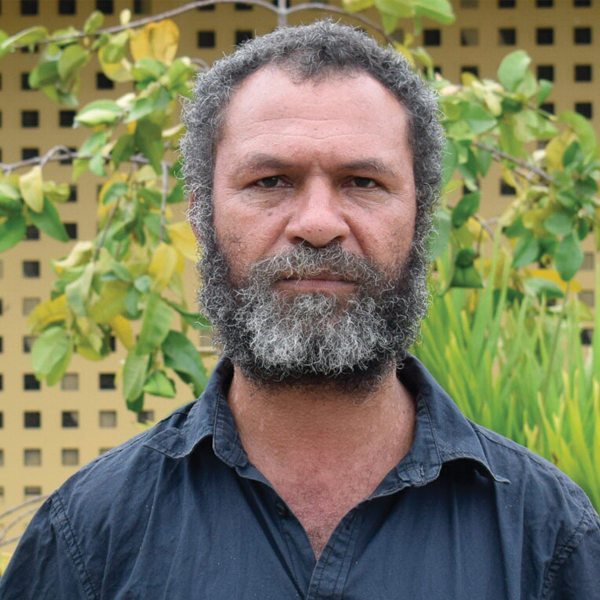
The Farmers and Settlers Association (FSA) has called on the Papua New Guinea Government to take concrete action in response to the European Union’s Deforestation Regulation (EUDR), warning that local farmers and agricultural exporters could face significant compliance challenges if adequate support is not provided.
In a press release, FSA President Wilson Thompson said Papua New Guinea must engage more assertively with the European Union and seek fair recognition for its role in conserving one of the world’s largest remaining tropical forest ecosystems.
The European Union introduced regulations requiring agricultural products imported into the EU to be sourced from land that has not been subject to deforestation. While the regulations were originally scheduled to take effect on December 31, 2025, implementation has been extended to allow exporting countries additional time to meet compliance requirements.
Mr Thompson said the association has been raising concerns about the regulation since 2023 through consultations with the coffee industry and discussions with the Department of Agriculture and Livestock (DAL).
“We are concerned that PNG is a major forest country. While we conserve forests for the benefit of the world, we should not be expected to bear additional certification costs,” he said.
A key concern raised by the association is the requirement for geolocation mapping of individual farms and garden plots to verify compliance with the EU regulations. According to the FSA, the exercise would be costly, time-consuming, and difficult to implement, particularly for smallholder farmers who form the backbone of PNG’s agricultural sector.
The association has proposed several measures for the national government to consider and communicate to the European Union.
Among its recommendations, the FSA said PNG should actively advocate for its interests rather than simply accepting international requirements, arguing that the country’s vast forest resources provide significant environmental benefits to the global community.
The association also suggested that PNG consider imposing a levy on exports of non-forested or organic agricultural products destined for the EU market, including coffee, cocoa, rubber and spices, to reflect the environmental value of the country’s forests and sustainable farming practices.
In addition, the FSA believes the European Union should contribute towards the costs of geolocation surveys required to identify and map farms. Mr Thompson noted that both DAL and commodity boards currently lack the resources and funding needed to undertake such a nationwide exercise.
The association further urged the government to diversify export markets beyond the EU, including exploring opportunities in Russia and other European countries, to strengthen PNG’s bargaining position and reduce dependence on a single market.
Another recommendation is for the government to adequately resource Kumul Agriculture Ltd to invest in large-scale farming operations, including cultivation, production, and processing of primary agricultural commodities. The association argues that larger-scale production could reduce costs currently borne by smallholder farmers and improve export volumes.
While expressing support for compliance with international trade requirements, the FSA stressed that Papua New Guinea faces genuine capacity constraints and should receive recognition for maintaining extensive forest cover and avoiding large-scale forest clearing for agricultural development since 2000.
The association has called on the government to take a proactive role in ensuring PNG’s interests are protected while maintaining access to valuable export markets.