


THE government of Papua New Guinea has now put in place a framework to help parents provide better care for their children and raise them in a positive environment.
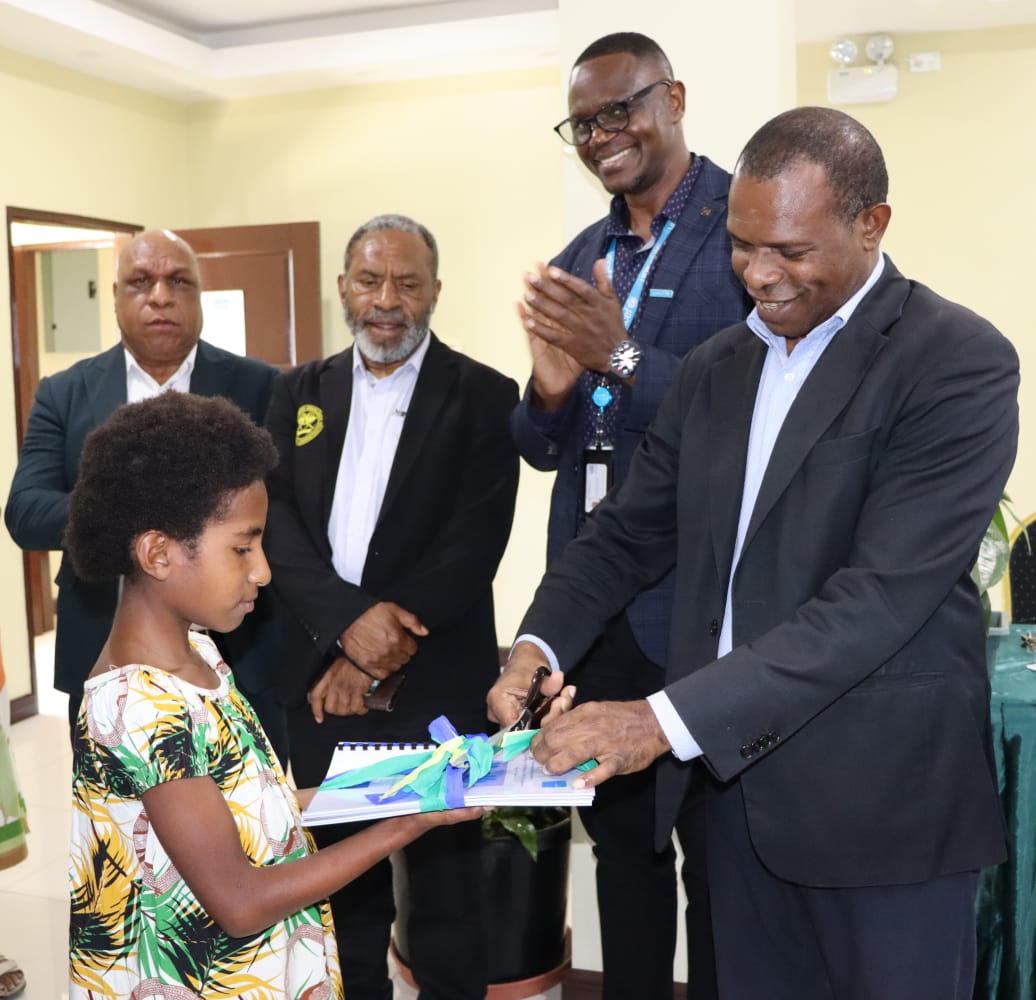
This platform, called the Positive Parenting for Child Development Institutionalisation Framework (PPCDIF), was launched last Friday in Mt Hagen, Western Highlands Province.
The PPCDIF was launched by Minister for Community Development Jason Peter.
The launch means that the Positive Parenting for Child Development (P4CD) program is now recognised and given prominence by the department.
Furthermore, this means that the State has provided a national platform for different partners in the child protection space to network, collaborate and advance child development in the country, with specific attention to parental support and training.
The launch was witnessed by National Office for Child and Family Services (NOCFS) Chief Executive Officer Mr Jerry
Wap, Western Highlands Deputy Provincial Administrator provincial (Policy and Advisory Services services) Mr Esley Tiki, United Nations International Children’s Emergency Fund (UNICEF) chief field officer Dr Christopher Ngwerume, Western Highlands community development manager Mr Steven Tepra and other implementing partners.
When launching the framework, Minister Peter said people are the greatest resource of any country, so it was the responsibility of their governments to invest in their welfare.
“Our country’s greatest resource is not what lies beneath our soil or our ocean; our greatest resource is our people.
“ Investing in children is therefore investing in PNG’s future.
“A child who grows up in a safe, loving, and nurturing family is more likely to succeed in school and contribute positively to society and become a productive citizen of our country,” Minister Peter said.
He added that conversely, violence, neglect, and poor care during childhood can have lifelong consequences on children.
“For these reasons, the government places strong emphasis on strengthening families as the foundation of our national development.
“When we invest in positive parenting, we reduce violence, improve children’s development, strengthen families, and trigger social and economic development.
“The government remains committed to strengthening child protection services as part of our national development agenda,” Minister Peter said.
Meanwhile, NOCFS chief executive officer Mr Wap, who also spoke at the occasion, said the government has now institutionalised the P4CD program in the country.
“Before this program was launched, we did not have it in our organisational structure,” Mr Wap said.
“So, this event signifies the institutionalising, the embedding and creating a position where there is an officer responsible for coordinating this program in the long-term.
“Today, we celebrate the embedding of the practice of positive parenting into the very heart of our child protection system.
“We celebrate the vision of PNG where every child grows up in safety, dignity, and love,” Mr Wap said.
According to Mr Wap, the P4CD program began as a response to the urgent need for families to be equipped with practical tools to raise children in a socially challenging environment.
The program started as a pilot initiative in selected communities in four provinces, including Western Highlands and Madang, in 2016, where parents adopted positive parenting practices to interact with their children.
The fundamentals of the positive parenting approach include spending quality time with children, listening to children, and using non-violent methods to discipline children.
These approaches resulted in parents forming stronger bonds with their children, a lower level of violent discipline on children, and children themselves experiencing a greater ability to freely communicate and interact with parents and their peers.
“From this humble beginning, positive parenting grew into a national program under the prevention programs division of the NOCFS,” Mr Wap explained.
“Its success demonstrates that if families are supported, children succeed. And when children succeed, communities benefit,” he said.
Mr Wap said the framework is a five-year roadmap that started in 2025 and will continue through to 2029.
He pointed out that some of the long-term outcomes of the P4CD program include healthy families, safer communities, generational change, reduction in law-and-order problems, and stronger families and community systems.