


By PAMA I. ANIO
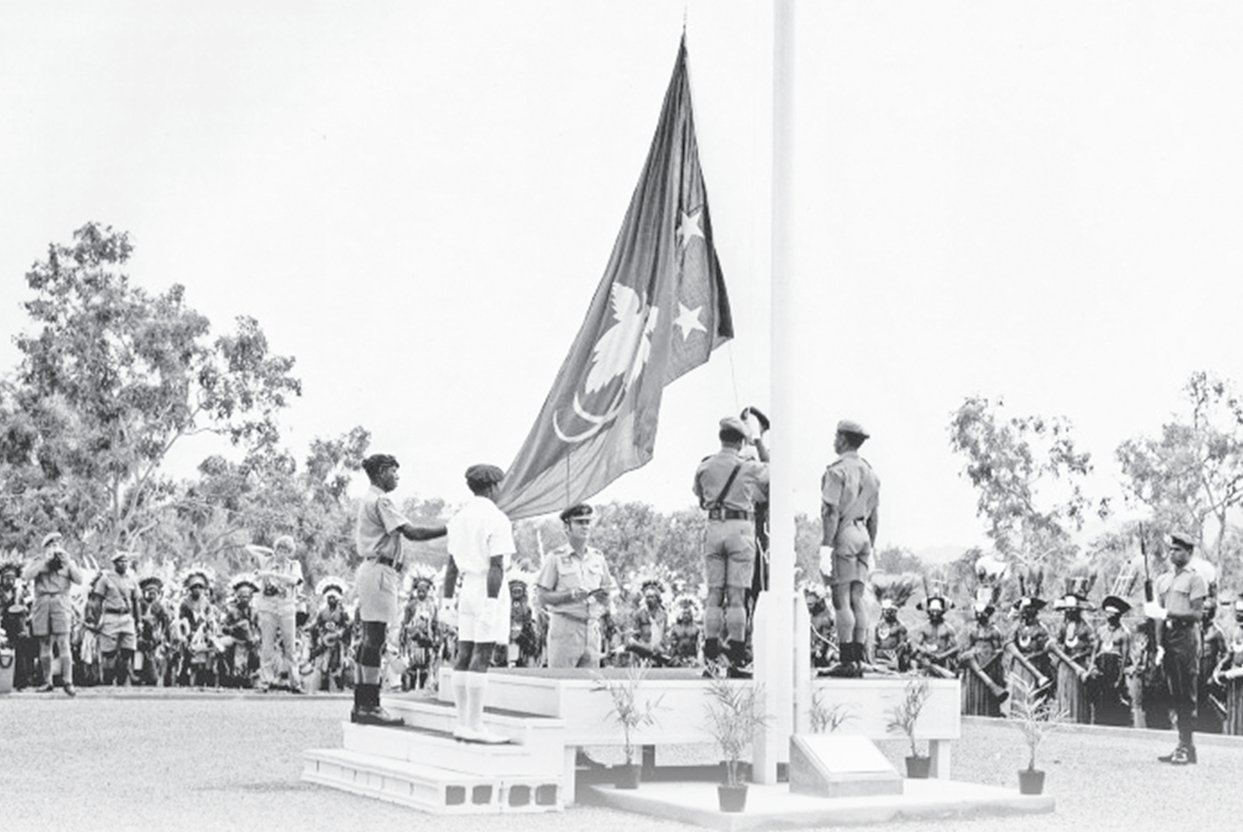
POLITICAL independence for Papua New Guinea was a peaceful transition from colonial rule to nationhood almost 50 years ago.
Unlike many Third World countries that gained political independence from blood, sweat and tears, PNG was handed its sovereignty on a silver platter by its former colonial master, Australia.
Then Prime Minister Gough Whitlam and his Australian Labor Party (ALP) collaborated with Michael Somare’s Pangu Pati to enable the smooth transition of political power from Canberra to Waigani. Somare and Whitlam are long gone but Pangu and ALP are alive and well.
Independence Day, 16 September 1975, was witnessed by a very special guest of honor, Prince Charles, who represented his late mother, Queen Elizabeth, then Head of State of the Commonwealth’s newest member. The reigning monarch is unlikely to attend our Golden Jubilee celebrations but will no doubt send his best wishes to a country that is dear to his heart. As PNG prepares to celebrate its fiftieth anniversary, this milestone achievement begs the pertinent question: Is our beloved country truly in dependent? Short answer is “yes” for political independence and “no” for economic independence. Nationhood can be likened to marriage. It was easy for PNG to attain political independence, just like getting married. The hard part has been maintaining political stability and generating economic wealth, just like staying married.
Successive governments have maintained our democratic principles by upholding our constitution that guarantees basic freedoms for all citizens. Our vibrant democracy is the envy of many developing countries. Having achieved political independence within the first 15 years, PNG started to seriously consider economic independence in the 1990s. This was the dawn of a new era of economic activity and growth, bolstered by the mining and petroleum sectors following the demise of Bougainville Copper. As hundreds of millions of kina flowed into the government coffers, many of our leaders discarded or toned down their political rhetoric about achieving economic independence. They couldn’t resist the temptation to enrich themselves at the expense of the people and country. Economic independence is just a cliché that our leaders love to preach about. As the saying goes, “no man is an island”, hence no sovereign nation can do business and prosper on its own in this modern economic environment. North Korea is an exception but that’s another story.
Geographically, PNG is the second largest island on the planet but its economy is intertwined with other economies. We co-exist within the global village.
The real deal is economic growth and prosperity, which are spelled out in numerous long-term and medium-term strategic plans, the most recent being MTDP IV. Unfortunately, these grand plans are collecting dust in Waigani because politicians and bureaucrats conveniently lose sight after launching them at fancy fanfares.
It’s ironic that despite the billions of kina earned from the major mining, oil and gas projects since the start of the new millennium, PNG’s economic health and wealth are well below par while most of its people are struggling to make ends meet. The current government may use glowing economic growth figures to justify its performance and mandate but the reality of life in our urban and rural areas tells a very scary story.