


By SEPKOLIN WALNE
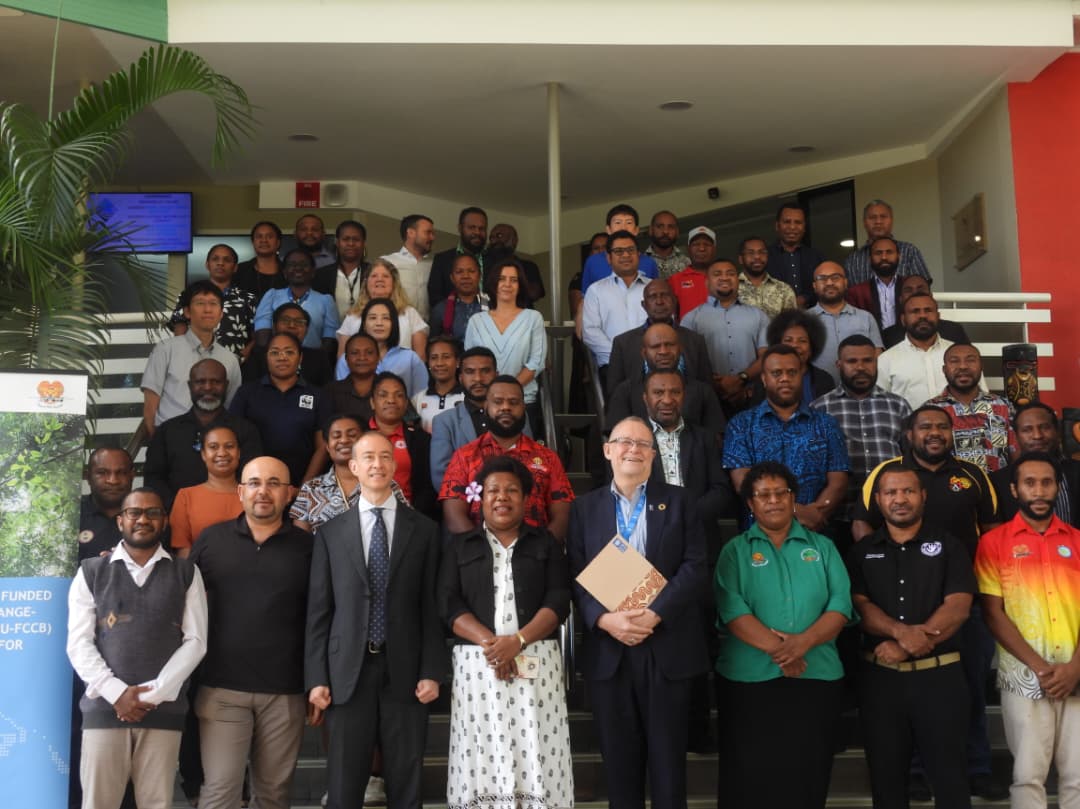
The Climate Change and Development Authority (CCDA) hosted the second national stakeholders’ consultation on the draft Nationally Determined Contribution (NDC) 3.0, bringing together government officials, provincial representatives, civil society, youth groups, and international partners.
The meeting, held in partnership with the United Nations Economic and Social Commission for Asia and the Pacific (ESCAP), focused on reviewing updated greenhouse gas reduction targets, sectorial strategies, and pathways toward achieving carbon neutrality by 2035.
CCDA acting Managing Director Debra Sungi highlighted the progress made since Papua New Guinea’s initial NDC submission in 2016, noting achievements in forestry, renewable energy, and policy interventions.
“We have really come a long way, and submitting our transparency update report has set us in a better position to design NDC 3.0,” Ms Sungi said.
“In 2020, PNG updated and enhanced its climate ambition through the submission of the Enhanced Nationally Determined Contribution (NDC 2. 2.0).
“Currently, we submitted this through the United Nations Framework Convention on Climate Change (UNFCCC) as our commitment under Article 13 of the Paris Agreement.”
She added that this version incorporated a more refined emissions baseline, improved transparency, and broadened the scope to include adaptation and loss and damage considerations.
Despite progress, Ms Sungi stressed challenges in adaptation financing, infrastructure, and early warning systems.
She urged partners to align support with PNG’s Vision 2050 and NDC priorities.
“Let’s work on reaching our NDCs together, not driving separate agendas,” Ms Sungi said. “Feedback from today’s consultation will guide the finalisation of NDC 3. 3.0, scheduled for national validation in March 2026.”
Development partners including the United Nations Development Program (UNDP), United Nations Environment Program (UNEP), Asian Development Bank (ADB), and the World Bank outlined their support for priority projects, while special sessions highlighted the role of women, youth, and Indigenous communities in advancing climate action.