


By FREDRICK JEJERI (Stringer)
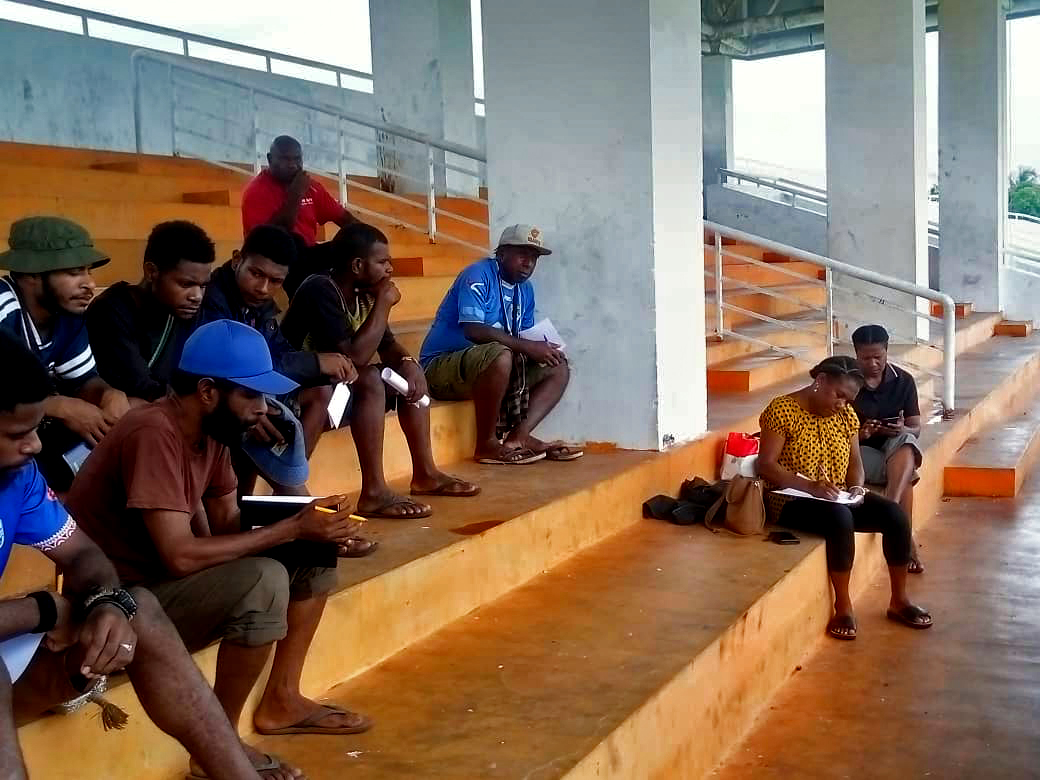
While government education reforms continue to emphasise restructuring and policy shifts, the experience of students at the Haniak Flexible Open and Distance Education (FODE) Centre in 2025 suggests that many marginalised learners remain excluded from meaningful support.
Of the 20 students enrolled at the centre across Grades 7 to 12, only six—two Grade 10 students and four Grade 12 students—sat for the FODE National Examinations this year. The figures point to deeper issues within Papua New Guinea’s education system, where access and retention continue to decline despite repeated reform announcements.
Education advocates say the low progression rate reflects a system that prioritises policy changes over practical investment in infrastructure, teaching resources, and alternative education pathways.
Sepik FC Director for Sports and Education Services, Mr Clarence Hukahu, said many students enrolled at the Haniak FODE Centre had already been failed by the mainstream system before arriving.
“These students are not dropouts by choice. They are young people who missed out because there were no spaces, no funds, or no follow-up support from authorities,” Mr Hukahu said.
Despite operating with limited funding and relying heavily on community support, the Haniak FODE Centre recorded measurable academic improvement among the six examination candidates. Students who previously achieved failing or low-pass grades in Grade 10, and D grades in Grade 12 subjects, improved by one to two grade levels.
Mr Hukahu said the results demonstrate that the issue is not student capability, but the lack of sustained government support.
“When resources are available, students improve. That is proof that the system is failing them, not the other way around,” he said.
Flexible Open and Distance Education was introduced to serve as a safety net for students unable to continue in formal schools. However, many FODE centres nationwide operate without adequate facilities, learning materials, or trained staff, raising concerns about the government’s commitment to inclusive education.
Sepik FC Education Services confirmed it will continue operating the Haniak FODE Centre in 2026, maintaining the same fee structure to keep education accessible. Fees include K170 for registration, K150 per subject for upgrading, K60 per subject for continuing students, K2 per hour for contact sessions, and K2 per assignment for assessment marking.
The organisation’s decision to expand services to Koil Island and Port Moresby further exposes the scale of unmet educational demand, particularly in remote and informal settlement communities where government schools are overstretched or absent.
Mr Hukahu said communities should not be forced to substitute for government responsibility.
“Education reform should not exist only on paper. Until funding, infrastructure, and accountability reach the classroom level, communities will continue filling gaps the government has left behind,” he said.
He acknowledged the role of volunteers, teachers, parents, sponsors, and Sepik FC board members who have sustained the program under difficult conditions.
As the national conversation continues around education reform, the situation at the Haniak FODE Centre serves as a reminder that real reform is measured not by policy documents, but by how many students are supported to stay in school and complete their education.