


By WASITA ROYAL
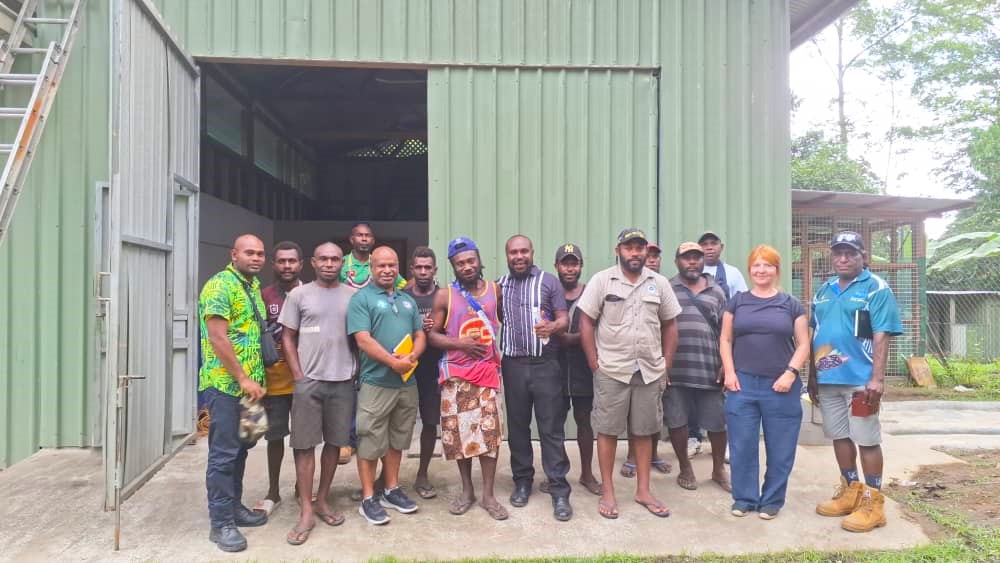
In the rural community of Vimi in East New Britain, a group of determined youths are driving a quiet change. Building on the success of an earlier poultry project, the Tapak Youth Business Group has now ventured into galip nut processing, creating a new pathway to income and self-reliance. This initiative, supported by the Growers Association Incorporation (GAI) in partnership with the PACD Cocoa Project, is turning agricultural opportunity into a powerful tool for positive change.
The Tapak Youth Business Group is not just creating income;it is restoring hope and reducing crime, making Vimi a growing model for rural transformation in Papua New Guinea.
The journey began when GAI Executive Manager Simon Arnold believed in the potential of these youths. In August, with support from PACD and the Market for Village Farmers project, selected members attended a two-day galip training course at NARI. Equipped with this new knowledge and methods from Frangipani Foods Limited (FFL), the group constructed a pioneering solar drying facility at a cost of K12,000,the first of its kind for rural communities using the FFL model.
Today, the operation stands as proof of their dedication. The youths buy fresh galip nuts from locals at K2 per kilogram, dry them using the solar dryer, and sell the processed nuts to Frangipani Foods Limited at NARI for K3.50 per kilogram. Already, from the tail end of the harvest flush, they have generated a profit between K3,000 and K4,000. “Though we did not get in at the beginning of the flush, that facility looks like it is still too small for what is going to come out because Vimi plantation is full of galip,” noted Mr. Arnold.
For youth leader James Joe, the project’s impact runs deeper than economics. He spoke of a community where many youths, have dropped out of school without skills or employment and turned to drug abuse and crime, often with very sad results. “We feel that we had enough… we were looking for a way to involve them so they do not get into similar issue with the police,” James shared. The facility has become a driving force for shifting mindsets. “It has changed things; people’s thinking, social issues, and youth involvement in agriculture,” he said.
“They’ve shown commitment by managing operations and reinvesting profits into building a poultry shed,” said Mr. Arnold, pointing out the group’s business-minded attitude. Supported by government and industry partnerships, what began as a registered business in 2018, slowed down by the COVID-19 pandemic, is now doing very well.