


Papua New Guinea has one of the highest Tuberculosis (TB) prevalence rates in the Western Pacific, with over 30,000 new cases annually.
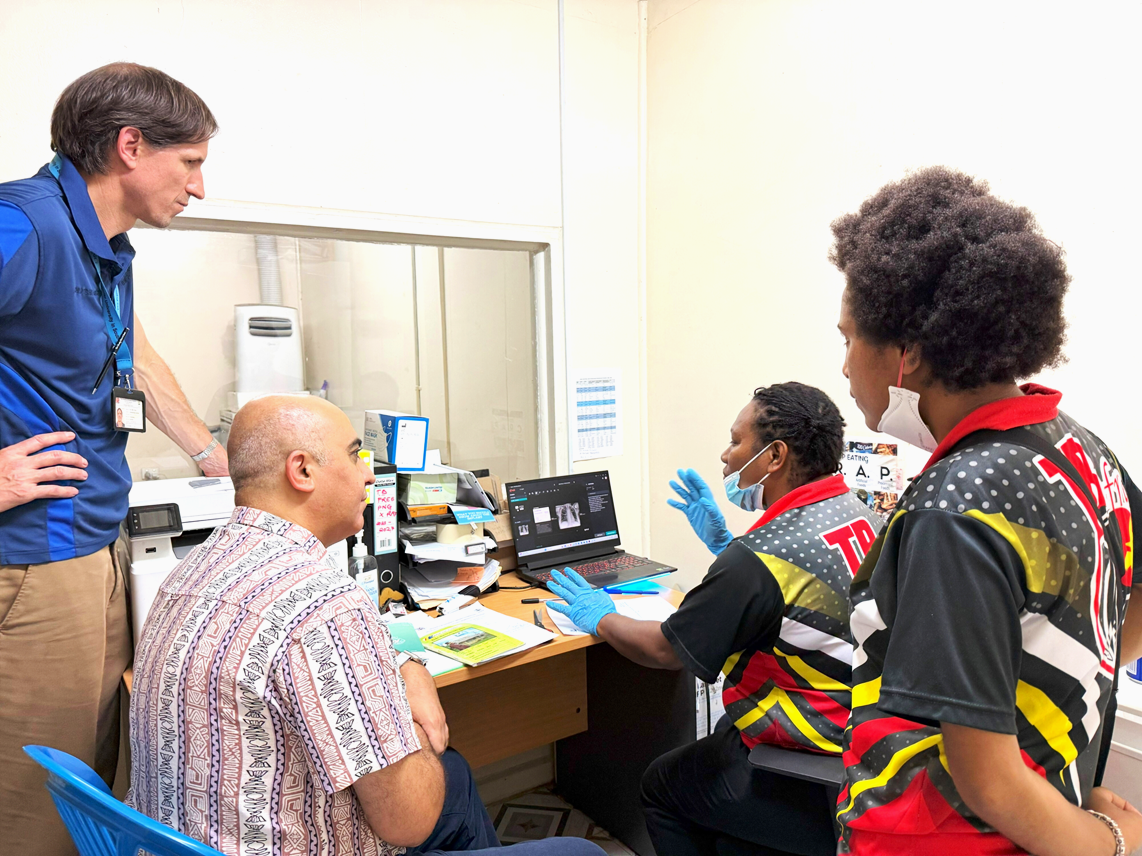
With continued support from the Australian Government through the PNG-Aus Partnership’s Stop TB Partnership, a portable X-ray machine has been procured that utilizes AI technology.
The AI tool, installed on a portable Minx ray system, generates a TB risk score within seconds. Healthcare workers responsible for treating patients can review images and make informed decisions quickly.
Obstetrician to the Child Maternal TB and HIV Program, Dr Pauline Masta said, “We’ve screened over 1,000 perinatal women using AI-assisted X-ray since March 2024 alone. ”In some cases, we’ve detected subclinical TB in mothers who appeared healthy but had disease picked up by the AI. We then confirmed TB through Expert testing and initiated treatment early. This initiative has improved accessibility for mothers in the Labor Ward. “
Dr Margaret Kal, from the National TB Program said, “AI-powered screening is a powerful tool to accelerate TB response and improve patient outcomes, especially in community settings with limited access to radiologists.”
Since acquiring the portable MinXray system with the (QureAI) AI tool installed in 2024, the investment has enabled the deployment of AI-assisted TB screening directly into POMGEN’s Maternity Wing, Radiology Department, and TB clinics.
In an important move, Australia has partnered with other organizations to introduce artificial intelligence (AI) into TB care for mothers and children at Port Moresby General Hospital (POMGEN)—a first of its kind in Papua New Guinea.
This is the result of collaboration between the University of Papua New Guinea’s School of Medicine and Health Sciences, the National TB Program, the PNG Obstetrics & Gynaecology Society, the Paediatric Society of PNG, National Capital District Provincial Health Authority (NCDPHA), World Vision International, and Baylor College of Medicine.
The Australian Government is proud to be working alongside other initiatives that improve early detection, reduce diagnostic delays, and strengthen local capacity to combat TB.