


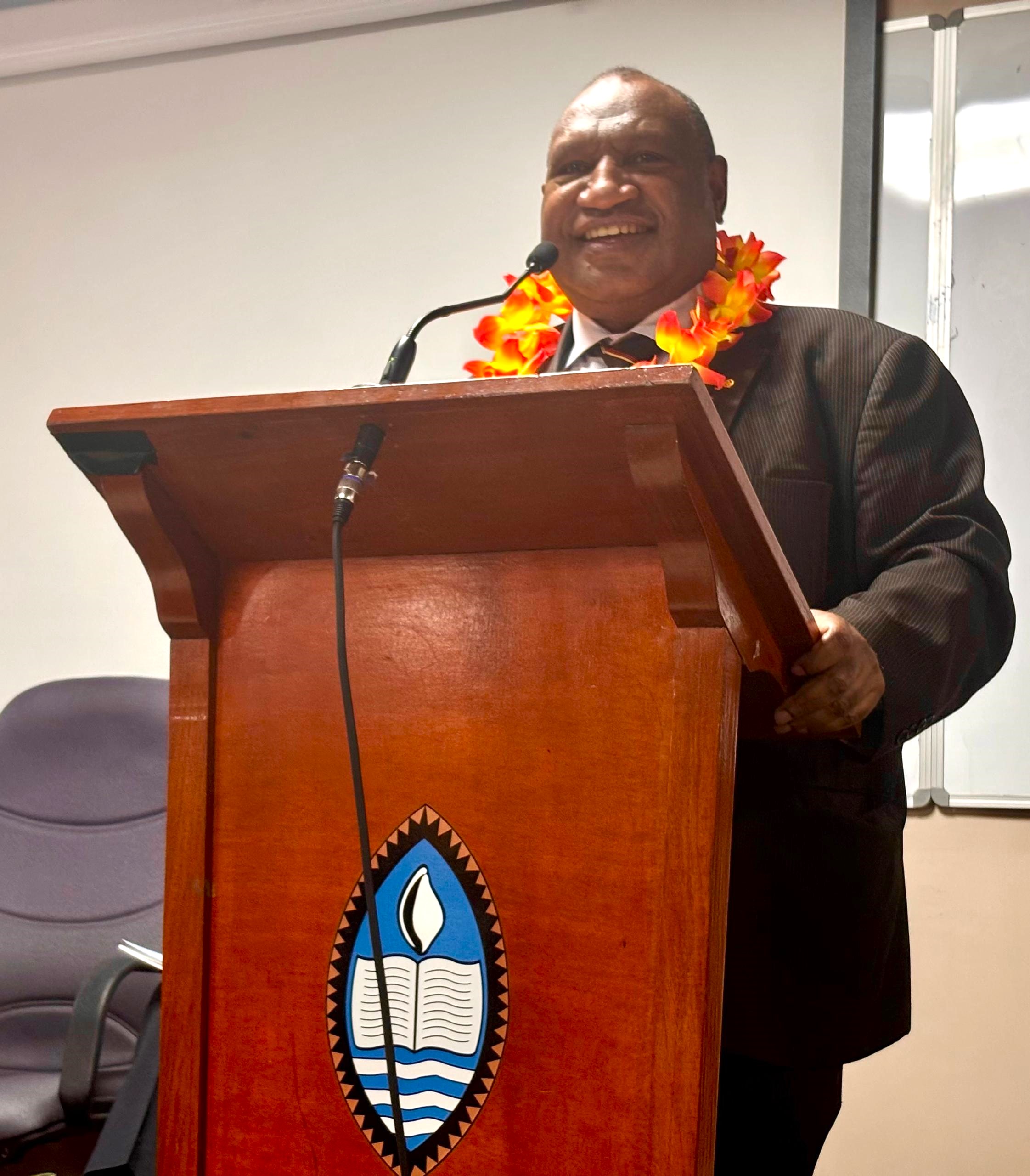
By GEORGINA MICHAEL
PRIME Minister James Marape has urged Papua New Guineans to uphold the National Constitution.
He was speaking at the University of Papua New Guinea today to mark the 50th anniversary of the Constitution.
Mr Marape told law students, lecturers, national leaders and other guests who gathered at the Law Faculty to celebrate Constitution Day, to reflect on the foundational document that shaped the nation since its adoption by the House of Assembly on the 15 August 1975.
“The constitution is the one book that must continue to hold and bind the diversity called Papua New Guinea together,” he said. “It frames our borders, our national emblems, our governance structures, and our rights as citizens, it is timeless and its relevance is as strong as today as it was in 1975.”
The Prime Minister also provided historical context, recalling the political and diplomatic resistance faced in both Canberra and Port Moresby before Independence.
He said that some local political movements had sought to delay self-government, but the determination of visionary leaders prevailed.
“The 1975 generation — the generation that stood on the threshold of history and gave us our Constitution and our Independence — will forever be the greatest generation of our country,” Mr Marape said. “They achieved this without bloodshed, through dialogue, wisdom, and unity.”
He praised the Constitutional Planning Committee’s (CPC) consultative approach, which included study tours to Africa and other parts of the world to ensure the Constitution reflected PNG’s unique cultural and social diversity.
The Prime Minister commended the system of provincial government, borne from the CPC’s vision, as a cornerstone of national unity and local empowerment.
He emphasized that respect for the Constitution was non-negotiable, warning that even parliamentary majorities must act within its provisions.
Reflecting on moments in PNG’s history when the Constitution was tested, including the 2011 political impasse, Mr Marape said the Judiciary was the proper forum for resolving constitutional disputes.
“If anyone feels the Constitution has been breached, the answer is not protest, violence, or civil disorder. The answer is to go to court, respect the rule of law, and abide by judicial decisions,” Mr Marape said.
The Prime Minister also reflected on the remarkable foresight of the leaders who steered the country to achieving political independence in 1975.
Mr Marape paid tribute to the CPC, chaired by the late Grand Chief Sir Michael Somare and deputy chairman Dr John Momis, for crafting what he called “one of the most inclusive nation-building documents ever found on planet Earth.”
He acknowledged distinguished guests, including former Chief Justice and Ambassador-designate Sir Arnold Amet, an alumnus of UPNG who served as President of the UPNG Students’ Representative Council at the time of Independence.
The Prime Minister also recognized the achievements of UPNG and the PNG University of Technology as the nation’s two premier universities, praising their contribution to producing leaders, technocrats, and professionals across all sectors.
Highlighting the achievements of women in law, the Prime Minister congratulated the country’s first female Public Prosecutor, Helen Roalakona, a UPNG Law Faculty graduate, saying her success reflected the equal opportunities available to anyone willing to work hard.
Mr Marape urged citizens to make a personal pledge to uphold the Constitution as PNG celebrates its Golden Jubilee.
“The greatest gift we can give our country on the 50th anniversary of Independence is not roads, bridges, or money — it is the solemn commitment of every child of Papua New Guinea to defend and live by our Constitution,” he said.
The Prime Minister also outlined his government’s commitment to strengthening the Judiciary, including creating a Court of Appeal, increasing judges’ retirement ages, and improving judicial capacity.
Mr Marape’s speech formed part of UPNG’s Constitution Day program, which brought together legal scholars, students, and national leaders to reflect on the foundational document that has shaped the nation since its adoption by the House of Assembly on 15 August 1975.
The Constitution came into effect on 16 September 1975, the day Papua New Guinea became an independent nation.