


By DALCY LULUA
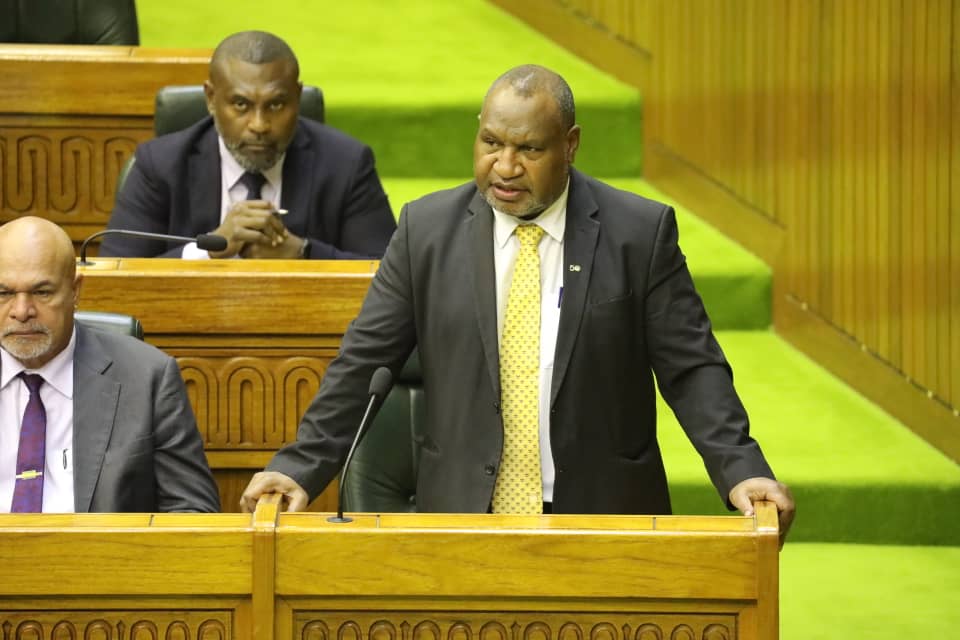
PRIME Minister James Marape has responded firmly to concerns raised by East Sepik Governor Allan Bird regarding the current shortage of chicken in shops across the country, saying the Government is standing by its decision to phase out chicken imports and support local production.
Governor Bird raised concern that retailers are already experiencing shortages and warned that chicken supplies may run out completely in the coming weeks.
He said the retailers had attempted to engage with the National Agriculture Quarantine and Inspection Authority (NAQIA) for clarity and action but claimed their concerns had been ignored.
“Retailers are telling me that chickens will run out soon,” said Governor Bird. “They’re asking NAQIA for assistance but are being met with
silence. Prime Minister, can we get a clear response this week? Our people need assurance.”
In response, PM Marape said the import ban was initially imposed by NAQIA due to health concerns, specifically avian flu risks in countries like Australia and New Zealand.
However, the ban had created a unique opportunity for Papua New Guinea’s poultry industry to grow and meet local demand, he said.
“This is an important question, and I thank the Governor. But let me remind the country that NAQIA imposed the ban to protect us from contaminated imports,” Mr Marape said.
“At the same time, this presents a huge opportunity for our own farmers—our people in the markets, smallholder farmers, and companies already producing poultry.”
He added that PNG’s annual chicken consumption value was over K500 million, and the Government viewed this sector as ideal for import replacement and SME growth.
“If there is a mother selling chicken in the market, go and buy from her. Support our local farmers instead of waiting for imports.
“Chicken is the easiest protein we can substitute through local farming, along with piggery and others.”
The Prime Minister reaffirmed the Government’s long-term policy to completely stop importing chicken, and that agencies like the Department of International Trade and Commerce were already working with local poultry companies to ramp up domestic production.
He acknowledged the immediate shortage and said the Government would speak with NAQIA to consider a temporary, controlled lifting of the ban—but only if it can be done without compromising food safety.
“In the short term, I will ask NAQIA to explore ways to address the supply gap without compromising our quarantine standards,” he said.
“But in the medium to long term, we are encouraging everyone-families, SMEs, cooperatives, and provincial governments-to step into poultry production.”
He urged the public, especially youths and families in rural areas, to seize this opportunity by entering the chicken farming sector.
“Let’s produce locally. Let’s build a supply chain from the village to the market. Our people must rise to fill this gap.”
The Prime Minister concluded by saying that food security is a national priority and that chicken production is now a key area for economic empowerment.