


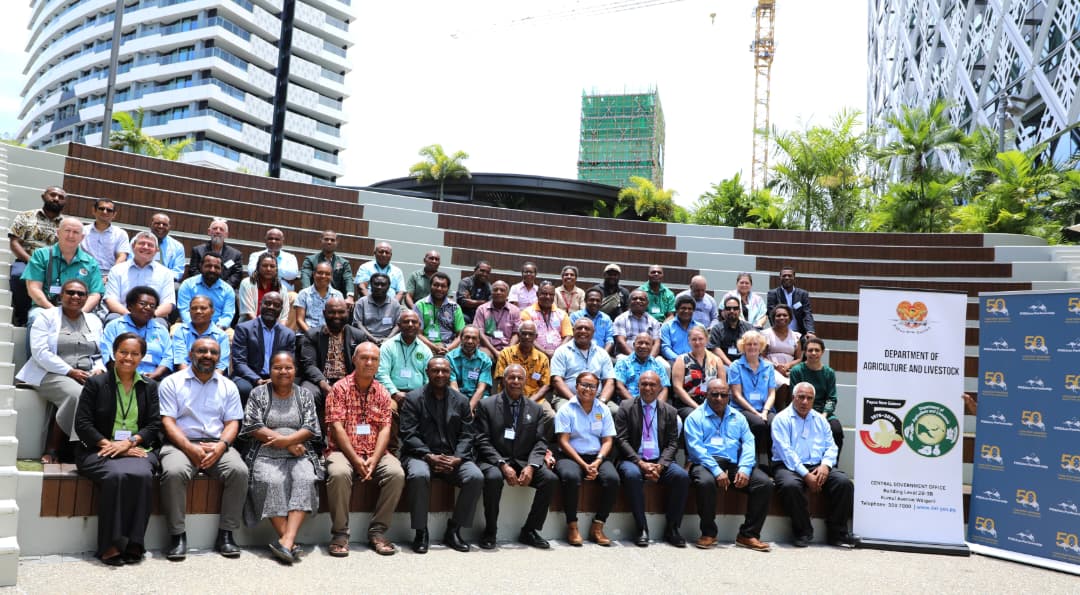
PAPUA New Guinea has taken a significant step toward developing its first comprehensive National Seed Policy, with agriculture and forestry experts from across the country gathering in Port Moresby this week to strengthen the nation’s seed systems.
The two-day National Seed Policy Roundtable, held on 17–18 February, was convened by the Department of Agriculture and Livestock with support from Australia. The forum brought together representatives from government agencies, research institutions, commodity boards, farmer organisations, development partners and the private sector.
The discussions focused on improving access to high-quality seeds and planting materials-including tissue culture, roots, tubers and stem cuttings- which are essential for agricultural productivity, food security, farmer livelihoods and climate resilience.
With Papua New Guinea’s agriculture sector heavily reliant on reliable planting materials, the roundtable provided a timely opportunity to draw on the practical experience of producers, researchers and users from both formal and informal seed systems. Participants reviewed current challenges, identified key priorities and explored practical options to improve seed availability, quality and resilience nationwide.
Opening the roundtable, Mr Heai Hoko, Deputy Secretary for Provincial Agriculture Technical Services at the Department of Agriculture and Livestock, highlighted the importance of a national seed policy for the country’s long-term development.
“A comprehensive seed policy is essential for protecting the environment, strengthening food production systems, increasing yields, and ensuring food and nutrition security,” Mr Hoko said. “It also underpins medicine, trade, employment, economic growth and overall human development.”
Mr Gure’ahafo Tumae, Senior Scientist with the Coffee Industry Corporation, said the roundtable addressed a major quality gap affecting coffee production, particularly among smallholder farmers.
“For coffee, this is critical for about 90 per cent of smallholder farmers,” Mr Tumae said. “They are working just as hard, but earning less because their seeds lack the potential to produce high-value crops.”
Outcomes from the roundtable are expected to contribute to improved access to affordable, high-quality and climate-resilient planting materials, especially for smallholder farmers, many of whom are women.
Strengthening coordination between government, research institutions and industry was identified as central to effective policy development, helping to establish clearer regulatory pathways and more resilient seed systems.
The initiative forms part of broader support to PNG’s agriculture sector under the PNG–Australia Partnership, which aims to strengthen agricultural growth, improve livelihoods, enhance biosecurity and create a more enabling environment for agribusiness development.