


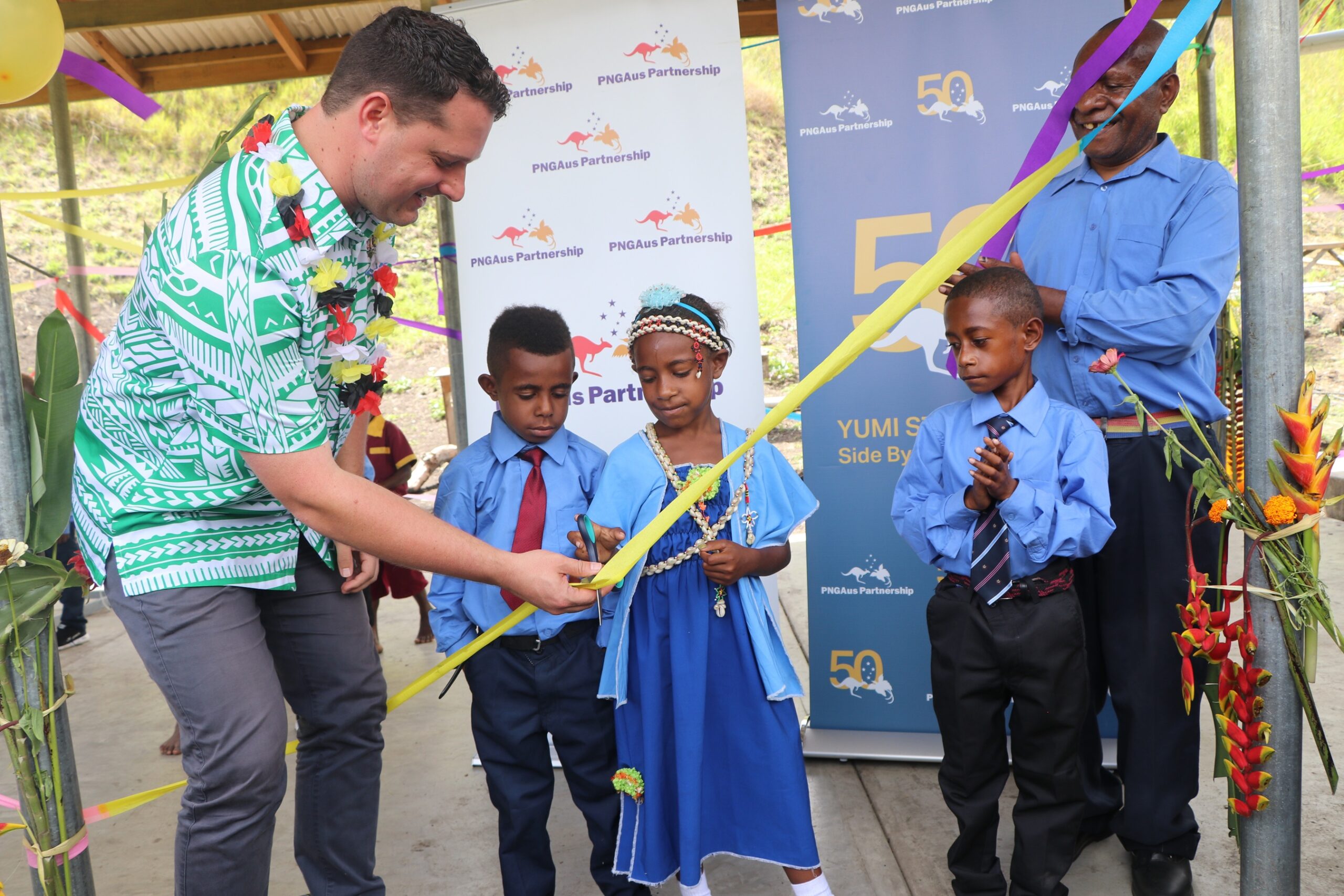
Thirty-five elementary schools in seven districts in Morobe were able to install 98 rainwater tanks with mini-structured halls to provide clean and safe drinking water through the Morobe Water Security Project.
The project is a partnership between the Australian Government and the Morobe Provincial Administration.
Last week, the Australian Consul-General Lae, Brenton Kanowski, handed over water tanks and desks to Kaisenik Elementary, Mainyanda Elementary and Mangki Elementary in the Bulolo and Wau-Waria districts.’
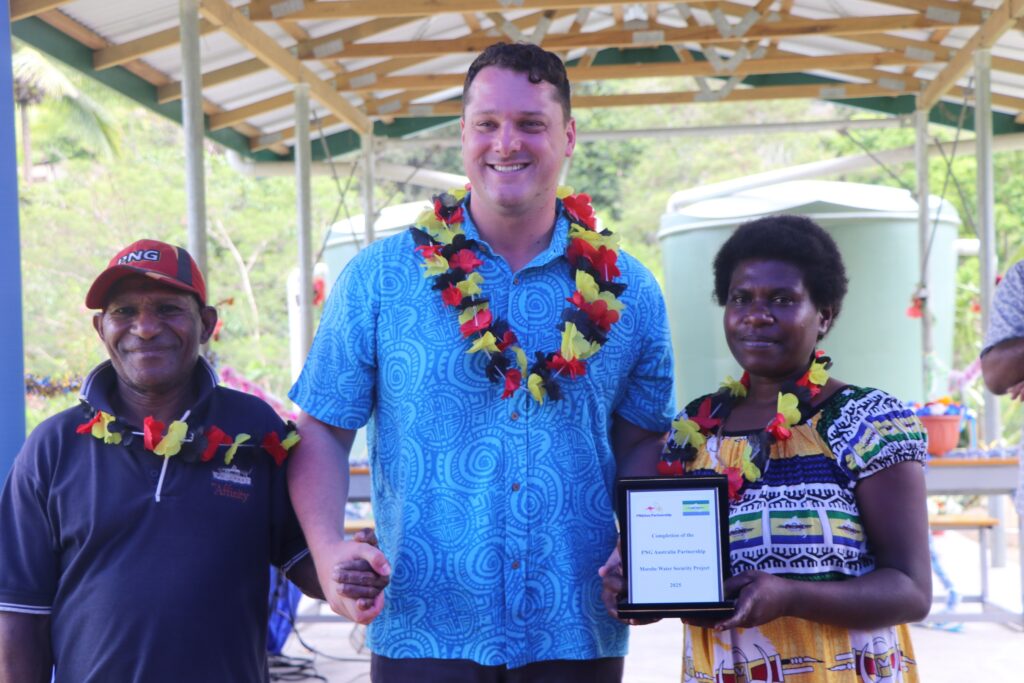
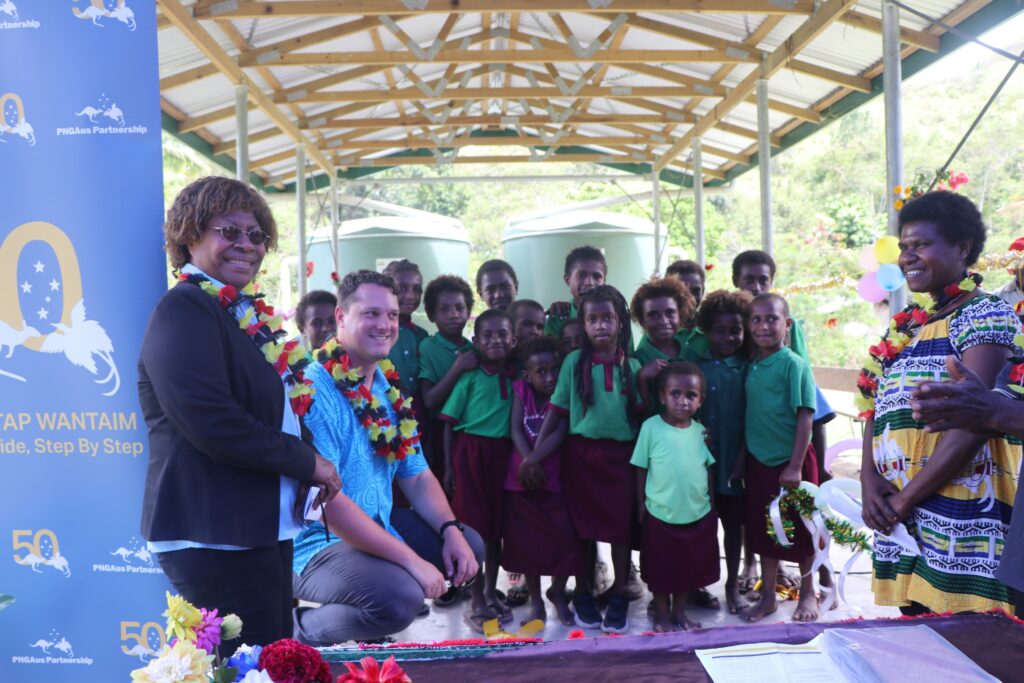
Access to clean water is essential to keeping children healthy and making sure students don’t have to walk long distances to fetch water and miss valuable learning time.
These small but important facilities, including the new desks, are part of Australia’s support in creating safer, better learning environments and improve conditions for children, teachers and surrounding communities.
Representing the Morobe Provincial Administration, Director of National Functions Fiona Gesa, said: “We appreciate the continued partnership and support from the Australian Government. I encourage students, teachers, and community members to take ownership of these new facilities and ensure they are well cared for.”
The Morobe Provincial governance committee, consisting of the Provincial Administration, Provincial Health Authority, Provincial Division of Education, civil society organizations, and partners, guided site selection, planning, and oversight to ensure strong local ownership and alignment with community priorities.
For many children in PNG’s largest province, the school day begins with the challenge of finding clean water. In most rural communities, students walk long distances and rely on unsafe water sources, affecting their health, well-being, and ability to learn.
The lack of water often leads to missed lessons, poor hygiene, and learning environments that fall short of what every child deserves. However, this situation is now changing.
This initiative demonstrates Australia’s support for locally led, co investment partnerships that support provinces in delivering resilient, community infrastructure and enhancing children’s learning, health, and future opportunities.