


By Cyril Gare
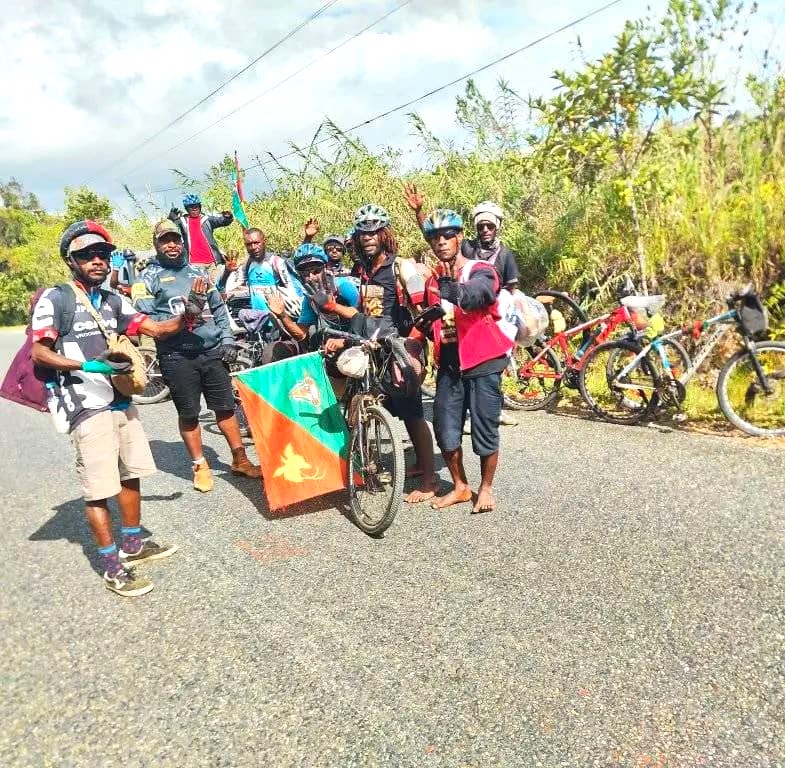
They did not arrive with fanfare. No motorcade. No sirens. Just the rhythmic hum of bicycle chains, the dust of the Highlands still clinging to their tires, and the quiet pride of young men who had paddled, pedalled, and persevered across the spine of Papua New Guinea.
From the serpentine waters of the Sepik River to the coastal breath of Madang, through the rugged ascent of the Highlands, and onward to Port Moresby—this was no ordinary journey It was a pilgrimage. A living tribute to two monumental milestones: the 50th Anniversary of Papua New Guinea’s Independence and the transformative promise of the Connect PNG program.
They are sons of Sepik—lean, determined, and unshaken by terrain or time. With bicycles as their vessels and conviction as their compass, they charted a course that few would dare. Their journey stitched together the fragmented geography of our nation, riding the veins of new roads that now pulse with possibility.
Each pedal stroke was a declaration: that the youth of PNG are not waiting for change—they are riding toward it.
The Connect PNG initiative is often spoken of in terms of kilometers and contracts. But for these cyclists, it is something far more intimate. It is the bridge between isolation and opportunity. Between forgotten villages and national consciousness. Between the Sepik and the capital.
Their journey was a living map of what Connect PNG means—not just roads, but relationships. Not just access, but agency.
As the nation commemorates 50 years of independence, these young men remind us that freedom is not static—it must be renewed, reimagined, and re-ridden. Their journey was not just a celebration of what has been, but a challenge to what must come next.
They carried no banners, but their presence was a flag in motion. A symbol of unity, resilience, and the unbreakable spirit of Papua New Guinea.
In every village they passed, they left behind more than tire tracks. They left stories. Inspiration. Proof that the youth of PNG are not passive observers of history—they are its authors.
Their journey calls on leaders to listen, on elders to bless, and on fellow citizens to rise. It is a call to connect—not just roads, but hearts. Not just provinces, but purpose.
When the dust settles and the celebrations fade, what will remain is the image of these young Sepik cyclists—faces sunburnt, spirits unbowed—riding into Port Moresby not as tourists of history, but as torchbearers of its future.
They remind us that the road to national renewal is not paved solely by policy but by people. By youth who dare to dream and who ride that dream across rivers, mountains, and memory.
Papua New Guinea is not just connected. It is awakening.