


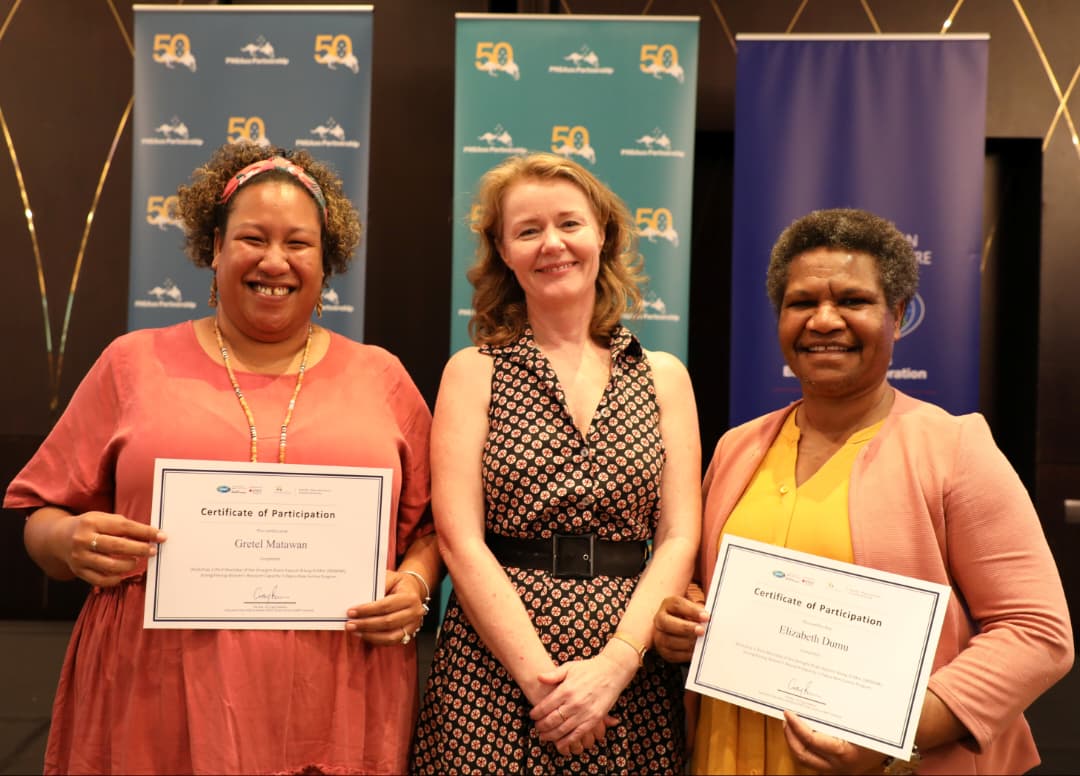
Strengthening evidence-based decision-making and improving development outcomes across Papua New Guinea were at the heart of a major research capacity-building program for women that concluded last week.
For Ms Gretel Matawan, a Senior Project Officer with the Consultative Implementation and Monitoring Council (CIMC), the training was more than a personal milestone-it was an opportunity to better serve communities across the country.
On Friday, 13 February 2026, Ms Matawan was among 40 Papua New Guinean women researchers who graduated from the Strengthening Women’s Research Capacity in PNG program, delivered by the APEC Study Centre at RMIT University.
The intensive program focused on developing advanced research skills and supporting participants to design high-quality research aligned with Papua New Guinea’s development priorities.
Participants were drawn from key national institutions, including the Bank of Papua New Guinea, the National Research Institute, and the University of Papua New Guinea, fostering collaboration across academia, government, and policy think tanks.
Ms Matawan said the program has already strengthened her work at CIMC, particularly in promoting women’s participation in the national budget process.
“I started in data entry, then moved into data analysis and research assistance,” she said. “Being able to build on those skills and bring them back to my workplace—sharing them with colleagues and improving research design that supports evidence-based policy
recommendations—is a win for all of us.”
She added that the training has improved how she engages with communities.
“I’m applying what I’ve learned to gather better data from local communities, especially women, to help design a budget that reflects grassroots needs such as health and education at the local level.”
Fellow graduate Ms Elizabeth Dumu said the program has created a strong network of women researchers with the potential to drive meaningful change.
“With women represented from universities and think tanks, we can grow this into something big,” she said. “Together, we can contribute to the meaningful development of this country.”
The Strongim Risets Kapasiti Bilong Ol Meri (SRKBOM) program forms part of the Australian Government’s commitment to supporting women’s participation in a diverse and inclusive research sector, contributing to long-term and sustainable economic growth in Papua New Guinea.