


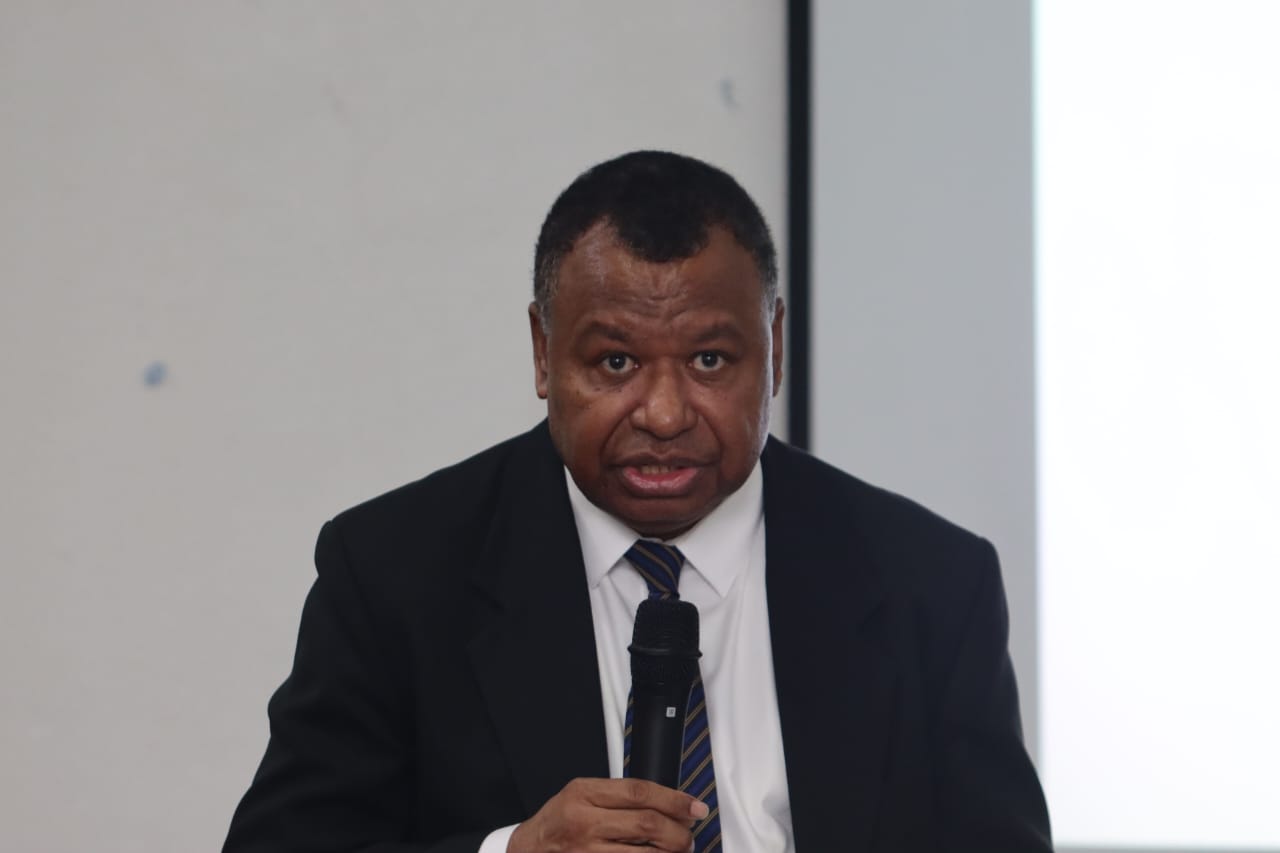
The Deputy Governor of the Bank of Papua New Guinea (BPNG), Jeffery Yabom, has reaffirmed BPNG’s commitment to building an inclusive financial system, stressing that microfinance is vital to national development.
Mr Yabom delivered the keynote address at the PNG Microfinance Diagnostic Validation Workshop held on Wednesday at the Crown Hotel in Port Moresby.
The workshop, facilitated by the Asian Development Bank (ADB), brought together Financial Institutions, the Credit Guarantee Corporation, BPNG, and the Centre for Excellence in Financial Inclusion (CEFI), along with the SME Corporation and other key stakeholders from the financial and development sectors.
Highlighting the importance of microfinance, Mr Yabom noted that more than 80 percent of Papua New Guineans live in rural and remote communities with limited access to financial services.
He described microfinance as a “lifeline” enabling families to save, invest, educate their children, and grow small businesses.
Reflecting on progress since Papua New Guinea signed the Maya Declaration on Financial Inclusion in 2013, the Deputy
Governor said: “At that time, fewer than one in five Papua New Guineans had access to formal financial services. Today, under the National Financial Inclusion Strategy 2023-2027, there are more than 4.3 million bank accounts, a result of the combined efforts of BPNG, financial institutions, and development partners.”
While acknowledging this progress, Mr. Yabom cautioned that challenges remain, including the high costs of serving rural areas, weak governance in microfinance institutions, and limited product diversity.
He called for expansion into new services such as micro-insurance, remittances, and SME products, while strengthening consumer protection and regulatory oversight.
He further emphasized the opportunities that exist in digital finance, women’s economic empowerment, strategic partnerships, and climate-resilient “green finance.”
He noted that financial inclusion is central to PNC’s Vision 2050 and its medium-term-development plans.
“BPNG will continue working closely with government, the private sector, and development partners to ensure that microfinance remains sustainable innovative, and inclusive,” Mr Yabom said.
ADB consultant Jagdeep Dahiya also delivered two key presentations at the workshop. In his first presentation, Status of Microfinance – Key Findings, Mr Dahiya outlined how PNC’s financial sector has expanded since the Microfinance Expansion Project, which established CEFI.
He reported that PNG now has over 4.3 million deposit accounts, compared to the initial target of one million in 2013. However, microfinance institutions still account for less than three percent of total financial sector assets, with services skewed towards urban areas.
He also highlighted the dominance of commercial banks in deposit mobilization, while noting that Microbanks and Savings and Loan societies have broader outreach in rural areas. Despite growth in account, ownership access to credits remain low, leaving many Papua New Guineans dependent on informal lending. He further observed that the gender gap in financial access has widened, calling for renewed efforts to advance women’s financial inclusion.
In his second presentation, Challenges and Key Recommendations, Mr Dahiya identified major barriers, including limited regulatory incentives, low digital financial literacy, weak consumer protection, and inadequate ID systems.
He also pointed to high banking fees, lack of trust in formal institutions, and poor infrastructure as obstacles to participation.
To address these issues, Mr Dahiya recommended strengthening policy frameworks, fostering innovation in digital finance, expanding funding to microfinance institutions, and simplifying compliance processes to improve access.
He added that coordinated efforts across government, industry, and development partners are essential to strengthening microfinance and ensuring inclusive growth in Papua New Guinea.
The workshop concluded with an engaging Q&A session, open discussions, and development partners are essential to strengthening microfinance and ensuring inclusive growth in Papua New Guinea.