


By DALCY LULUA
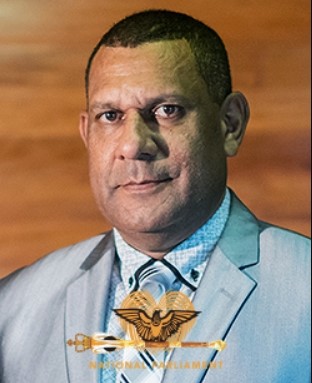
Minister for Administrative Services and Minister Assisting the Prime Minister, Hon. Richard Masere, has reaffirmed the Government’s commitment to advancing electoral reform and digital democracy as Papua New Guinea prepares for the 2027 National General Elections.
Speaking at the opening of a three-day workshop in Port Moresby, Minister Masere said the journey to reform the country’s electoral process began in January 2024, following a directive from Prime Minister Hon. James Marape to establish a single, credible population data source and align the national electoral roll accordingly.
“To drive this work effectively, key agencies including the National Statistical Office (NSO), the PNG Civil and Identity Registry (NID), and the PNG Electoral Commission (PNGEC) were brought under my Ministry to ensure better coordination and accountability,” Mr Masere said.
He outlined four key priorities that will guide the Government’s electoral reform agenda:
Priority A: Completion of the long-overdue National Population Census to establish accurate and credible demographic data.
Priority B: Strengthening the National Identification (NID) system to ensure all citizens aged 18 years and above are registered and issued NID cards. To date, more than 2.8 million Papua New Guineans have been registered.
Priority C: Development of a credible electronic electoral roll using verified data from the census and NID systems to eliminate ghost names, duplications, and inaccuracies.
Priority D: Transition from paper-based to biometric and electronic voting systems to restore integrity and public trust in national elections.
Mr Masere said these reforms were critical to ensuring that the 2027 elections are free, fair, and credible.
“The success of the 2027 National General Elections depends on the groundwork we lay now — strengthening data systems, improving coordination among agencies, and embracing technology to modernize our electoral process,” he said.
The three-day workshop brings together key government agencies, development partners, and election stakeholders to deliberate on strategies for implementing the electoral reform agenda and advancing digital democracy in Papua New Guinea.