


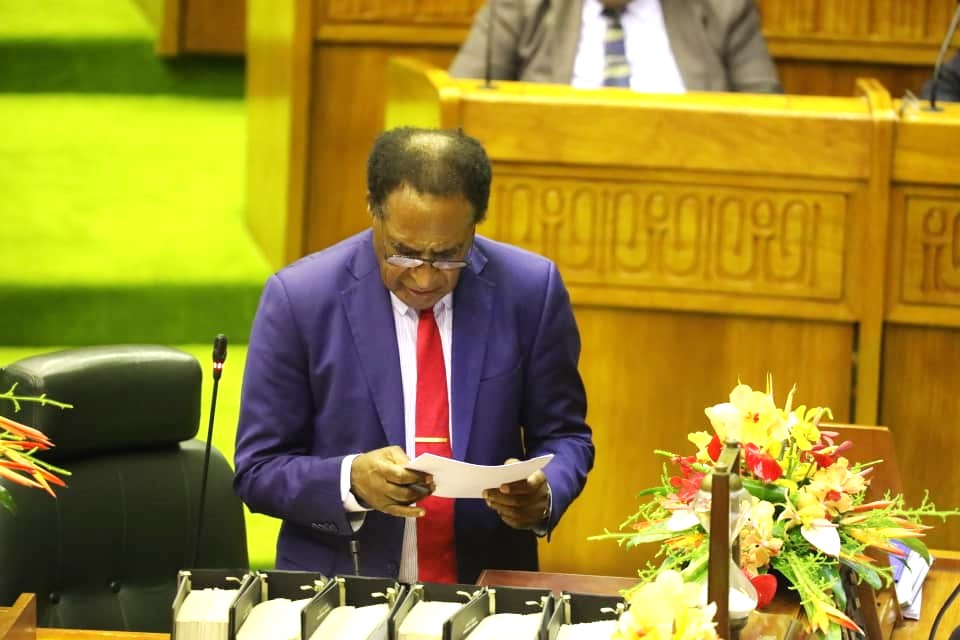
By DALCY LULUA
Parliament yesterday passed a significant amendment to the Organic Law on the Integrity of Political Parties and Candidates, raising the retirement and compulsory retirement age for the Registrar of Political Parties.
The amendment was passed with overwhelming support, with 80 Members of Parliament voting in favour.
The amendment was introduced by Minister for Justice and Attorney General, Pila Niningi, who explained that the change aims to align the Registrar’s retirement age with that of other Constitutional Office Holders, such as Judges, the Chief Ombudsman, and ICAC Commissioners.
Under the new law, the retirement age has been increased from 55 to 72 years, while the compulsory retirement age moves from 60 to 75 years.
In his second reading speech, Minister Niningi said the amendment is part of the Government’s broader policy to standardize the retirement age for Constitutional Office Holders across the board.
“This is consistent with the policy decision by the Government to standardize the retirement age and compulsory retirement age of Constitutional Office Holders to 72 years and 75 years respectively,” Mr Niningi told Parliament.
He added that the decision is also a response to the growing institutional knowledge gap, driven by the early exit of experienced officials.
“Senior officials who still have adequate years to contribute to strengthening our institutions and contributing to service delivery are not able to do so due to them reaching retirement age,” he said.
“The proposed amendment allows continuity and transfer of knowledge and skills to the younger generation of leaders.”
Minister Niningi added that similar amendments are being introduced to apply the same retirement standards across other constitutional offices, helping to address leadership vacuum and reinforce institutional stability.
The passage of this bill marks a key step in the Marape-Rosso Government’s reform agenda aimed at strengthening governance systems and ensuring experienced leadership remains in place to guide the public service.