


By WASITA ROYAL
A powerful bipartisan push is redefining national sovereignty in Papua New Guinea, arguing that the government’s executive power must be secondary to the people’s voice on critical issues like the Bougainville referendum. This approach, championed by the Bipartisan Committee, challenged decades of top-down governance and insists that no constitutional amendment or national decision with far-reaching consequences can be made without comprehensive public consultation.
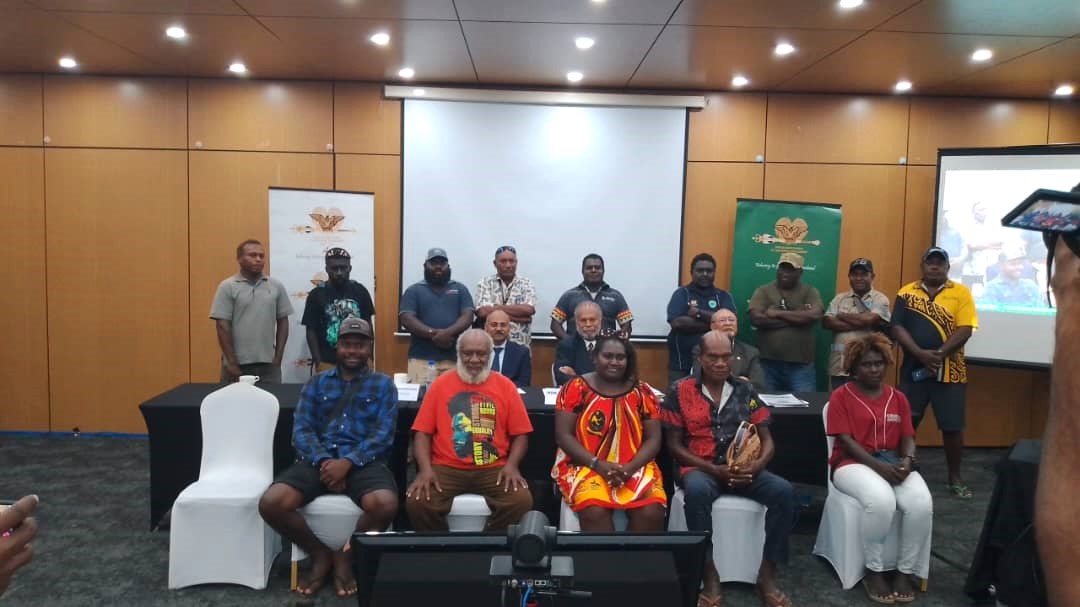
The movement, centered within the Bipartisan Parliamentary Committee on the Bougainville referendum, directly confronts the previous process managed solely “between the two governments.” The committee has conducted a nationwide consultation and will compile areport that reflects the genuine will of the people, and that the process our leaders say is dictated by our democratic necessity and the Melanesian tradition.
The shift in thinking begins with a deconstruction of sovereignty itself. Rabaul MP Dr. Allan Marat argues that the very idea of a nation having absolute control is an outdated illusion in an interconnected world.
“The idea of sovereignty is it’s no longer pure. There’s no pure sovereignty in the world today,” Marat stated. He pointed to global relationships, such as those between the US and Israel or Australia and PNG, where influence constantly flows. “That kind of pollutes the idea of sovereignty… It’s all watered down due to this interdependency.”
For Marat, this reality dismantles the argument for a rigid, executive-only approach to the Bougainville issue. If sovereignty is already fluid, then a decision of this magnitude must be opened to the people which will be most affected.
This philosophical stance was translated into direct political action by Sir Puka Temu; a former Minister for Bougainville Affairs.
Temu has been a vocal critic on the floor of Parliament, arguing that the executive cannot rely on its “numerical strength all the time to make decisions.”
“Executive government cannot use its numerical strength all the time to make decisions, amend the constitutions, or by itself make its own decision,” Temu asserted. He strongly endorsed the Bipartisan Committee as the correct Melanesian path, ensuring that “the report will bring in the voice of the people.” For him, any issue impacting the entire country “deserves a wider consultation and deserves the input of the citizens.”
Building on this, Provincial Member for West New Britain Hon. Sassindran Mutuvel, reported a “burning desire for autonomy” across many provinces and sees this moment as a chance to rebuild the nation’s structure.
“We cannot bring development… without respecting the diversity in our country,” Mutuvel argued. He proposed treating provinces not as political constructs but as “real economies” and “development partners.” His vision includes granting provinces real financial and administrative autonomy, noting that national functions like police and health already depend entirely on provincial logistics and support. Empowering them, he suggested that this is the key to unity and prosperity which could have prevented the past crises.
The committee’s work, fueled by these perspectives, has seen to be more than a fact-finding mission and seem as a live demonstration of a new and more inclusive model of governance for Papua New Guinea, where our true sovereignty is found not in control, but in conversation.