


By GEORGINA MICHAEL
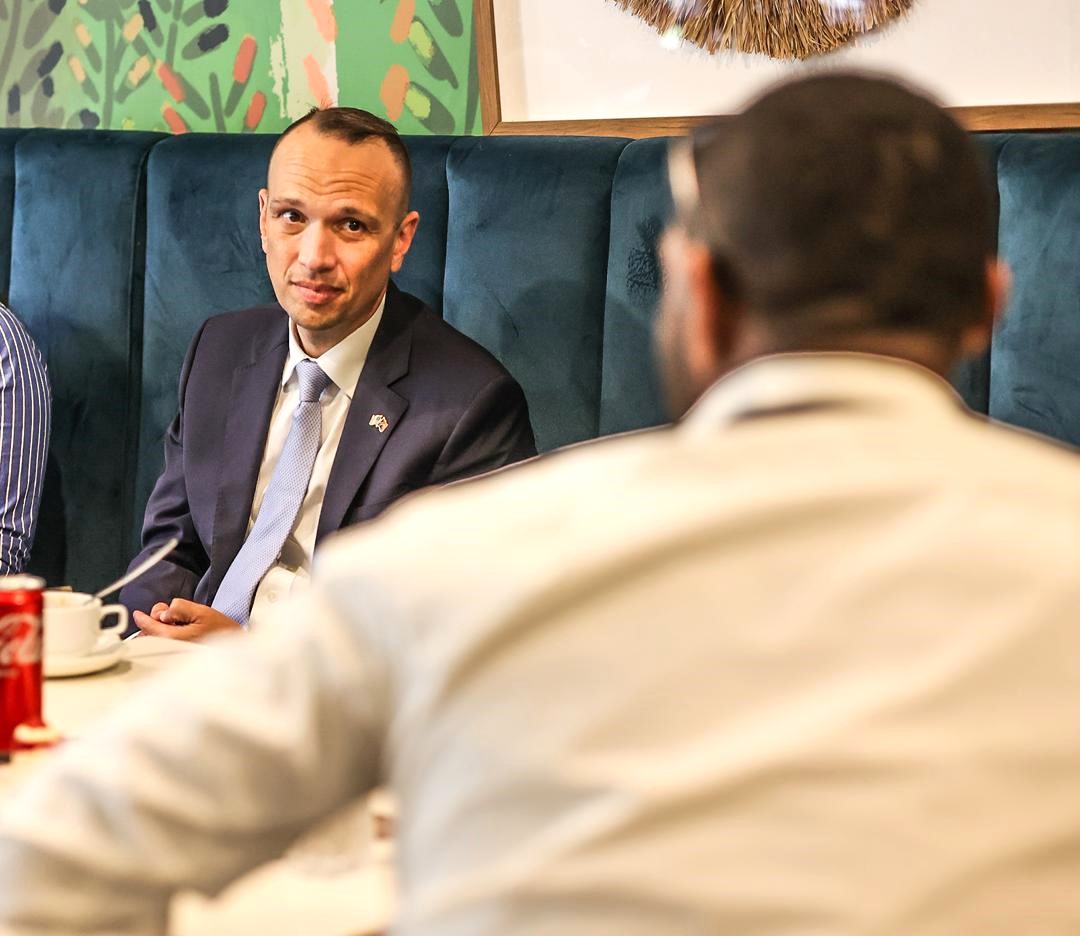
The United States Embassy in Port Moresby hosted a luncheon for local journalists to interact on a number of issues.
The luncheon was attended by journalists from the various media outlets.
The purpose of the luncheon was to understand how the US government works, which would help journalists to have basic understanding of US government systems and businesses in PNG, and also a brief overview of US policy and priorities.
US Embassy Public Affairs Officer Sarah Sanderson said: “The United States government is called a constitutional federal republic. This means that we share power between our national and our state governments which also means that all of our government officials are elected by American citizens. We operate under the principle of the separation of powers and checks and balances. This phrase separation of powers and checks and balances means that we want to prevent any one branch( Legislative, Executive and Federal) of our government from having too much power.”
Deputy Public Affairs Claudia Borovina further explained: “In order to talk about US investment in PNG, it is important to understand that the United States is a free-market economy and so, businesses largely operate independently. They’re making decisions for themselves based on different market factors that will create good business outcomes for them, basically a good profit.
“The US Embassy is working with US companies, because we have a good sense of corporate social responsibility and finding places where interests mutually align in terms of employment opportunities and others, finding investment areas where they can make a profit but also invest well and responsibly abroad. So, they’re largely though investing in trade and investment independently which are based on their own decision decisions,”
“With the government, occasionally, you’ll see businesses working with the government on what’s called a contract. This is very common in the defense and infrastructure sector, especially the US government. For example, Might have a company wanting to build a road or to hold a fuel storage facility, but it’s still largely the business operating within what is beneficial to them, and they would make the choice to accept those contracts, not as businesses are basically independent.”
Deputy Chief of Mission Alex Berenberg said: “We are here executing the foreign policy of the United States. Firstly, we are here to strengthen our alliances, to secure fair trade and to build friends with the rest of the world.
“We look at our bilateral relationship under three different lines of effort, or three different buckets:
- Firstly, a strong economic and Defense Partnership, that is in progress, this means trade and investment, commercial ties, business, people to people ties;
- Engaging with the people of Papua New Guinea, engaging moving throughout the country and meeting people, learning about your culture, sharing our culture, working exchange programs, educational opportunities in the United States, and bringing American visitors here to this great country.
- And finally, defense and security cooperation, whether that’s law enforcement cooperation, etc. The US Embassy is dedicated to build a relationship that touches on our shared history, built in the crucible of the Second World War where US service members served in this great country to help defend against fascism, and today it stands to honor the shared values and cherish them and is looking forward to building a shared prosperous future together.”