


By CHRISTOPHER YANDAWAI
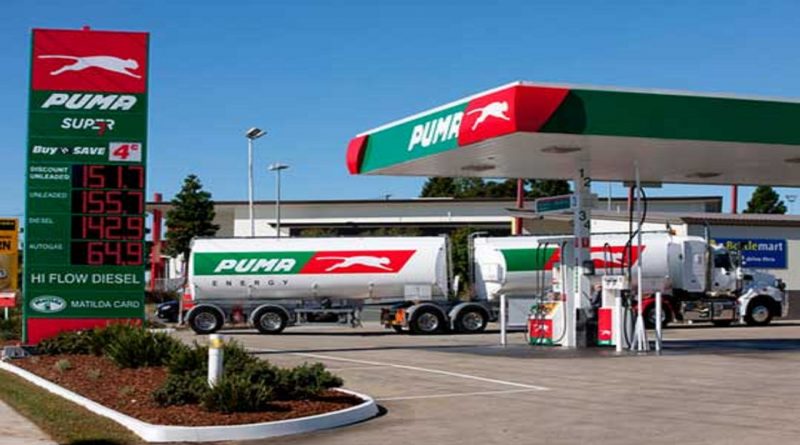
THE fuel crisis in Papua New Guinea is far from over as Puma Energy, being the only supplier, continues to face the issue of foreign currency.
This is despite the government’s interventions to find short-term and long-term solutions.
Petroleum and Energy Minister Kerenga Kua declared a month-long state of emergency (soe) in July 31 this year following a similar crisis.
This was to allow for the government and relevant stakeholders to take necessary steps to address the issue, while the Bank of Papua New Guinea (BPNG) and Puma were advised to allow for the fuel supply to be restored.
However, the SoE period lapsed on August 31, with no possible solutions being announced.
Subsequently, the loggerheads between Puma and BPNG has continued, with the fuel crisis on the verge of rearing its ugly head again.
Yesterday afternoon, the chairman and managing director of Puma Energy PNG Group of Companies, Hulala Tokome, issued a customer notice of force majeure and implementation of supply rationing.
He said in order to preserve limited supplies, Puma has resolved to start implementing supply restrictions with effect as of midnight on Thursday, Oct 5.
“We refer to your fuel supply agreement with Puma Energy PNG Limited and regret to inform you that both Puma PNG and our supplier Puma PNG Refining Limited have not obtained sufficient foreign currency through authorized foreign exchange dealers, including the Bank of Papua New Guinea (BPNG) in order to pay our fuel supplier in foreign currency,” he said.
“We are unable to purchase further supply for reasons beyond our control until such time as we have sufficiently paid our supplier.
“We therefore, need to take urgent steps to ration and prolong our remaining supply for as long as reasonably possible and to ensure emergency demand is met.”
“We are unable to determine how long this force majeure event will continue, however, we remain committed to finding solutions to resolve this critical situation at very earliest.”
Tokome said Puma PNG and its supplier are using all reasonable efforts to mitigate the situation and are engaging with stakeholders, including the Papua New Guinea Government, and BPNG and these efforts remain ongoing.
Meanwhile, the chairman said the Puma intends to prioritise support to emergency services during this period and to resume full supply upon cessation of the force majeure event.
“We apologise for the inconvenience and sincerely appreciate your patience during this difficult time and will keep you further informed,” Tokome said.
Early last week, Minister Kua blamed the Treasury for not playing its part in addressing the ongoing fuel crisis.
He expressed his disappointment to the Department of Treasury for failing to play its role of releasing the K8 million budget allocation earmarked to deal with the fuel crisis issue from 2022 and 2023.
He said the country faced a fuel crisis and his ministry was taking necessary steps to mitigate on the possible lasting approach to address the issue.
“As this being a way forward for the Ministry since I declared the SoE, I have worked with several stakeholders for a possible solution but the only gap left is to be filled by Treasury.
“With the SoE declaration, I issued a number of directions; the first directions was directed at BPNG to maintain a supply of foreign exchange to Puma Energy so that they can have the ability to continue to pay for fuel from overseas and bring it to PNG to be distributed.
“The direction was issued to Puma Energy to maintain the fuel supply, especially jet fuel.
“In addition to that, we have published a work plan which is also required by those legislations (National Energy Authority Act, and under the provision of the Essential Services Act) as to how we can deal with the emergency,” he said.
The ministry had consultations with stakeholders involved in the supply of foreign exchange, including the Bank of PNG, Bank of South Pacific, Customs, IRC, Department of Treasury, ExxonMobil, Santos, MRDC, Air Niugini and Pacific Energy Aviation Limited.
Minister Kua said during their discussions, they talked about how to deal with the supply of foreign exchange and the supply of fuel.
He said the only thing that is slowing the progress is that the Treasury has not allocated the funding for two consecutive years amounting up to K8 million for them to effectively carry out the work plan.
Sunday Bulletin reached out to Treasurer Ian Ling-Stuckey for a response but none was forthcoming.