


By CYRIL GARE
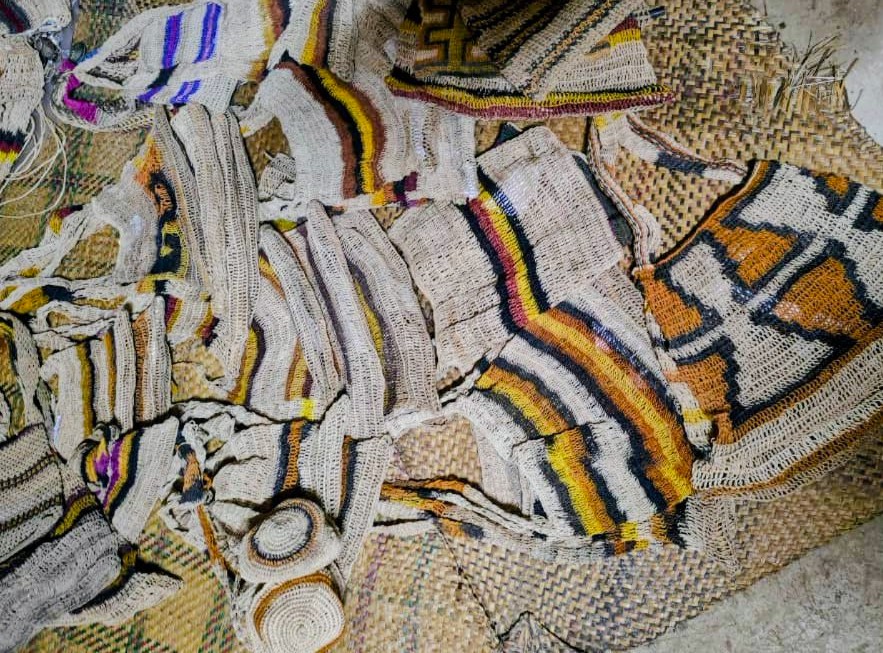
Authentic, original, hand crafted, the Karawari bilum is more than a woven string bag. It carries a hallmark of civilizational memory, a thread of prehistoric knowledge reaching back to Denisovan time, 50,000 years ago. Each strand is drawn from rudimentary yet profound sources: tree fibers, barks, roots. The sap’s natural chemistry yields colors that shimmer like river light, spectacles of glamour for any eye.
You may have seen a Wosera or Maprik bilum, or held a Murik basket. Yet the Karawari bilum remains less known, though it is no less wondrous.
Tourists recognize the Karawari Lodge, music lovers recall the Karawari style song by the Gembog band. But few have heard of the bilums themselves — beautiful creations born of the gifted hands of Karawari mothers.
They are matriarchs of time and nature, weaving in a nexus where man, environment, and cosmos coexist. Their bilums reign silently across the Sepik basin, guardians of an ancient civilization.
These are the Karawari bilums, emblems of rural mothers from the outback Karawari, one of the five LLGs in Angoram, East Sepik, the home district of Grand Chief Somare.
Many of these women had never seen their capital city before. Thanks to Em Vision and the Tree of Life Foundation, they now journey to Port Moresby to present their artistry at the Contemporary Bilum and Arts Festival, scheduled for tomorrow Friday 29 May to Sunday 31 May, 2026, at the Sir John Guise Stadium.
Karawari bilums are unique yet affordable, priced between K50 and K200. Each piece is rudimentary in material but profound in meaning. Every toea spent supports:
- local artisans
- empowers women
- preserves culture, and
- strengthens rural communities.
To place orders or seek further information, call 71783200 or email treeoflifefoundation22@gmail.com.