


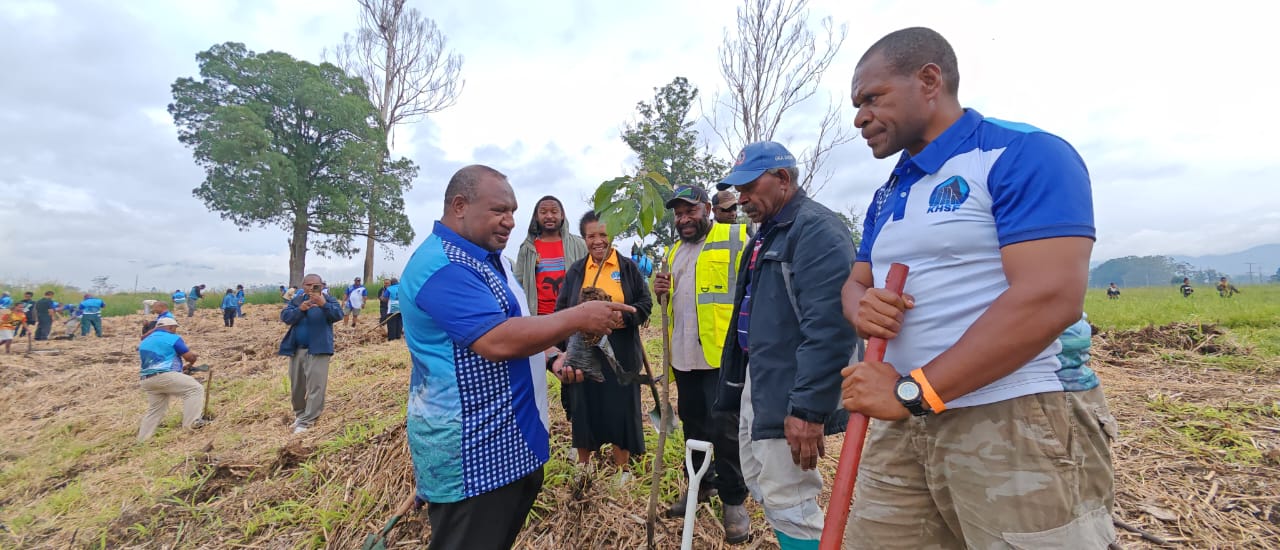
Prime Minister Hon. James Marape has called for a national revival of agriculture, urging Papua New Guineans to return to a culture of production, self-reliance, and rural enterprise, drawing inspiration from the legacy of Kabiufa Adventist Secondary School.
Reflecting on his time as a student, Prime Minister Marape recalled how Kabiufa once stood as a major producer of fresh vegetables supplying markets as far as Port Moresby.
“When I was a student at Kabiufa, it was one of the biggest producers of fresh vegetables. We packed cartons of produce, and buyers would take them to Port Moresby. That was agriculture in action — real production, real income,” Prime Minister Marape said.
He said this example demonstrates the untapped potential of Papua New Guinea’s land and people.
“We have always had the ability to produce. What we need now is to return to that mindset — to work our land, grow our food, and supply our markets,” he said.
Prime Minister Marape emphasised that agriculture must remain the backbone of Papua New Guinea’s economy, particularly as the country looks to reduce import dependency and strengthen rural livelihoods.
“Agriculture is not just subsistence — it is business. It is income, it is employment, and it is the foundation of our economy,” he said.
He noted that consistent small-scale production, whether in vegetables, coffee, or other crops, can generate long-term income and improve living standards across rural communities.
“Even simple, consistent production — selling garden food, coffee, or cash crops — can translate over time into better homes, better education for children, and stronger communities,” he said.
Prime Minister Marape said the Government’s free education policy is now giving families the financial space to invest in agriculture and small businesses.“Families that once spent between K4,000 and K10,000 a year on school fees now have that money available. That is a head start,” he said.
“That money should go into productive use — into farming, into SMEs, into improving livelihoods — not wasted.”
“If Government is carrying the cost of education, then families must step forward and invest in their own progress, especially through agriculture,” he said.
The Prime Minister also called for schools across the country to return to strong agricultural programmes, using Kabiufa as a model.
“Schools must not only teach theory — they must produce. Agriculture should be part of education, teaching students how to grow food, manage land, and build livelihoods,” he said.
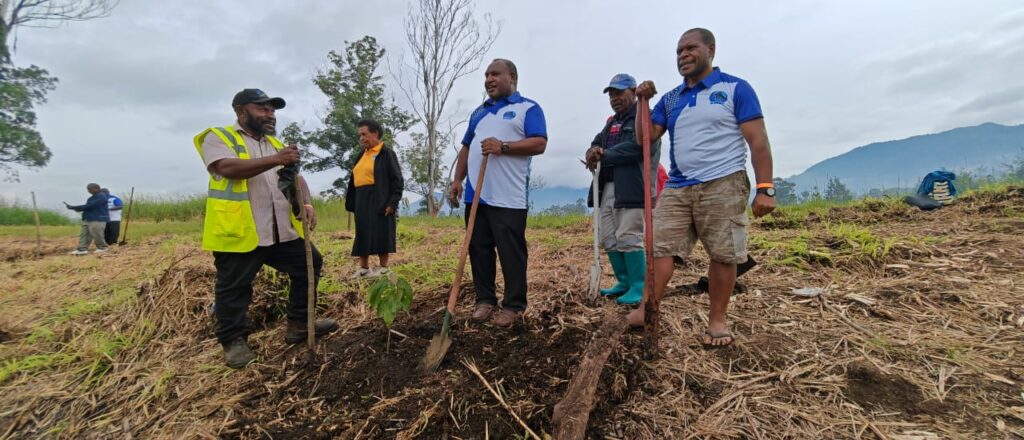
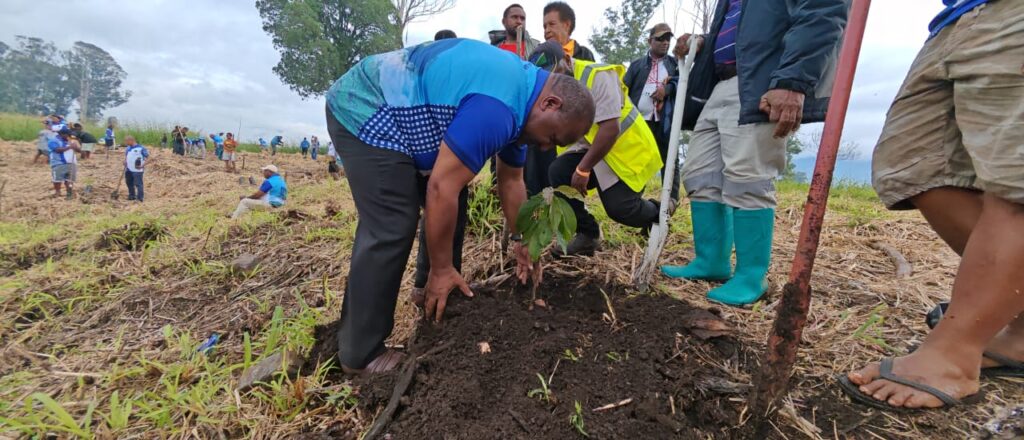
During his recent visit, Prime Minister Marape encouraged Kabiufa to explore specialised high-value crops such as avocado for both local and international markets.
“As part of our visit, we planted avocado trees — a symbol of long-term investment. These are the types of crops that can connect our farmers to global markets,” he said.
He added that schools can play a key role in becoming centres of agricultural innovation and training for surrounding communities.
Prime Minister Marape stressed that a shift in mindset is critical to unlocking the country’s agricultural potential.
“We must move away from dependency and return to production. Government cannot do everything — our people must also take responsibility,” he said.
He urged citizens to draw inspiration from past success stories and apply them in today’s context.
“We have done it before, and we can do it again. Our land is rich, our people are capable — agriculture must lead our future,” he said.
Prime Minister Marape concluded by calling on all Papua New Guineans to embrace agriculture as a pathway to personal and national development.
“Let us go back to the land. Let us produce, supply, and grow our economy from the ground up. That is how we will build a stronger, more self-reliant Papua New Guinea,” he said.