


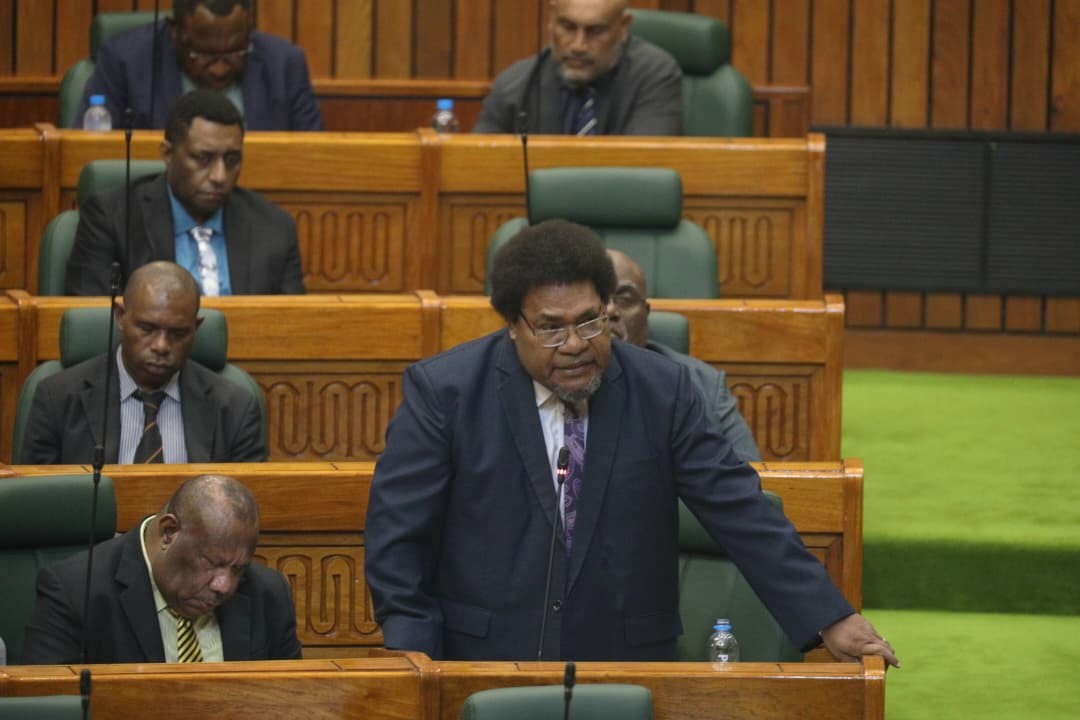
CHAIRMAN of the High-Level Cabinet Committee on the Fuel Crisis and Minister for Implementation and Rural Development, Joseph Lelang, says the government’s fuel price stabilization program has successfully kept fuel prices in Papua New Guinea among the lowest in the region despite rising global oil prices caused by tensions in the Middle East.
Responding in Parliament today to questions raised by Usino-Bundi MP Vincent Kumura, Minister Lelang said the government acted swiftly in April to intervene and stabilize fuel prices to prevent inflationary pressures from affecting the wider economy.
He said Papua New Guinea’s diesel and petrol prices remain lower compared to countries such as Australia, New Zealand, Fiji and the Philippines, with only Indonesia recording lower prices due to its subsidy arrangements.
Minister Lelang revealed that around K600 million has already been released under the subsidy program, including an initial K247 million followed by an additional K383 million recently.
He acknowledged that the K1 billion subsidy allocation was not budgeted for in this year’s national budget, but clarified that the amount represents only 3.4 per cent of total net expenditure and lending, allowing Treasury to reallocate funds within existing appropriations without returning to Parliament.
The minister said the major challenge now is ensuring the long-term sustainability of the subsidy program, with the task force team and Treasury currently assessing several policy options to extend the program towards the end of the year.
Lelang warned businesses against price gouging and urged consumers to report unfair fuel price increases to the Independent Consumer and Competition Commission (ICCC) through its hotline, 7036 8350, for investigation and possible penalties.
He also indicated that the Minister for Energy is expected to present a detailed report to Parliament addressing issues relating to domestic market obligations, refinery operations and domestic fuel processing.