


BY WASITA ROYAL
The market opens every day. Customers come and go, business continues, and life moves on. But for more than 30 women who once sold their handmade products at Kokopo Market, the spaces they relied on to earn a living now stand empty.
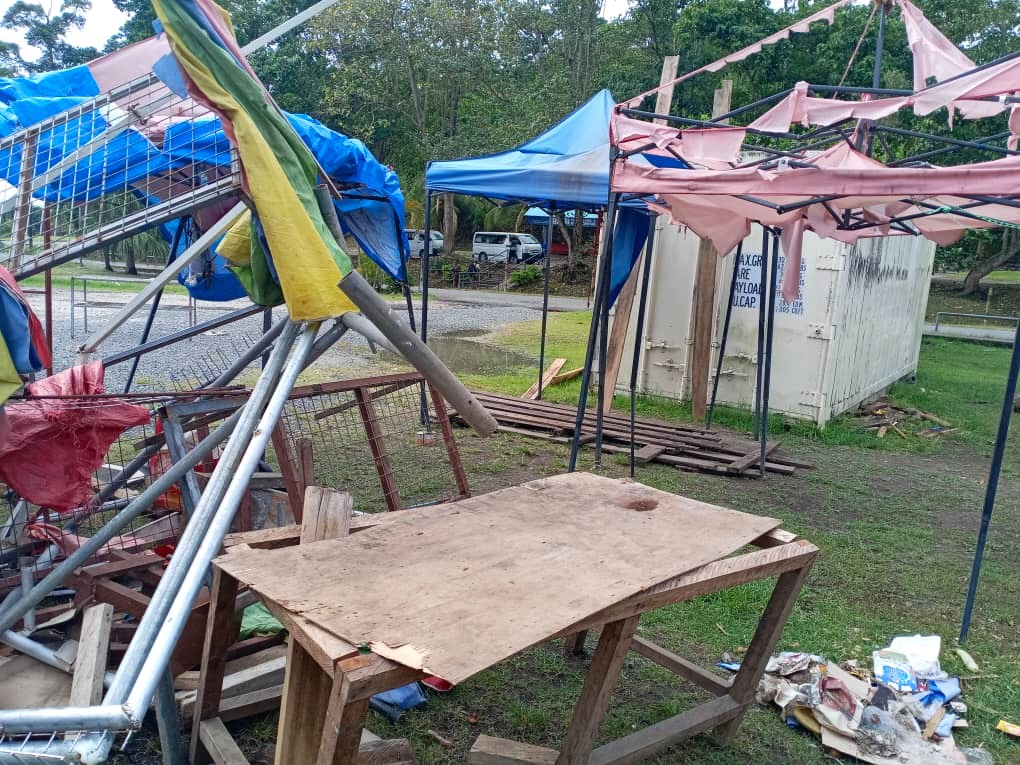
On May 19 and 20, 2026, more than 30 SME mothers were instructed to remove the tents from which they had been operating. The women say the spaces had been allocated to them by market authorities and that they had been paying K12.00 daily in market fees to conduct their business.
“We were left with no other alternative,” the mothers wrote in an appeal letter addressed to East New Britain Market Manager Peter Lapim.
For the women, the consequences are immediate and personal. Without a place to sell their products, they say there will be less food on the table, school fees will go unpaid, and basic household needs will become harder to meet.
Speaking to the media after the removal, Mr Lapim said the decision was made to maintain order and improve the appearance of the market.
According to him, SME vendors had initially been permitted to operate under the condition that their stalls remained temporary, using only umbrellas that could be removed and stored at the end of each day.
Over time, he said, some vendors began using canvas structures, making the stalls more permanent. He described the structures as an “eyesore” for visitors and said market authorities removed only those stalls built with canvas.
Mr Lapim added that vendors had previously been advised to return to using umbrellas, but the directive was not followed.
The mothers, however, tell a different story.
In their appeal, they state that they do not recall receiving any prior warnings and were never informed that umbrellas were the only acceptable structures. Instead, they say they were suddenly instructed to remove their tents without explanation.
The women also point out that they pay K12.00 daily in market fees, plus an additional K2.00 for storage. By comparison, casual vendors selling at the market pay only K2.00.
For the mothers, the issue is not about canvas versus umbrellas. It is about survival.
“We do side hustles to keep us going,” said SME owner Debora Senus, speaking on behalf of the group. “Now that we have been removed from the market, our children will have no food, no decent clothes, and outstanding school fees will not be paid on time.”
They say the decision affects not only the vendors themselves but also the families who depend on the income generated from their small businesses.
Despite their frustration, the mothers acknowledged the authority of the market management and maintained a respectful tone throughout their appeal.
“We respect the decision of the Market Authority,” they wrote, before making two requests.
First, they are asking for the decision to be reconsidered. Second, they are requesting a dedicated building or designated space where local SMEs can sell and showcase their handmade products and accessories.
They are also seeking clarity on any registration requirements or formal processes that may be needed to continue operating legally.
“We are mothers, members of families in this province, and taxpayers as well,” they wrote. “We request that our voices be heard and that a favourable decision be made.”
Copies of the appeal have been forwarded to the East New Britain Provincial Administration, Kokopo City Mayor James Wong, and East New Britain Governor Michael Marum.
For now, the tents are gone. The market, as Mr Lapim noted, remains part of broader efforts to improve the market environment. But more than 30 mothers are still waiting for a response, a conversation, and an opportunity to return to earning a living and supporting the