


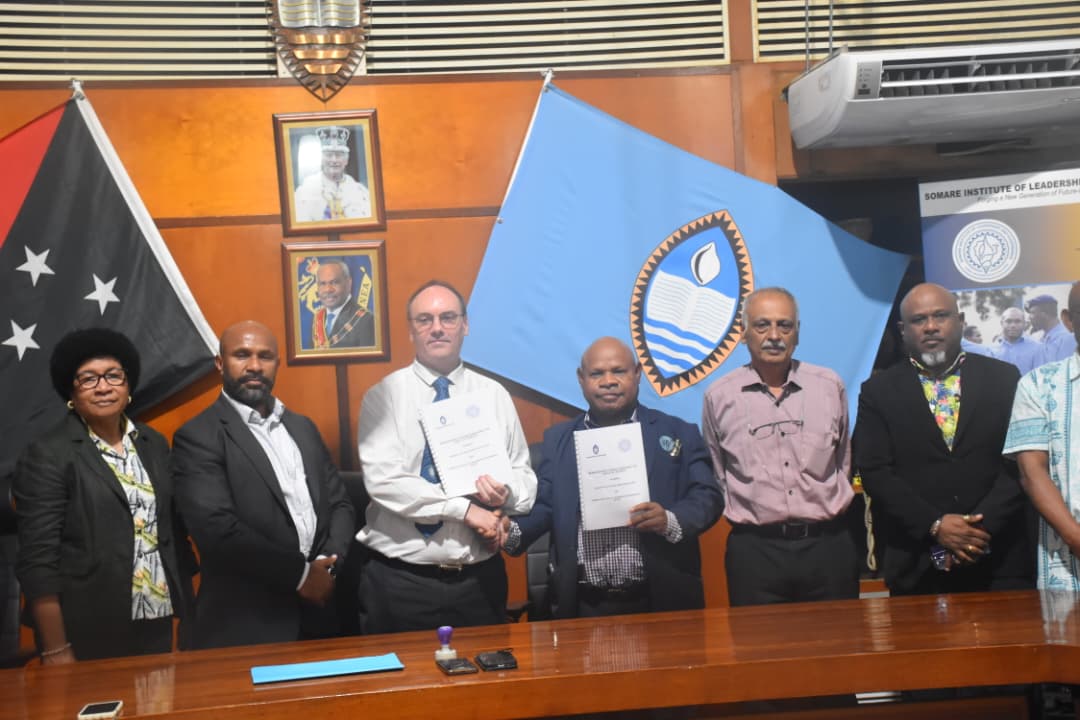
THE University of Papua New Guinea (UPNG) and the Somare Institute of Leadership and Governance (SILAG) have strengthened their partnership with the signing of a Memorandum of Understanding (MoU) to establish a framework for the future transfer of the land occupied by SILAG’s main campus.
The signing ceremony was held at the UPNG Waigani Campus and marks a significant milestone in the relationship between two of Papua New Guinea’s leading national education institutions.
The MoU provides a pathway for SILAG to secure long-term tenure of its campus as the institution continues its transition towards becoming Papua New Guinea’s Public Service University.
Speaking at the ceremony, UPNG Vice Chancellor Professor Ian Findlay said the partnership demonstrates the importance of collaboration between national institutions in
strengthening education, developing future leaders, and supporting PNG’s long-term development.
“The MoU represents an enduring partnership between two of PNG’s leading institutions. As neighbours, we work together to help education evolve in PNG, upskill our graduates to become the best they can be, and contribute to the country’s future prosperity and quality governance,” Professor Findlay said.
He said the agreement represents one of the first steps towards SILAG becoming a fully fledged university, adding that further discussions, administrative processes, and legal requirements would need to be completed.
“The MoU recognises the land that SILAG is already occupying, and we look forward to further discussions as we know this is part of a journey,” Professor Findlay said.
SILAG Chief Executive Officer Mr Michael Barobe said the MoU provides an important foundation as the institution progresses through its transition period.
“The MoU provides a clear pathway towards securing SILAG’s permanent campus. While legal and administrative processes must still be completed before the transfer is finalised, this agreement provides confidence and certainty as we continue our journey towards becoming Papua New Guinea’s Public Service University,” Mr Barobe said.
He said securing long-term ownership of the campus is critical to SILAG’s future growth and development.
“Permanent tenure of our campus will support strategic planning, infrastructure development, academic expansion, research, accreditation, and institutional sustainability. Most importantly, it will strengthen our ability to deliver leadership and professional development for Papua New Guinea’s public sector and future leaders,” Mr Barobe said.
Both Mr Barobe and Professor Findlay acknowledged the support and collaboration of the UPNG Council, Management, and staff in advancing SILAG’s journey towards university status.
Mega Congratulations 🎊 to SILAG CO Mr Barobe to make that outstanding investment through your mission and vision to achieve your organizational goal…however I am a former student of SILAG and I want to join the University of Papua New Guinea for my degree program may your administration on the page may able to assist me to apply..thank you..God bless 🙌