


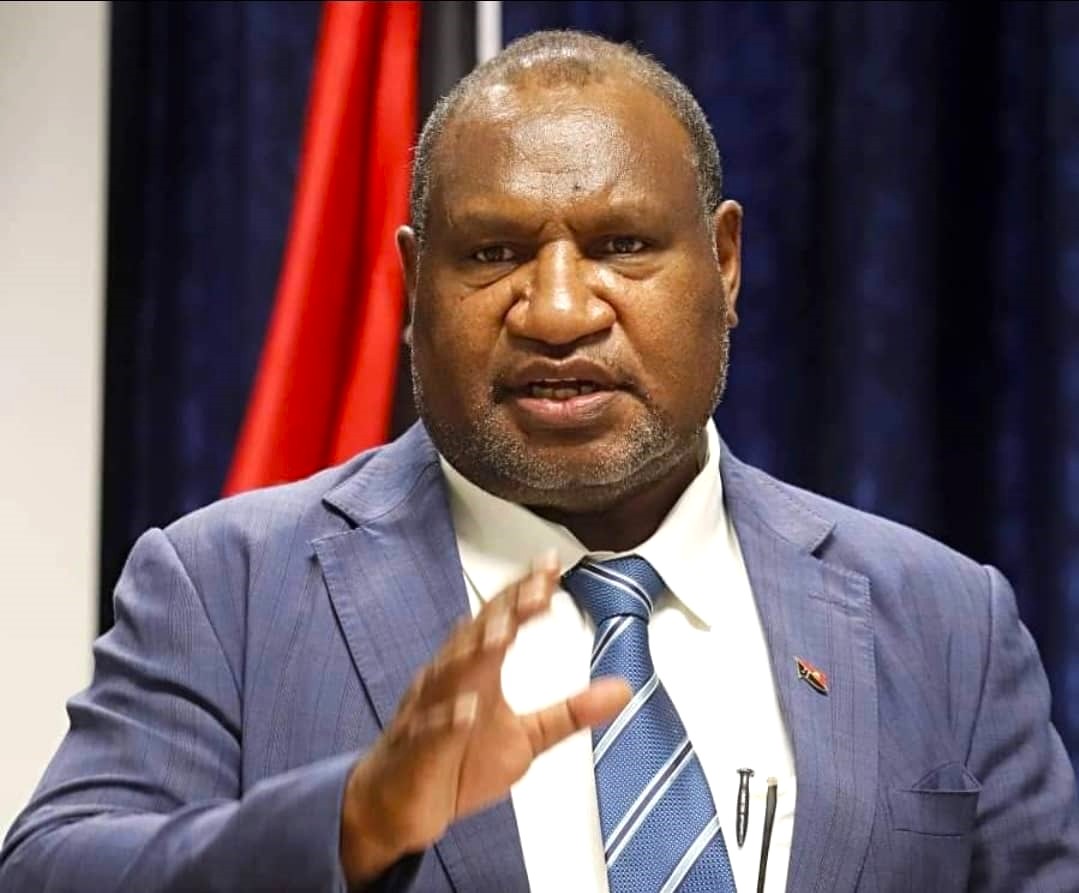
PRIME Minister James Marape says Papua New Guinea will engage the United States diplomatically over the US visa bond requirement affecting some Papua New Guineans travelling for business and tourism.
Marape said the Government respected the sovereign right of the United States to set its immigration and border-security policies, but would seek clarification on why PNG was included in the visa bond programme and what could be done to address the concerns behind the decision.
The United States introduced the requirement for certain B-1/B-2 temporary business and tourist visa applicants from PNG on April 2, 2026. The US Government has linked the programme to issues including visa overstays and immigration compliance.
Marape said the requirement should not be interpreted as the United States closing its doors to Papua New Guineans or as a deterioration in bilateral relations.
“Our response should not be anger or unnecessary criticism. Our response must be to understand why this policy has been applied to us, correct whatever issues are within our responsibility, and make a strong case for Papua New Guinea to be reconsidered in future reviews,” he said.
PNG must address visa overstays
Marape has also urged Papua New Guineans travelling overseas to strictly comply with the visa conditions and immigration laws of their host countries.
He said visa overstays by a small number of travellers could have consequences for thousands of genuine Papua New Guinean travellers, including students, professionals, business people, sportspeople and families.
“A visa is not permission to remain indefinitely,” Marape said.
“When the authorised period ends, our citizens must return home unless they have lawfully obtained another immigration status.”
He said improving compliance would be important as more Papua New Guineans travel overseas for education, business, employment, sport, tourism and professional opportunities.
Government to seek dialogue with Washington
Marape said he would direct the Department of Foreign Affairs, through PNG’s diplomatic representation in the United States and the US Embassy in Port Moresby, to pursue further discussions with Washington.
The Government will seek to better understand the data and compliance issues involving PNG, strengthen public
awareness about visa requirements and improve the country’s compliance record.
Marape also acknowledged the financial impact of the bond requirement on ordinary Papua New Guineans.
“For many ordinary Papua New Guineans, a bond running into tens of thousands of Kina is a considerable amount of money,” he said.
He said the Government would convey the practical impact of the refundable bond on genuine travellers, particularly small-business operators, professionals and families who may not have immediate access to substantial funds.
PNG considers reciprocal visa policy
Marape also revealed that the Government is considering a broader reciprocal visa policy covering PNG’s arrangements with countries around the world.
He said the policy was not specifically targeted at the United States, but was intended to ensure greater fairness and reciprocity in PNG’s international visa arrangements.
“If countries give Papua New Guineans visa on arrival, we will likewise consider giving their citizens visa on arrival,” he said.
“If they charge our citizens for visas, we will likewise apply appropriate visa charges. If they require Papua New Guineans to apply for a visa before travelling, then we will likewise apply similar requirements.”
Marape said the proposed framework would take into account PNG’s diplomatic, economic, tourism, security and development interests.
Students should not be alarmed
The Prime Minister also urged Papua New Guinean students and their families not to assume that the US visa bond applies to every traveller.
He said the published US visa-bond requirement concerns certain applicants for B-1/B-2 business and tourist visas, while student and exchange visitor visas fall under separate classifications.
“Our young people studying overseas must continue to pursue their education with confidence,” Marape said.
PNG-US relations remain strong
Marape said the visa issue should not overshadow the broader relationship between PNG and the United States.
PNG and the US established diplomatic relations at PNG’s Independence in 1975, and the two countries continue to cooperate in areas including security, defence, education, trade and investment, energy, infrastructure and climate resilience.
“America remains an important partner of Papua New Guinea and of our Pacific region. One visa policy should not define the entirety of our relationship,” Marape said.
He said PNG would continue to engage Washington constructively while reviewing its own visa arrangements to ensure they reflected mutual respect and the country’s national interest.
Marape concluded by urging Papua New Guineans travelling abroad to protect the reputation of the country by complying with the laws and visa conditions of their host countries.
“Every Papua New Guinean who travels abroad is, in some way, an ambassador for our country,” he said.
“When we respect another country’s laws, respect our visa conditions and return home on time, we strengthen the credibility of the PNG passport and make international travel easier for the Papua New Guineans who come after us.”