


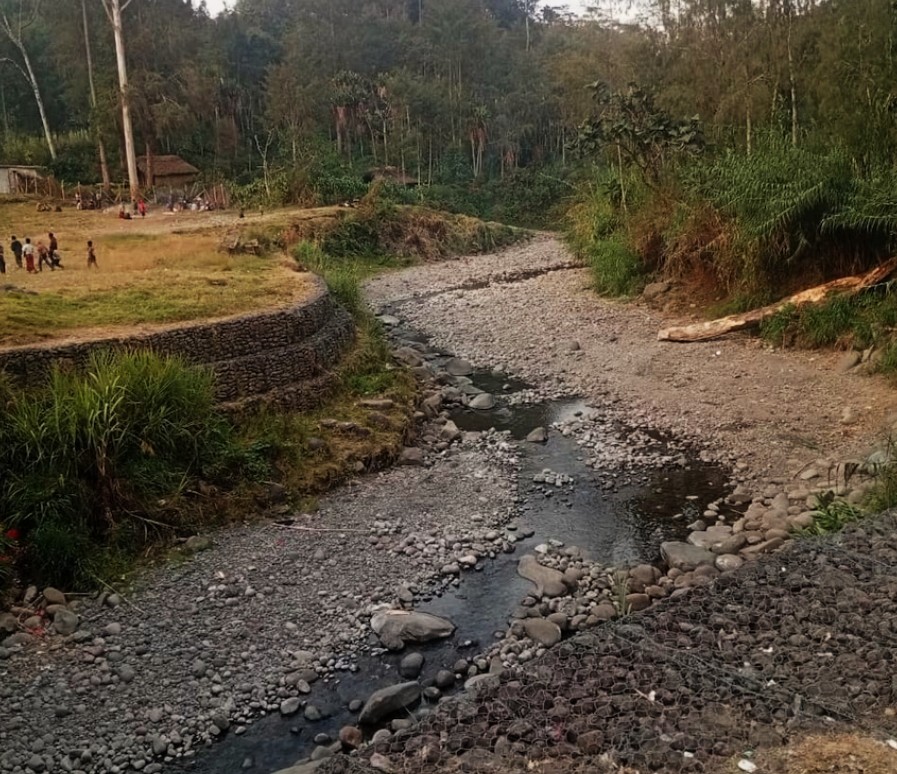
The Government has declared the worsening El Niño-induced drought a national humanitarian emergency, with millions of people across Papua New Guinea facing serious shortages of water and food and increasing health risks.
Minister for Health and National Disaster Services, Hon. Dr Billy M. Joseph, MP, said consolidated assessments from Provincial Disaster Committees and Provincial Emergency Operations Centres show prolonged dry conditions are now affecting communities across all four regions of the country.

“This is no longer just a prolonged dry season. Families are running out of safe drinking water, gardens have failed, children are missing school, and our health workers are under increasing pressure,” Minister Joseph said.
“Getting water, food and health support to the hardest-hit communities is the Government’s immediate priority.”
According to the National Disaster Centre’s Combined Drought Impact Severity Index, 15 provinces are classified as Extreme and five as Severe.
The provinces classified as Extreme are the National Capital District, Central, Gulf, Western, Hela, Simbu, Eastern Highlands, Enga, Jiwaka, Southern Highlands, East Sepik, Western Highlands, Morobe, Oro and Manus.
West New Britain, West Sepik, Milne Bay, New Ireland and East New Britain are classified as Severe, while assessments for Madang Province and the Autonomous Region of Bougainville are continuing.
Provincial reports indicate that more than 5.5 million people may be affected, exposed or at high risk, although the figure remains subject to verification because provinces have used different reporting methods.
The drought is severely affecting water supplies, food security, health, education and livelihoods.
In Southern Highlands Province, about 300,000 people reportedly lack reliable safe drinking water, while around 400,000 people face moderate to severe food insecurity, with sweet potato yields falling by between 60 and 75 per cent.
Frost has also reportedly destroyed more than 80 per cent of crops in parts of Simbu.
Health authorities are monitoring increased risks of diarrhoea, dysentery, typhoid, malaria, skin infections and malnutrition, while water shortages are also disrupting schools and other essential services.
Minister Joseph said the Government’s immediate response would focus on five priority areas, water security, sanitation and hygiene,food security and emergency food assistance; health and nutrition; agriculture and livelihood recovery; and logistics and access to remote communities.
He confirmed that K2.5 million has now been released to each district to support drought response efforts.
“I call on all District and Provincial Administrations to ensure these funds are used promptly, transparently and accountably to deliver water, food and health support to those who need it most,” Minister Joseph said.
The national response will continue through the established disaster management framework under the Disaster Management Act 1984, involving the National Disaster Committee, National Disaster Centre, National Emergency Operations Centre, provincial and district governments, development partners, churches, NGOs and other stakeholders.
The Government will also prioritise keeping schools, universities, colleges and health facilities operational during the drought, including emergency water supply, water carting, tanks and improvements to water and sanitation systems.
Over the next 30 days, the Government will prioritise life-saving water and sanitation assistance, emergency food supplies, disease and nutrition surveillance and completion of further drought impact assessments.
Over the following one to three months, efforts will focus on provincial response packages, pre-positioning supplies, repairing and constructing water infrastructure including tanks and boreholes, supporting schools and health facilities, and distributing drought- and frost-tolerant seeds.
Minister Joseph urged communities to conserve water, ensure drinking water is properly treated or boiled, maintain good hygiene and seek early medical treatment for diarrhoea, fever and signs of malnutrition.
“We have a disaster management system that works when every level plays its part. Districts and provinces respond on the ground, the NDC and NEOC coordinate nationally, and the National Disaster Committee sets the priorities,” he said.
“If we work together, we will get our people through this drought and come out better prepared for the next one.”