


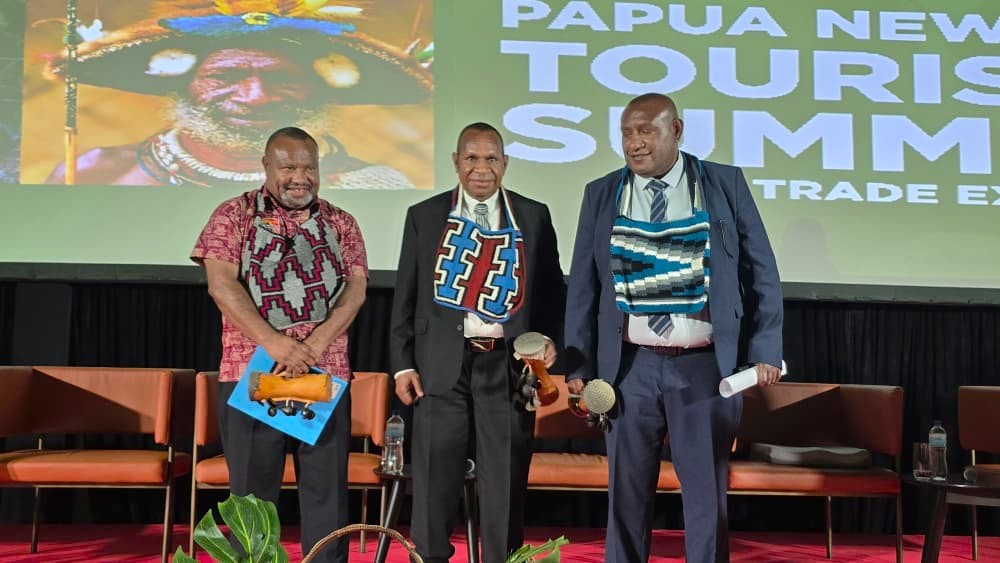
MINERAL Resources Development Company (MRDC) Managing Director Augustine Mano has called on the National Government to introduce targeted investment and taxation incentives to unlock Papua New Guinea’s enormous tourism potential, warning that the country’s natural and cultural wealth remains largely untapped despite decades of dependence on the extractive industries.
Speaking at the Papua New Guinea Tourism Summit 2026 in Port Moresby today, Mr Mano said PNG must move beyond its traditional reliance on gold, copper, oil and gas and begin investing seriously in tourism as a sustainable driver of economic growth.
He challenged the Government to ensure that investment incentives were not restricted to major hotels and established tourism operators but extended to traditional landowners, community enterprises and small and medium businesses.
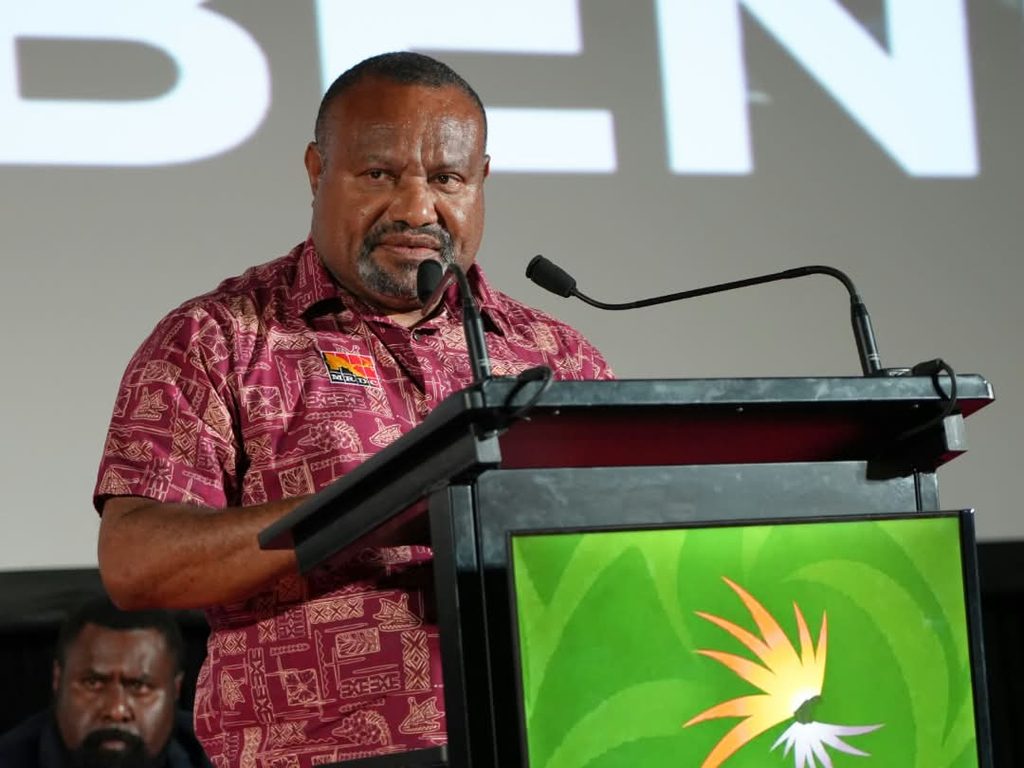
“These incentives should extend to traditional landowners, community enterprises and small and medium businesses seeking to develop tourism products and experiences,” Mr Mano said.
He stressed that Papua New Guinea possessed extraordinary tourism assets, including its diverse cultures, untouched forests, wildlife, spectacular landscapes and rich biodiversity, but had failed to fully transform these resources into sustainable economic opportunities.
Mr Mano said PNG had long built its economy around the extraction and export of mineral and petroleum resources, while overlooking the enormous economic value of its people, cultures and natural environment.
“Unlike the minerals we extract from the earth, our forests, our wildlife, our cultures and our natural landscapes can continue generating economic opportunities for generations, provided we have the wisdom to protect them,” he said.
He said tourism had the potential to create employment, stimulate rural economies, empower local communities and generate long-term revenue for the country.
However, achieving this potential would require stronger government commitment, appropriate investment policies and major improvements to essential infrastructure.
While calling for greater government support, Mr Mano revealed that MRDC, with the backing of its resource-owning shareholders, was already making significant investments in tourism infrastructure across the country.
He outlined several major developments demonstrating the company’s commitment to building a sustainable tourism industry.
These include the Kikori Heritage Hotel in Gulf Province, which opened in September 2026, while the Kutubu Heritage Hotel is scheduled to open in November 2026 and the Kerema Heritage Hotel in December 2026.
The Tari Heritage Hotel is scheduled to open in April 2027, followed by the Cultural and Performing Arts Centre at Star Mountain Plaza in June 2027.
Mr Mano said these investments demonstrated MRDC’s confidence in PNG’s long-term tourism prospects despite the commercial risks associated with developing facilities ahead of established market demand.
“We are investing ahead of established tourism demand, and that carries commercial risk. But we believe the long-term economic value justifies taking that risk,” he said.
The developments are expected to strengthen accommodation and tourism infrastructure in several provinces, potentially opening new opportunities for local businesses, cultural groups, transport operators and surrounding communities.
Mr Mano also highlighted MRDC’s investment in PNG Air as an important component of its wider tourism development strategy.
He revealed that the airline was recording 86 per cent on-time performance and a cancellation rate of just 3 per cent, demonstrating improvements in operational reliability.
He stressed that building hotels alone would not create a successful tourism industry, pointing out that reliable air services, improved roads, electricity, water supply, telecommunications, security and efficient visitor entry arrangements were equally important.
Mr Mano said the Government and private sector needed to work together to address these challenges and create an environment capable of attracting more domestic and international visitors.
He also emphasised the importance of coordinated regional tourism planning, pointing to the tourism masterplan currently being developed in East New Britain Province.
He said such planning was essential to ensure that tourism development delivered broader economic benefits rather than isolated infrastructure projects.
Mr Mano further challenged policymakers and industry stakeholders to measure tourism success not simply by the number of hotels constructed or visitors arriving in the country, but by the economic opportunities created for ordinary Papua New Guineans.
He said the true measure of success should be the number of citizens employed, local businesses supported, foreign exchange earnings generated and tourism activities reaching rural communities and provinces.
He also emphasised the importance of protecting PNG’s natural environment and cultural heritage as tourism development expanded.
His message reinforced the need for tourism investments to directly benefit traditional landowners and resource-owning communities, ensuring they become active participants in the industry rather than spectators.
As the statutory trustee responsible for managing landowner and provincial government equity interests from PNG’s mining, petroleum and gas sectors, MRDC has increasingly diversified its investment portfolio to generate sustainable returns for its beneficiaries.
Mr Mano said the company’s tourism investments reflected its commitment to creating long-term economic opportunities beyond the life of the country’s extractive industries.
He urged the National Government, provincial governments, investors and tourism operators to work collectively to transform Papua New Guinea into a competitive tourism destination.
“At MRDC, we have taken the first step. And now, I invite you to join us,” Mr Mano declared.
His message at the summit was clear,Papua New Guinea must move beyond simply recognising its tourism potential and begin creating the policies, infrastructure and investment environment necessary to transform its extraordinary natural and cultural wealth into lasting economic prosperity.