


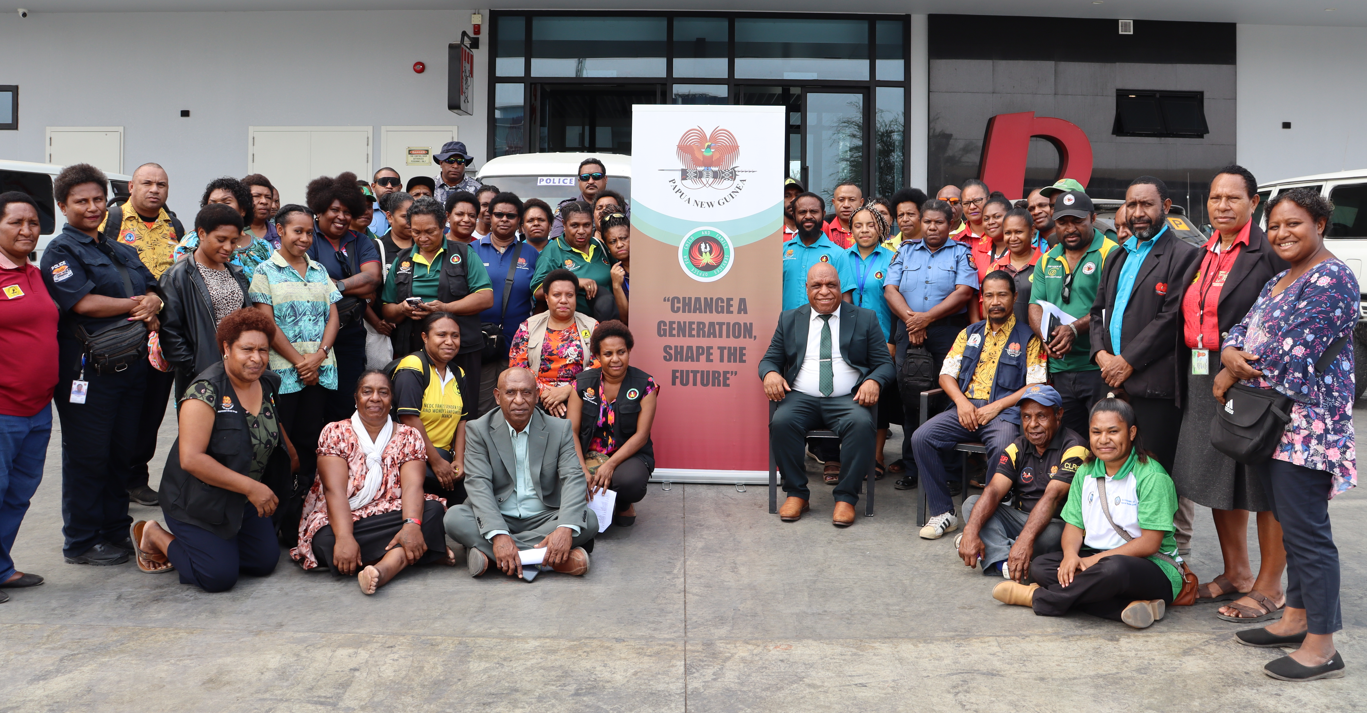
THE National Office for Child and Family Services (NOCFS) and its partners have commenced the rolling out of phase 4 of the “Street Children Response Program” (SCRP) in the National Capital District (NCD).
Phase 4 of the SCRP is the awareness and advocacy and “Parental Engagement” component.
This follows on from the previous three phases which were identification, processing and reintegration of street children, which was conducted in NCD and other regional centres around the country like Mt Hagen (Highlands), Lae (Momase) and Kokopo (Islands).
When opening and sanctioning the phase 4 of the program, NOCFS chief executive officer Mr Jerry Wap, said it was time parents were held accountable and responsible for letting their children off onto the streets.
“In the parental engagement component of the program, we will find the parents of these street children and have them sign an agreement with the NOCFS,” Mr Wap said.
“In that agreement, they will make a commitment not to let their children wander aimlessly on the streets of Port Moresby,” he said.
“Any parents who allow their children on the streets after signing this agreement can be penalised. This means, they can also be imprisoned for neglecting their children,” Mr Wap said.
He explained that the aim of the exercise is not to scare, threaten or intimidate parents but to educate them about child rights and remind them of their responsibilities as primary care-givers to children.
According to Mr Wap, the SCRP is a very important National Government program which commenced two years ago and is aimed at removing children from the streets and reintegrating them back into the communities including putting them back to school, placing them in Outof-Home Care Centres and referring them to health facilities for treatment.
In phases 1-3, about 235 children were identified on the streets of the major regional cities in the country, processed and sent back into the communities and assisted through the referral pathway system.
“The street children issue has been here for a very long time. When we did the first national research, we have identified that there are three categories of street children in our country: the first one is children who are coming from villages and settlements to make a living on the streets. The second group are children actually living on the streets to make a living. The third category is families living off the streets—this includes fathers, mothers and their children,” Mr Wap said.
“The NOCFS is providing the leadership in bringing all the important partners together so that we wholistically address this issue. In the next 50-years we don’t want to see this issue in our country,” he said.
“Every child in this country has the right to be educated, to live in a house, have the right to go to school and have the right to parents—that’s the information that we want to relay to the public,” Mr Wap said.
Mr Wap explained that the phase 4 of SCRP will be replicated in the other major centres of the country following the initial rollout in NCD.
The program commenced on Tuesday and will end on Saturday covering major residential areas in Moresby North-West, Moresby North-East and Moresby South electorates.
The program would see NOCFS officers and its partners carry out awareness and advocacy on child rights and the street children issue in selected hotspots in the city and later identify parents of street children, counsel them, and have them sign an agreement with the office.
Stakeholders taking part in this exercise include: National Capital District Commission, National Department of Education, Port Moresby General Hospital Welfare Division, the Royal Papua New Guinea Constabulary and Out-of-Home Care Centres.