


By JAYLINE AKENA SOALILI- UPNG Journalism Student
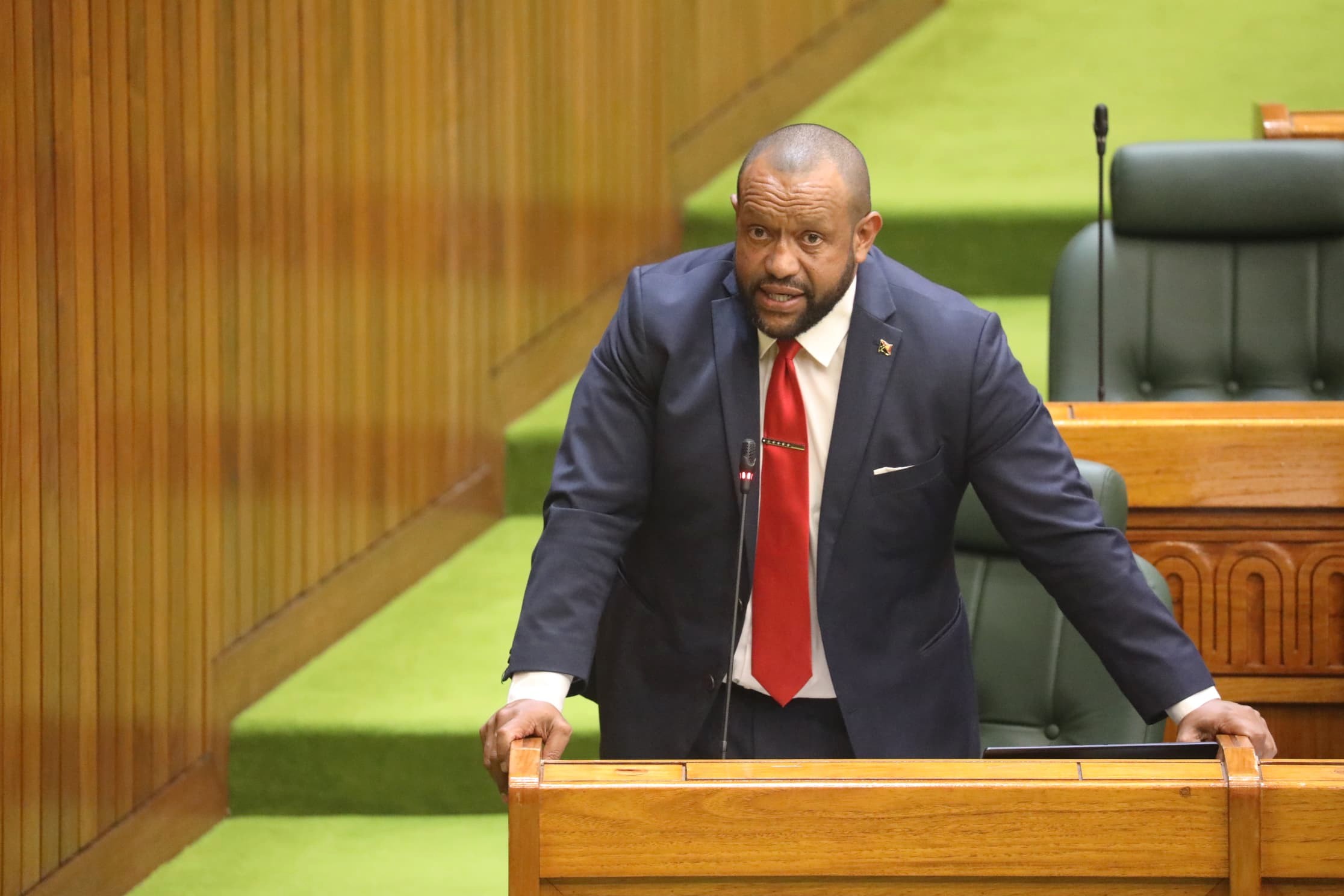
OPPOSITION Leader Hon. James Nomane has warned that Papua New Guinea risks moving from the Financial Action Task Force (FATF) greylist to the blacklist if the Government merges the warranting functions of the Treasury and Finance departments.
Mr Nomane raised the concern in Parliament last week, referring to an October 6, 2026, International Monetary Fund (IMF) press release announcing a staff-level agreement and a May 2026 report by Josh Gardner of the IMF.
He said the IMF report emphasised the importance of preserving institutional authority to strengthen expenditure controls and fiscal accountability.
“Treasury must retain warranting. Finance must manage payments, banking, accounting and reporting. Combining authorisation and disbursement undermines segregation of duties, internal controls and accountability,” Mr Nomane said, quoting page 10 of Gardner’s report.
Mr Nomane warned MPs against assuming the country was safe from further financial scrutiny, pointing to PNG’s FATF grey-list status, rising public debt and reliance on IMF support.
“We are on the razor’s edge. We are FATF greylisted, and nobody’s talking about the FATF greylisting. We are K70 billion in debt, nobody’s talking about that. And we are IMF dependent,” he said.
He challenged Prime Minister Hon. James Marape to assure Parliamentthat Treasury would retain responsibility for issuing warrants while Finance continued to manage payments. He also sought an explanation of how the Government intended to meet IMF conditions and prevent the country from being blacklisted.
In response, Mr Marape defended the Government’s economic management, saying official statistics showed that when his Government took office in 2019, the Final Budget Outcome for 2018 recorded negative economic growth of 0.3 per cent.
The Prime Minister also referred to the foreign exchange arrangements in 2014 and 2015, arguing that the kina had been artificially pegged, contributing to the depletion of foreign exchange reserves.
Mr Marape said the Government’s proposed approach was intended to allow Treasury to focus on economic growth and revenue generation, while Finance would concentrate on expenditure, cash flow management and holding the Cash Flow Certificate (CFC).
“So, we can hold one department accountable,” he said.
The Prime Minister confirmed that legislative changes were being proposed and acknowledged that the IMF had raised concerns about the Government’s policy direction.