


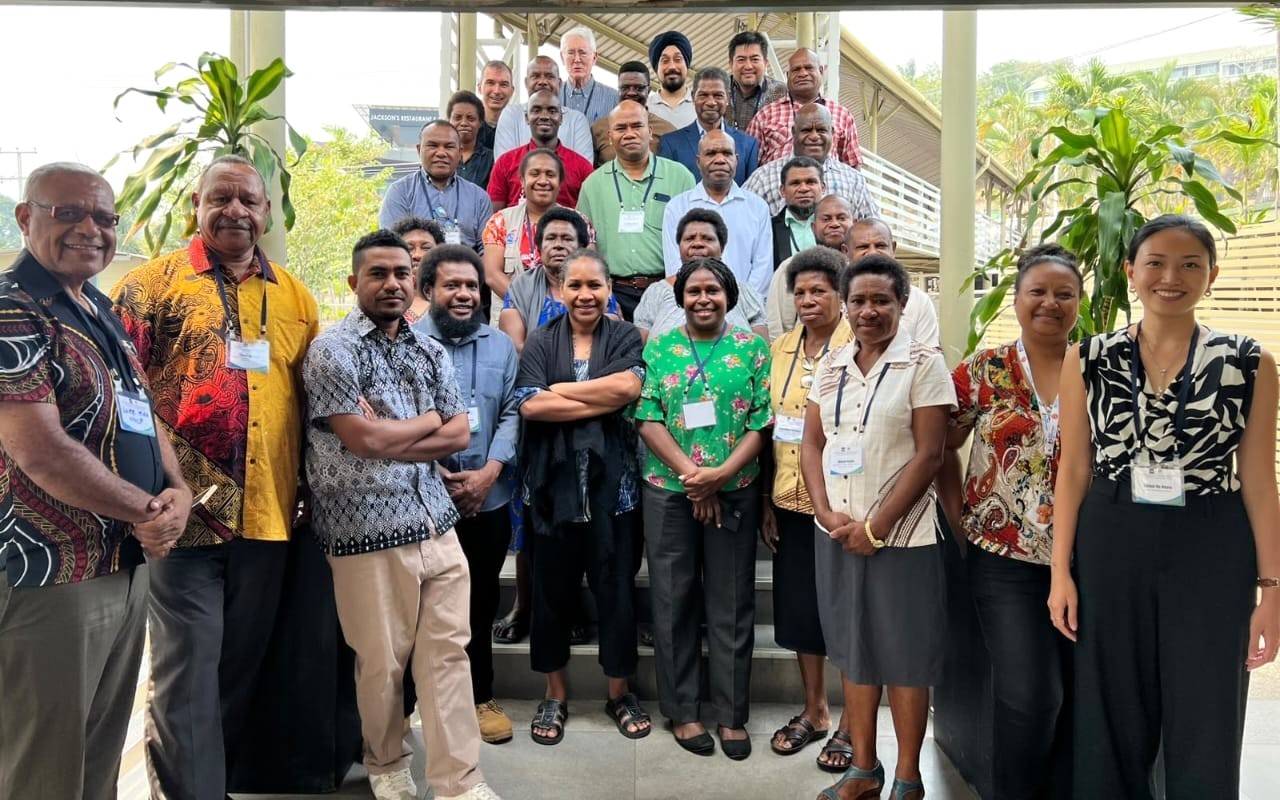
PAPUA New Guinea has taken an important step towards strengthening cross-border cooperation with Indonesia in the fight against malaria, following a two-day workshop, organized with the Asian Development Bank (ADB), that identified priority activities and mapped the way forward for establishing a joint coordination mechanism between the two countries.
The One-Island Malaria Workshop, held at the Gateway Hotel in Port Moresby on 13–14 October, was held under the patronage of Deputy Secretary for Health Mr Ken Wai and jointly organized by the PNG National Department of Health, through its National Malaria Control Program, and ADB.
The meeting brought together representatives from national and provincial health authorities, research institutions, development agencies, PNG Sustainable Development Program and other partners to advance the PNG – Indonesia Joint Malaria Action Plan (JAP). The Joint Action Plan, endorsed by the two countries in June 2025, recognizes that malaria remains a shared public health challenge across the island of New Guinea and that stronger cooperation is needed to reduce transmission and improve access to prevention and treatment.
A key outcome of the workshop was agreement on a proposed way forward to establish a Joint Steering Committee to coordinate implementation of the Action Plan between PNG and Indonesia. The proposed committee would provide high-level oversight, supported by technical advisory arrangements and national secretariats, to coordinate joint activities, facilitate information sharing and mobilize resources. The workshop also identified the importance of regular joint reviews to monitor progress. Participants prioritized activities under the Action Plan’s three strategic areas: information sharing and capacity building; new tools and innovative approaches to malaria control; and financing and resource mobilization.
Malaria remains a significant public health challenge facing both PNG and Indonesian Papua. According to the World Health Organization, PNG experienced an estimated 1.6 million malaria cases and more than 3,300 malaria-related
deaths in 2024. Despite significant progress in the early 2010s, malaria transmission has increased again over the past decade. On the Indonesian side, approximately 95% of the country’s reported malaria cases are now concentrated in the Papua region.
The workshop highlighted that communities on both sides of the international border face similar challenges, including geographical isolation, limited access to health services, shortages of trained health workers, and difficulties ensuring reliable supplies of malaria medicines and diagnostic tests. Provincial representatives from Western, West Sepik and East Sepik shared their experiences in delivering malaria services to remote communities, emphasizing the need for stronger provincial capacity and sustained operational support. Because the two countries share one island and a land border, malaria control on one side depends on progress on the other.
Through technical presentations and working-group discussions, participants identified opportunities for practical cooperation between the two countries. Priority areas included strengthening malaria surveillance and sharing information across borders, improving laboratory and diagnostic capacity, supporting training and exchanges
between health workers, and strengthening community-based malaria services. The workshop also considered opportunities to introduce and evaluate new tools and approaches, including improved insecticide-treated mosquito nets and spatial emanators that protect people from mosquito bites, and optimizing the use of artificial intelligence and drones, and community-led interventions, in larval source management. Improving access to effective malaria treatment, including treatment for Plasmodium vivax, a parasite that can cause repeated malaria episodes, was another important topic.
Participants also discussed opportunities to strengthen health financing, identify resource gaps and mobilize domestic and international support for priority interventions. Researchers from the PNG Institute of Medical Research, James Cook University and other research partners presented evidence on emerging interventions and the importance of using surveillance and research findings to guide the malaria control program.
The workshop was designed to translate the existing high-level JAP framework into practical activities that can be implemented and monitored. Working groups developed recommendations on governance, information sharing,
workforce development, new interventions and financing, with a focus on activities that could be advanced over the next four years. The proposed Joint Steering Committee would provide a mechanism for maintaining cooperation, reviewing implementation and ensuring that agreed activities translate into measurable improvements in malaria control.
A similar workshop was held in Bali, Indonesia, on 6-7 October 2026 with stakeholders from Indonesia. The recommendations from both meetings will inform discussions between the two countries on the finalization of the JAP, which the two governments plan to launch formally in Q1, 2027. ADB, which supports regional cooperation on communicable disease control and health security in Asia and the Pacific, will continue to work with both governments as the recommendations are taken forward.
The initiative reflects growing recognition that effective malaria control on the island of New Guinea requires coordinated action across national borders. By strengthening partnerships between governments, provincial health authorities, researchers and development partners, the One-Island approach aims to accelerate progress towards reducing malaria infections and deaths in communities across both PNG and Indonesian Papua.