


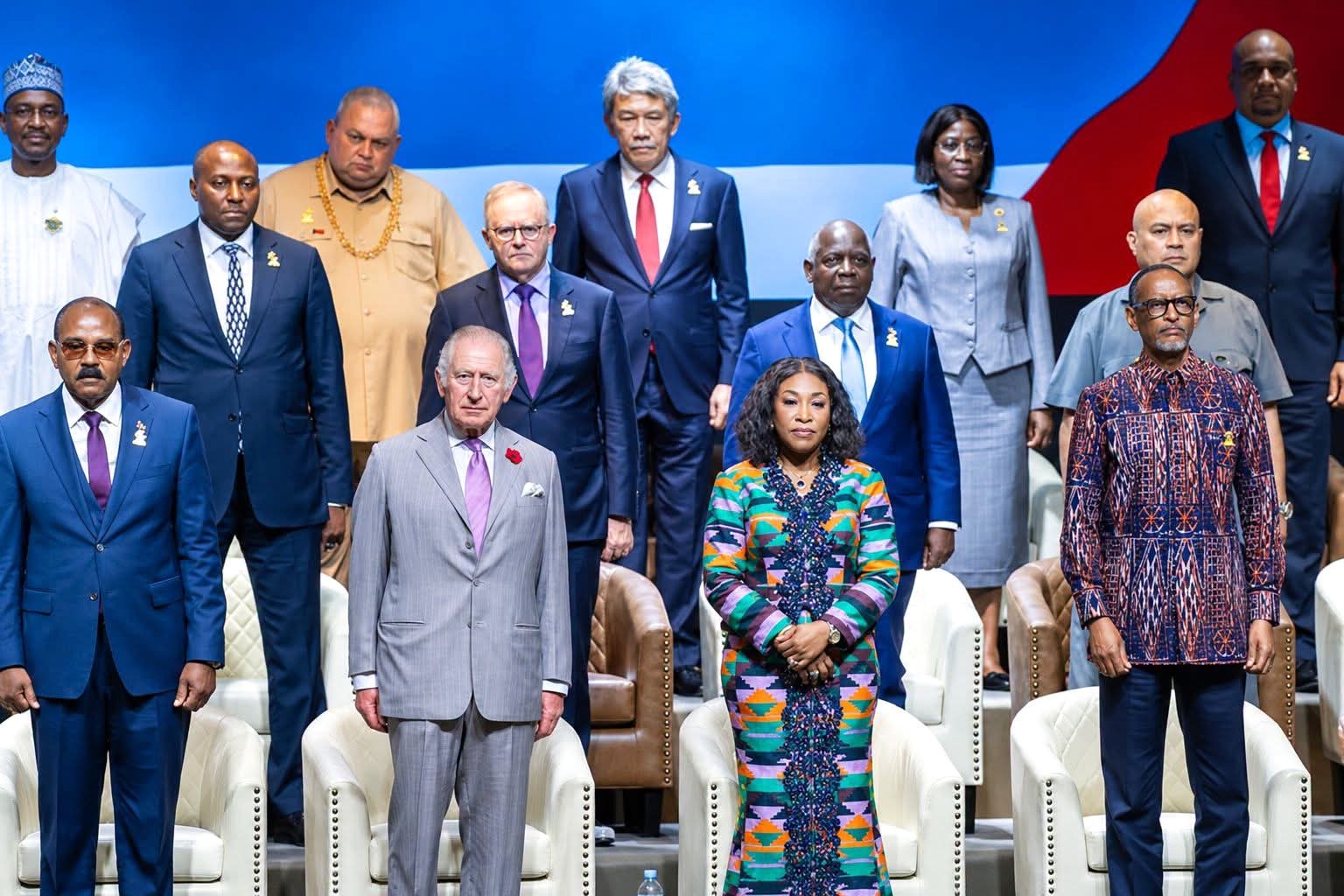
PAPUA New Guinea has called on Commonwealth member countries to strengthen partnerships and utilise their collective networks to attract investment, access development financing and sustain economic growth amid growing global challenges.
Foreign Affairs Minister Justin Tkatchenko made the call during the 28th Commonwealth Heads of Government Meeting (CHOGM) Leaders’ Retreat in Antigua and Barbuda, where he represented Prime Minister James Marape as head of the PNG delegation.
Speaking in line with the meeting’s theme, “Accelerating Partnerships and Investment for a Prosperous Commonwealth”, Mr Tkatchenko said the ripple effects of the current global situation highlighted the need for Commonwealth nations to work together and explore investment opportunities through stronger international partnerships.
He said member countries must champion the Commonwealth’s pillars by building economic, democratic and environmental resilience through strategic collaborations with regional groupings, the private sector and key multilateral institutions.
“As the globe continues to grapple with multiple crises, there is a greater need to diversify our relations with key multilateral institutions and regional groupings that are influential in mobilising finance, resources and expertise, and driving innovation to support the Commonwealth agenda,” he said.
Mr Tkatchenko said the Commonwealth could leverage its shared democratic values and collective influence through stronger engagement with institutions such as the International Monetary Fund (IMF), World Bank, World Trade Organisation (WTO) and United Nations, as well as the G7 and G20.
He said such engagement was important in advocating reforms to the international financial architecture to better reflect national economic circumstances and address issues relating to debt, trade and development financing.
He also stressed the importance of ensuring that Commonwealth priorities were represented in major multilateral forums and international groupings, including BRICS.
On democratic resilience, Mr Tkatchenko said ongoing global challenges had tested democratic systems and institutions, with democracy experiencing a substantial decline in several parts of the world.
He said upholding democracy, the rule of law, human rights and good governance, in accordance with the Commonwealth Charter, was essential to strengthening institutions and maintaining public trust and confidence.
“Papua New Guinea remains committed to upholding the rule of law,” he said.
Mr Tkatchenko expressed PNG’s support for the proposed Commonwealth Early Warning System, which would monitor key indicators of governance, democratic integrity and institutional fragility through existing mechanisms.
He also welcomed the adoption of the Nadi Declaration on Democratic Resilience and Participation, describing it as an important step towards strengthening democratic systems and institutions, and called for its implementation to be supported.
On climate change, he said PNG recognised the importance of stronger coordination and dialogue among
Commonwealth member states throughout the United Nations climate change process to strengthen their collective voice in achieving the goals of the Paris Agreement.
He said mobilising finance for sustainable development, infrastructure and economic growth required cooperation between governments, the private sector and development partners.
PNG was also calling for a coordinated approach ahead of international climate meetings to promote Commonwealth initiatives capable of attracting finance and investment to support national climate efforts.
Mr Tkatchenko highlighted the need to strengthen the capacity of national institutions to access international climate funds and financial institutions, as well as improve governance mechanisms for managing climate financing.
“Papua New Guinea supports the Secretary-General’s proposed Net Zero Fund and the proposed Aspiration Fund, as well as efforts to support mobilisation of private capital for large-scale transformative and bankable projects,” he said.
He further called for financial commitments towards the Pacific Resilience Facility, describing it as a Pacific-led, owned and regionally managed initiative that would strengthen communities’ resilience, preparedness and capacity to adapt to climate impacts.
The 28th CHOGM concluded on November 4, 2026, with Heads of Government and Heads of Delegation adopting a communiqué outlining the meeting’s decisions, outcomes and commitments.
A major outcome was the announcement of more than US$500 million in new partnerships and investment commitments to support renewable energy, youth skills development, trade and economic growth across the Commonwealth.