


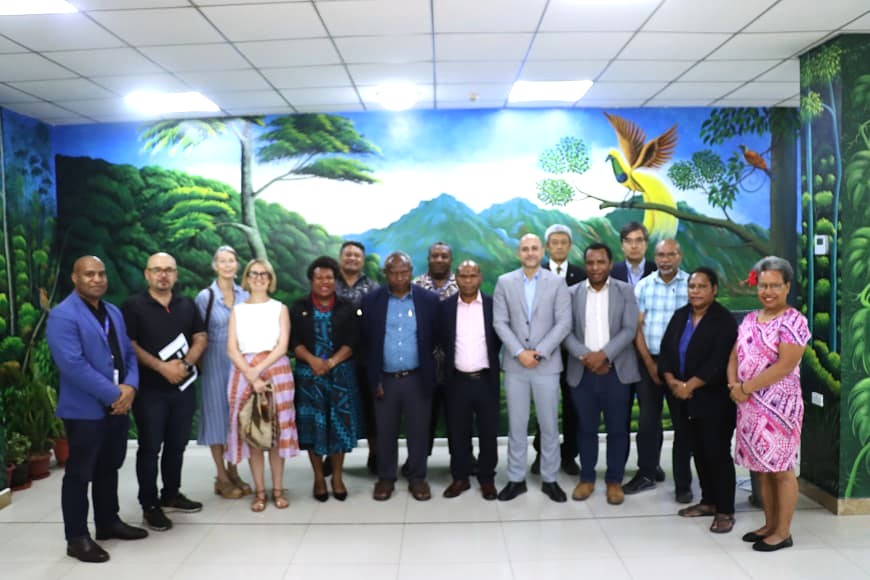
MINISTER for Environment, Conservation and Climate Change John Kaupa on Friday, 6th November convened the second coordination meeting with development partners and government agencies to advance practical climate adaptation and preparedness measures in response to the growing impacts of El Niño across Papua New Guinea.
The meeting forms part of the Minister’s leadership in coordinating climate action across the country, particularly in strengthening community resilience, food security, water security, health and sanitation.
With many communities experiencing prolonged dry conditions, water shortages and declining agricultural production, t e Minister’s Office as received increasing requests for urgentnGovernment intervention from affected communities.
Recognising these challenges, Minister Kaupa has directed the Climate Change and Development Authority (CCDA) and the Conservation and Environment Protection Authority (CEPA) to work closely with development partners to identify existing programs, resources and practical interventions that can be mobilised to support vulnerable communities.
The meeting brought together development partners including the Food and Agriculture Organization of the United Nations (FAO), the United Nations Development Programme (UNDP), the Asian Development Bank (ADB), the Australian Government through Department of Foreign Affairs and Trade (DFAT), the New Zealand Government, Expertise France, the Global Green Growth Institute (GGGI), the European Union-supported climate programs, the International Organization for Migration (IOM), and other implementing partners.
These partners are already supporting climate change, agriculture, environmental protection and resilience programs in Papua New Guinea, including the Green Climate Fund REDD+ Results Based Payment Programme, Global Environment Facility (GEF) projects and other climate adaptation initiatives.
Minister Kaupa emphasised that the purpose of the coordination mechanism is to complement, notnto duplicate, the National Government’s existing El Niño emergency response arrangements.
“The National Disaster Centre and its coordinating agencies are responsible for disaster responsenand relief assistance. Our responsibility, through the Ministry and its agencies, is to strengthen climate adaptation, preparedness and preventative measures that will help our people withstand the impacts of El Niño and future climate-related events,” Minister Kaupa said.
The Minister highlighted the importance of practical interventions, particularly in communities experiencing water shortages and food insecurity.
Interventions under consideration include water bore drilling, water storage and supply systems, appropriate desalination technologies for coastal and island communities, climate-resilient agriculture, drought-tolerant crops and improved food production technologies.
The Ministry will also work with technical institutions such as the National Agricultural Research Institute (NARI), the Department of Agriculture and Livestock (DAL) and other agricultural partners to strengthen food security and promote practical technologies that can be applied at community level.
CCDA Managing Director, Ms. Debra Sungi, said the second meeting focused on developing a coordinated action plan that brings together the existing work of development partners and identifies opportunities for immediate and medium-term adaptation interventions.
“Our development partners are already implementing important programs across t e country. The Minister’s direction is for us to bring t ese efforts toget er, identify w ere support is most needed and determine what practical interventions can be delivered through existing programs and available resources,” Ms. Sungi said.
She said CCDA will consolidate the requests received from affected communities and work with partners to identify appropriate interventions, responsible implementing agencies and opportunities to accelerate delivery.
The meeting also stressed the need for coordinated public awareness on El Niño preparedness, including water conservation, health and sanitation, food security and practical measures households and communities can take to reduce climate-related risks.
Minister Kaupa thanked the development partners for their continued commitment and encouraged all participating agencies to provide their proposed activities and interventions for inclusion in the coordinated action plan.
The Minister reaffirmed t at t e Government’s approac must go beyond responding to the immediate impacts of El Niño and focus on building the long-term resilience of Papua New Guinea’s communities to climate change.
Minister Kaupa also acknowledged the Marape-Rosso Government for its continued support of the Ministry’s climate c ange agenda and its commitment to protecting communities affected by El Niño.
The Ministry, through CCDA and CEPA, will continue coordinating with development partners and relevant government agencies to progress the action plan and complement national disaster response efforts led by the National Disaster Centre (NDC).