


By Miriam Mandibi
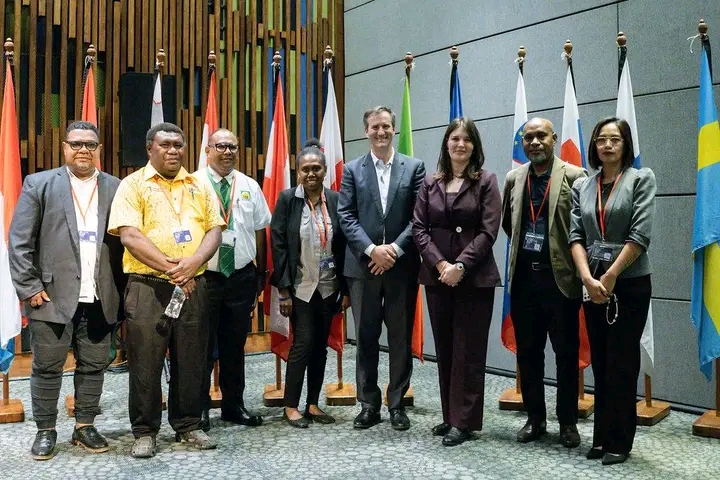
A regulatory requirement for compliance and certification for PNG Agribusiness Exporters into the European Markets discussed at the PNG EU Business Forum on the 3rd of June, 2026 in Port Moresby was the European Union Deforestation Regulation (EUDR).
EUDR rule is to guarantee that the products EU citizens consume do not contribute to deforestation or forest degradation worldwide. Reduce EU’s carbon emissions global footprint and support the transition to sustainable deforestation free value chains world wide.
In December 2024 and December 2025 the EU amended the Deforestation Regulation.
The entry into application is
- Large and Medium operators 30th December, 2026
- Micro and small operators 30th June, 2027
- Micro and small operators already covered by the EU Timber Regulation (EUTR) 30th December, 2026
Examining how PNG could be inclusive in the EUDR transition the European stakeholders through the EU Global Gateway Strategy provides a platform for Papua New Guinea Agribusiness owners to adapt and meet EU quality, certification and traceability standard .
The EU global Gateway is the European Union flagship strategy to boost sustainable high quality infrastructure and connectivity Investments worldwide.
Launched in 2021 as a value driven alternative to rival infrastructure programs, it aims to mobilize 400 billion Euros in public and private investments by 2027 to strengthen global supply chain and digital, energy and transport network.
Speaking as a developer from the Agribusiness perspective Dr. Samuel Himstedt , Director of Queen fine food Australia indicated a need for an In-house specialist unit in PNG to fully facilitate the highly technical certification process for local farmers to leverage skills and become inclusive and viable exporters in conjunction with the support from the government regulatory bodies.
Dr Himstedt emphasized that it is usually the exporters of Agribusiness that cover the high cost of certification and compliance processes as block holder farmers do not have the resources and is a costly exercise.