


BY MIRIAM MALAWA
THE telecoms sector has been growing rapidly in Papua New Guinea in recent years, with connectivity quickly spreading to the remotest parts of the country, and linking a diverse range of customers to each other and the outside world. While the growth of cellular coverage and the internet have been almost praised, the tech revolution also raises questions about the dangers of these technological developments and how to deal with them.
Some of the concerns that come with this development include cyberbullying, defamation, the sending of indecent materials, hacking, sedition and the spreading of false information. And as an independent state, it is crucial for Papua New Guinea to come up with appropriate rules and regulations to protect this space.
And so, the Office of Censorship through the National Censorship Policy II has tried to make sure that all form of information and communications, services and application whether from outside or within PNG are assessed and clarified and that appropriate action is taken so Papua New Guineans are protected from all materials that may be detrimental to their physical, mental and spiritual wellbeing.
According to the policy, the three board objectives of the National Censorship are to:
Assist in the creation of a healthy social environment;
Ensure that all harmful materials entering the public communication system is prevented and;
Improve the capacity of the Office of Censorship through partnership with stakeholders.
With that, the office has now embarked on a new collaboration between PNG DataCo Limited to enable a more secure and safe cyberspace in Papua New Guinea.
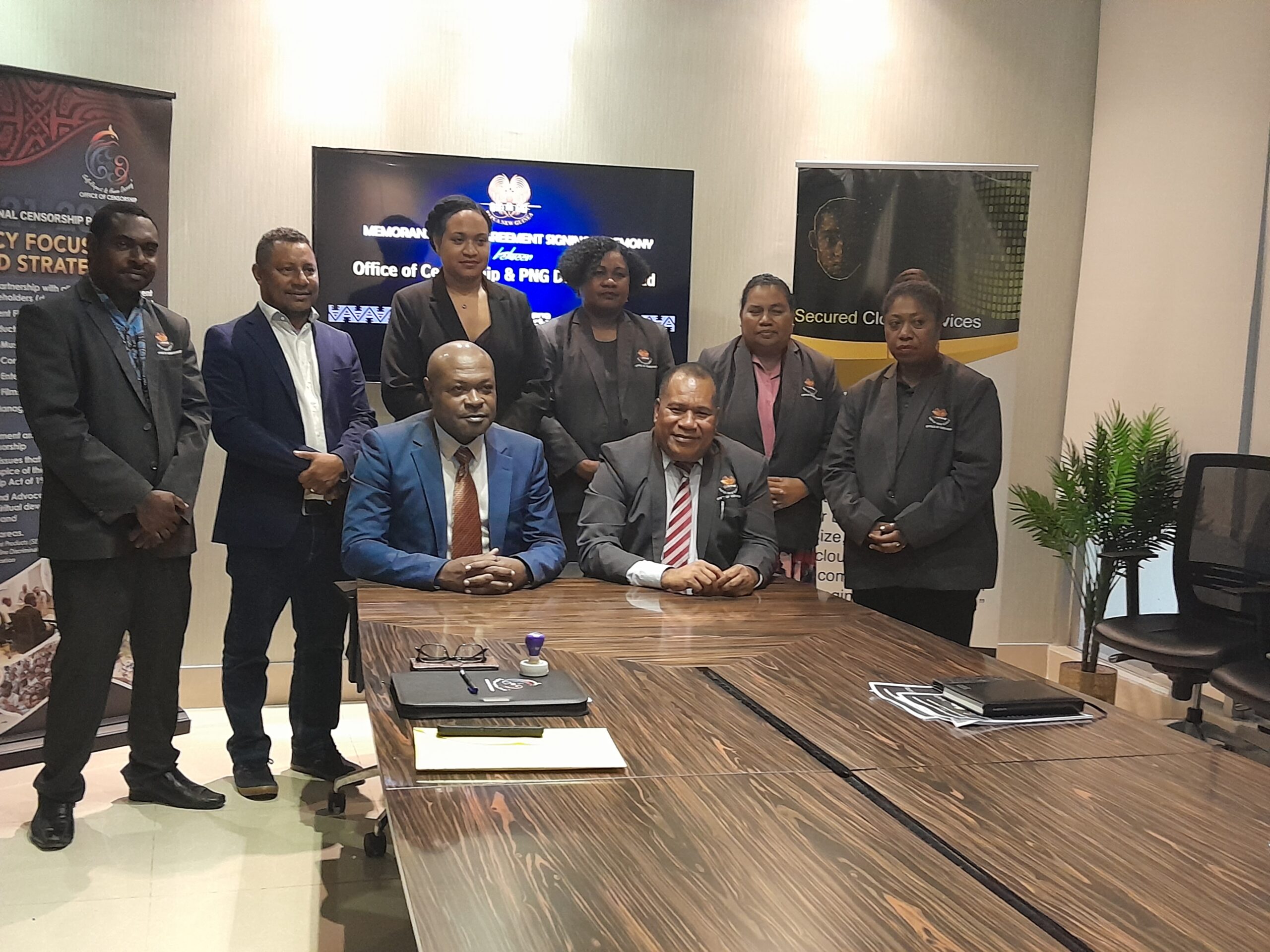
A memorandum of agreement (MOA) was recently signed by the two organizations in Port Moresby to formalize their cooperation in preventing the entry of indecent information and materials into the nation as well as their dissemination there through the National Transmission Network (NTN), which is part of Data Co’s nationwide digital infrastructure.
Chief Censor Mr. Jim Abani stated that the collaboration will now assist the office in monitoring and regulating the illegal content that is disseminated online.
The MOA’s goal is to coordinate actions, therefore both agencies will cooperate in that regard, according to Mr. Abani
“That is the course of action we are following, and we have already discussed it with various governmental bodies. And the strategy we are using right now involves establishing and upholding public-private partnerships. Government cannot function independently; to retake PNG, we must form this coalition.
He expressed gratitude to Mr. Paul Komboi, the chief executive officer of PNG DataCo Ltd, for being the first to work with the office to successfully embrace and address the emergence of new challenges that are being presented in the mass media and public information system.
Meanwhile, DataCo’s mission is to develop the NTN as the efficient domestic and international telecommunication transmission network for PNG. DataCo aims to make the NTN available on a wholesale and non-discriminatory basis to all licensed industry operators to stimulate and foster social and economic development in PNG.
According to Mr. Komboi, the collaboration represents a significant turning point for the two organizations as they move closer to tackling issues in the digital age.
“With our expansion, we acknowledge that what we are doing also has dangers, and one of those risks is being highlighted by the censorship office in their duties and responsibility, and that is the illegal or indecent information that is coming through our network, including cybersecurity issues,” he said.
And while we are working together to find ways to uphold our moral and ethical standards, we are fully conscious of the disadvantages it entails.
He clarified that the MOA, a joint undertaking by the two organizations, enables DataCo to assist the office in carrying out its duties.
“The next phase is how we will put it into effect and enforce it,” he continued.
Moreover, the news of this partnership has brought hope, as Papa New Guineans can now look forward to a more secure digital future. Both organizations are committed to implementing and enforcing the MOA, which will make a significant contribution to ensuring the ethical and moral standards of the country are met. The public-private partnership model being pursued in the MOA is a promising step towards a brighter future, and we are excited to see the progress that will be made.