


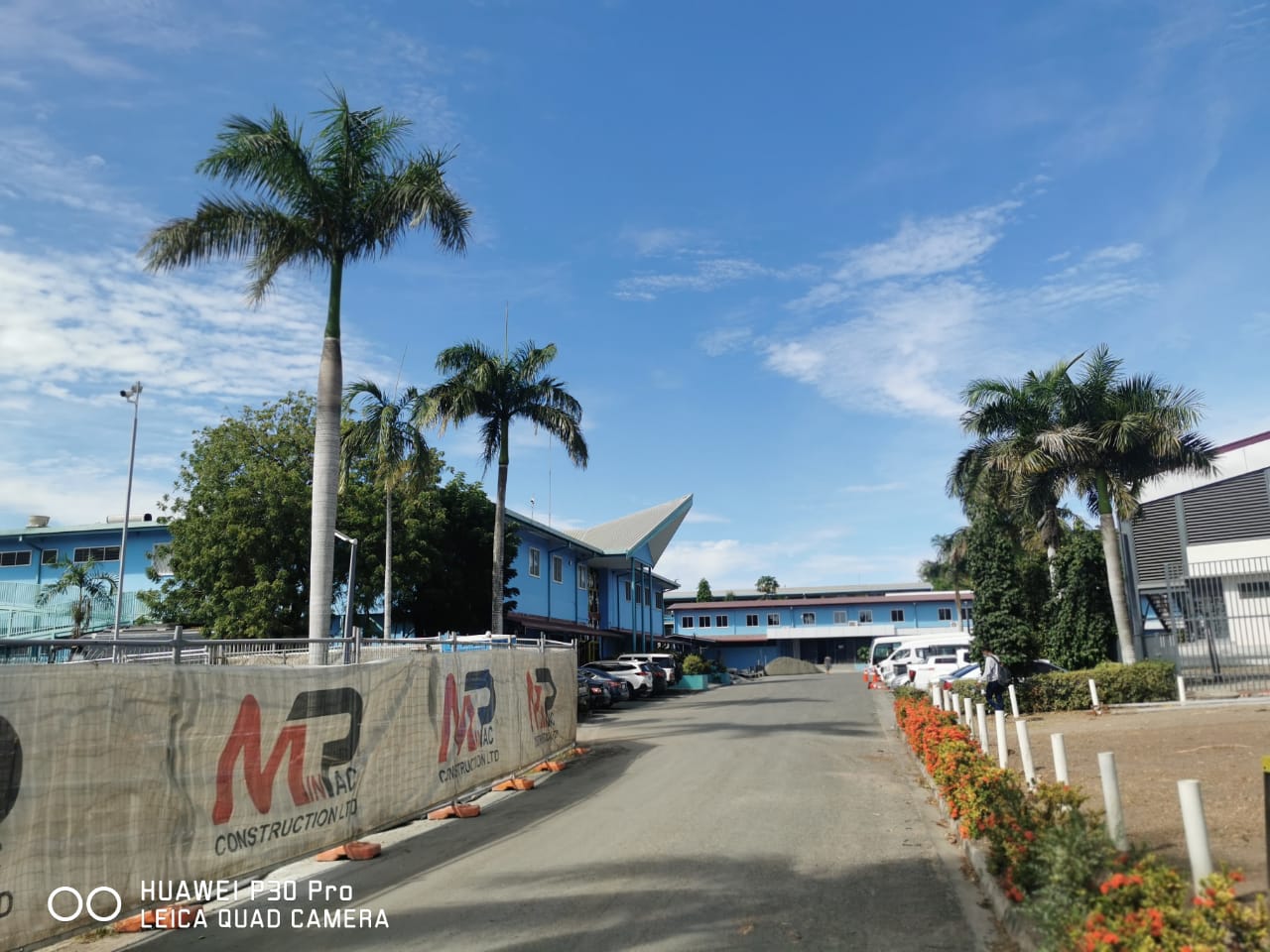
THE National Government’s decision to transform the University of Papua New Guinea’s School of Medicine and Health Sciences into a stand-alone medical university has been hailed as a landmark step toward addressing the country’s healthcare workforce crisis.
The reform, endorsed by Parliament in a unanimous 76-0 vote, is expected to expand PNG’s capacity to train doctors, specialists, and healthcare professionals.
Dr. James Naipao described the move as historic, stressing that the growing demand for medical services requires urgent investment in education and training.
Starting in 2027, the new university plans to increase its annual foundation-year intake to 100 students, part of a broader strategy to strengthen PNG’s medical workforce.
Dr. Naipao noted the country’s severe shortage of doctors, with the doctor-to-population ratio currently estimated at one doctor for every 25,000 people. “With the population growth rate nearing four percent, the gap will continue to widen if we keep sleeping on it,” he warned.
He said Prime Minister Hon James Marape’s vision of producing 10,000 doctors will require decades of sustained investment and institutional reform.
Dr. Naipao also acknowledged the growing interest from other universities—including Divine Word University, Pacific Adventist University, and the University of Goroka—in establishing medical schools.
He said that all future medical schools must align with national standards in curriculum, clinical training, and patient care. “The curriculum and clinical training modules must be similar to the old medical school or even far better,” he said.
When reflecting on PNG’s medical education history, Dr. Naipao recalled its origins in the 1950s under the Australian administration with the former Papuan Medical School, which evolved into today’s School of Medicine and Health Sciences.
He praised PNG’s strong clinical training approach, which has produced doctors serving across the Pacific region, including Solomon Islands, Vanuatu, Samoa, Tonga, Kiribati, and Timor-Leste.
Dr. Naipao said that the transformation into a stand-alone medical university represents a critical investment in PNG’s healthcare future.
“Life is precious. When people are sick, they need a well-trained health workforce to take care of them when time matters most,” he said.