


By WASITA ROYAL
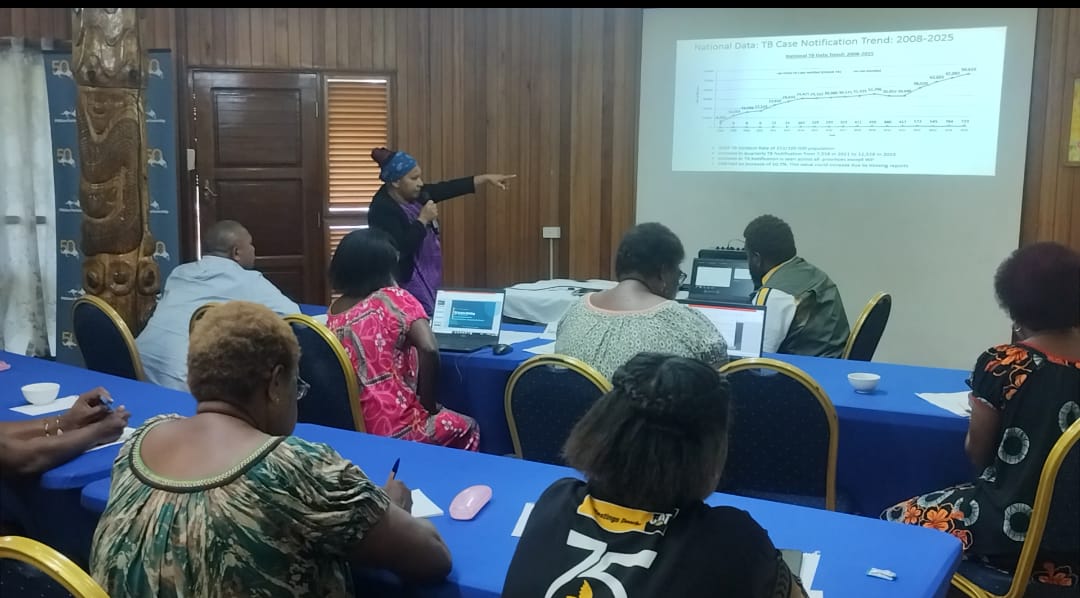
The East New Britain Provincial Health Authority has recorded a tuberculosis (TB) treatment success rate of just 58 percent for all forms of the disease in 2025, well below national and global targets, a five-day annual review has revealed.
The review, which concluded last Friday, also found a TB case rate of 203 per 100,000 people. However, only 1,061 cases have been officially notified, a figure health authorities believe is significantly lower than the actual number of cases in communities.
Senior Medical Officer Dr Simberi Jojoga said quality data is essential in assessing how effectively the TB program is reaching and serving people across the province.


“Initially, we started by reviewing data at the provincial level and then, over the next three days, shifted our focus to the 15 existing Basic Management Units across the different catchment areas,” Dr Jojoga said.
“We want a resilient system that can continue to function despite staff changes, emerging issues, and other challenges. The system must be able to continue delivering services under all circumstances. This review is part of that process.”
Dr Jojoga said greater efforts are needed to encourage people to undergo testing, seek diagnosis, complete treatment, and participate in follow-up assessments.
The review was supported by the PNG–Australia Transition to Health Program and the National Department of Health’s TB Program. It helped identify service gaps and better understand the challenges faced by Basic Management Units throughout the province.
Moving forward, health facilities in East New Britain plan to integrate TB services into existing community networks. Dr Jojoga stressed that TB is not solely a health-sector issue.
“This is a cross-cutting issue that requires all sectors to work together through existing community networks,” he said.
“We want communities to be aware of the signs and symptoms of TB and to support patients throughout the six-month treatment period, or longer in cases involving drug-resistant or more severe forms of the disease.”
Health authorities say continuous education and awareness campaigns are critical to encouraging more people to come forward for testing and treatment.