


By SEPKOLIN WALNE
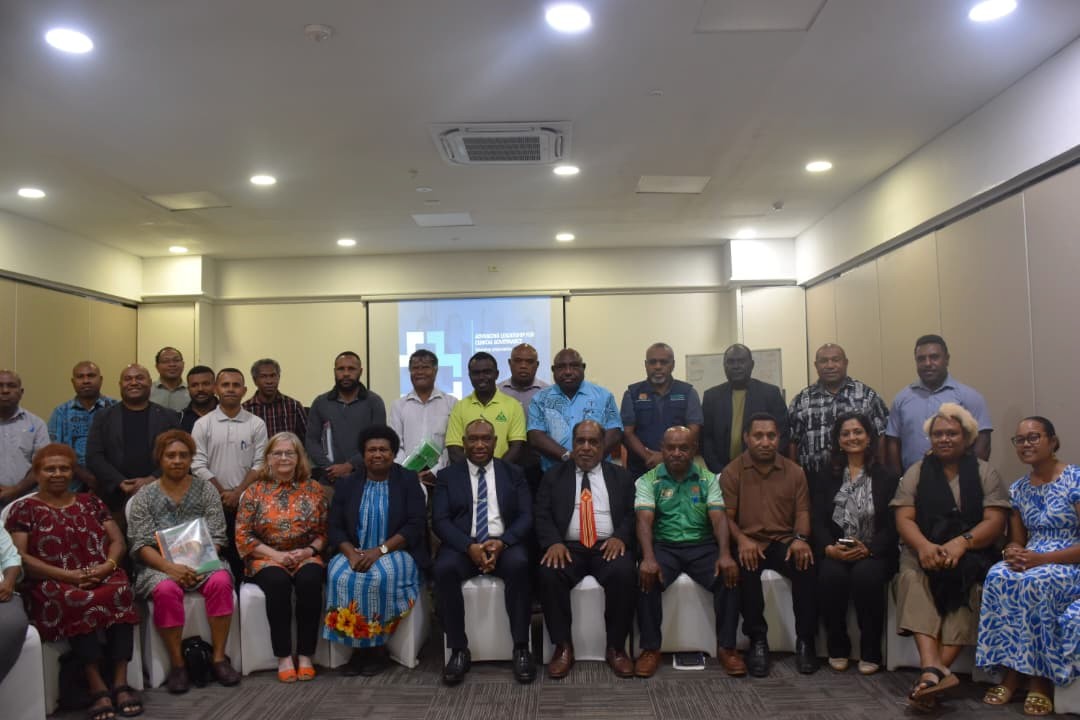
Papua New Guinea has taken a significant step towards strengthening patient safety and quality of care with the official opening of the National Clinical Governance Workshop and the commencement of the Certificate in Clinical Governance, delivered in collaboration with the Australasian Institute of Clinical Governance (AICG).
Speaking at the opening of the workshop, Health Minister Elias Kapavore said the workshop will provide a practical blueprint for strengthening quality, safety, accountability, and continuous improvement in service delivery.
He said the workshop also marked PNG’s collaboration with the Australasian Institute of Clinical Governance for the Certificate in Clinical Governance.
“The aim of the particular workshop is about clinical governance and establishing a framework to improve our health system,” Mr Kapavore said.
“This is very important for us. We can build infrastructures worth millions of kina and recruit staff, and the government is committing a significant amount of funds to the health budget.
“If we do not get the basics right, such as key fundamentals in clinics like safety, due diligence, attention to detail, and ensuring the health workers’ responses to patients’ needs while being treated in a safe and quality environment—that’s a concern.”
He added the training would focus on these essential areas.
“This was introduced back in 2000, but we did not capture this program, but today, I want to announce that it is a mandatory arrangement through the health sector,” Mr Kapavore said.
“Today we have all the Provincial Health Authorities (PHAs), church-run health services, and the Autonomous Bougainville Government representative, so these particular standards are mandatory now.”
The workshop was organised by the Health Services Sector Development Project (HSSDP) and members of the National Department of Health with joint health leaders and practitioners from Provincial Health Authorities and faith-based health services, to implement clinical governance practices that ensure that PNG receives quality care that is safe, effective, timely, and respectful.