


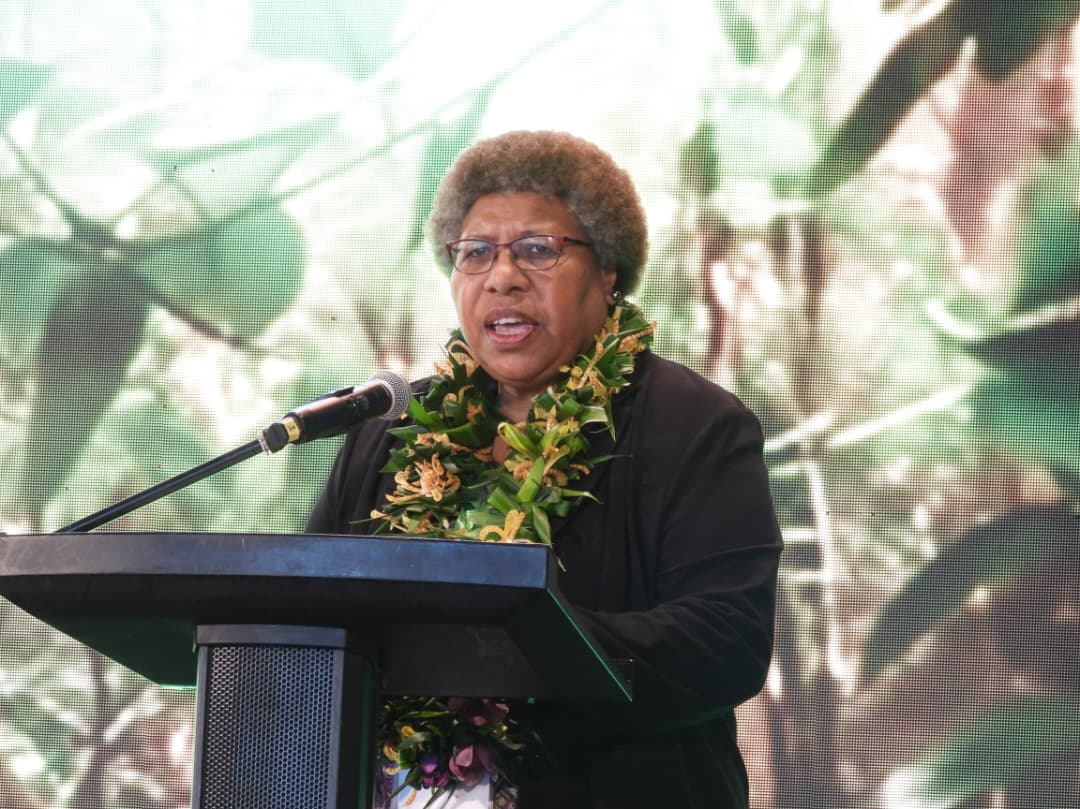
AT the National Forestry Sector Forum yesterday, Mrs Jacinta Manua Warakai, Secretary for the Department of International Trade and Investment, reaffirmed the Marape-Rosso Government’s commitment to transforming Papua New Guinea’s forestry sector through downstream processing and value addition.
Addressing government officials, industry representatives, and stakeholders at the forum, Mrs Warakai said the country must move beyond simply exporting raw logs and focus on securing the long-term future of PNG’s forests, economy, and people.
“We are not just talking about laws, we are talking about the future of our forest, our economy, and our people,” Mrs Warakai said.
She emphasized that all stakeholders must work together to drive reforms within the forestry sector.
“You are not alone in this process. We are all in it together,” she added.
Mrs Warakai said the logging industry has existed in Papua New Guinea for more than 50 years, dating back to the pre-Independence era, and has contributed significantly to government revenue, landowner royalties, and infrastructure development.
However, she acknowledged that the country’s continued reliance on exporting raw logs has limited long-term economic benefits.
“If we remain in this status quo, we will not fully realize the full value of the forestry sector,” she said.
The Secretary noted that downstream processing has been discussed in Papua New Guinea for the past two to three decades, but the government is now taking concrete steps to implement the policy through Special Economic Zones (SEZs).
“Downstream processing is not a new policy or strategy. It has been talked about for the last 20 to 30 years,” Mrs Warakai said. “But this government has realized that if there is a vehicle for us to bring investment into the country and integrate domestic investors into the full economy, it has to be through Special Economic Zones.”
She cited successful examples from countries such as the Philippines, Indonesia, Malaysia, and Thailand, where SEZs have supported downstream processing industries and economic growth.
Mrs Warakai said Papua New Guinea now has the policy and legislative foundation to support SEZ development, including the Special Economic Zone Act and a national master plan currently being developed.
She explained that SEZs provide infrastructure, incentives, and investment platforms necessary to support industrial development and value-added processing.
“The policy direction is now shifting from exporting more raw logs to producing furniture, engineered wood products, paper, and eco-certified products,” she said.
Mrs Warakai highlighted the economic, social, and environmental benefits of downstream processing, saying it would create more jobs, generate higher revenue, strengthen small and medium enterprises (SMEs), and improve skills development opportunities for Papua New Guineans.
She also stressed the importance of meeting international environmental and market standards as global regulations become stricter.
Mrs Warakai referenced measures such as the European Union Deforestation Regulation (EUDR), Forest Law Enforcement, Governance and Trade (FLEGT) requirements, and carbon border adjustment policies.
“We must comply with these market requirements in order to remain competitive globally,” she said. “Through downstream processing, we will be better positioned to meet international standards and maintain access to key export markets.”
She concluded by calling for stronger collaboration between government, landowners, communities, and the private sector to build a sustainable and value-driven forestry industry in Papua New Guinea.
This is a wasted opportunity that have been missed for so long, after forestry downstream processing, we look at LNG, Gold and other investment to be processed in Png..
Way to go
Comments are closed.