


By DALCY LULUA
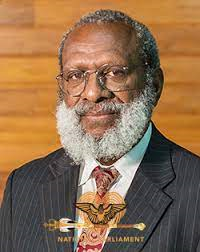
OPPOSITION strongman and Member for Sinasina-Yongomugl, Kerenga Kua, says the restriction on importing livestock from Australia, is preventing the development of a sustainable breeding industry in Papua New Guinea.
Mr Kua said while the Prime Minister’s push to promote the livestock sector is commendable, existing import protocols remain a major obstacle.
“The Prime Minister’s intention to promote livestock in this country is a good one. You need to bring into the country breeding stock,” he said.
He explained that under current arrangements between Australia and Papua New Guinea, imported cattle must be slaughtered within 90 days.
“They allow for 90 days of fattening, after which you must slaughter it before your next load comes up. The effect of that is that it makes it impossible for us to bring it in for breeding purposes,” Mr Kua said.
He added that the restriction discouraged long-term investment in the livestock industry, as farmers were unable to retain animals for breeding and expansion.
“That does not allow for a livestock industry to develop in Papua New Guinea.”
Mr Kua said efforts to address the issue were previously made during the tenure of former Agriculture and Livestock Minister John Simon, but no progress was achieved.
He urged the Government to renegotiate the protocol with Australia to allow imported livestock to be used for breeding.
“I’m wondering whether somebody within the government, under the Prime Minister’s leadership, could negotiate this and free this restriction up so that when you import livestock, you can also breed it and keep it for longer than 90 days,” Mr Kua said.
In response, Prime Minister James Marape acknowledged the challenges, citing strict international quarantine and biosecurity standards governing livestock trade.
“There’s a stiff protocol in importation of live animals and livestock. Each nation has their quarantine standards and requirements,” he said.
Mr Marape said PNG had strengthened its quarantine systems and continued to work closely with Australia, particularly in border areas, to ensure compliance.
“We’ve now stepped up the quarantine sector and we work with nations who want to send their stock to us,” he said.
He stressed that growing the country’s livestock industry remained a priority and assured that the government has begun discussions with Australia to address the issue.
“I take this question to heart. We will work with the Australian government—we’ve started this work,” Mr Marape said.
The Prime Minister also highlighted regional market opportunities, pointing to Indonesia as a major and growing beef market.
“This is an industry that must be moved,” he said, reaffirming the government’s commitment to expanding Papua New Guinea’s livestock sector.”