


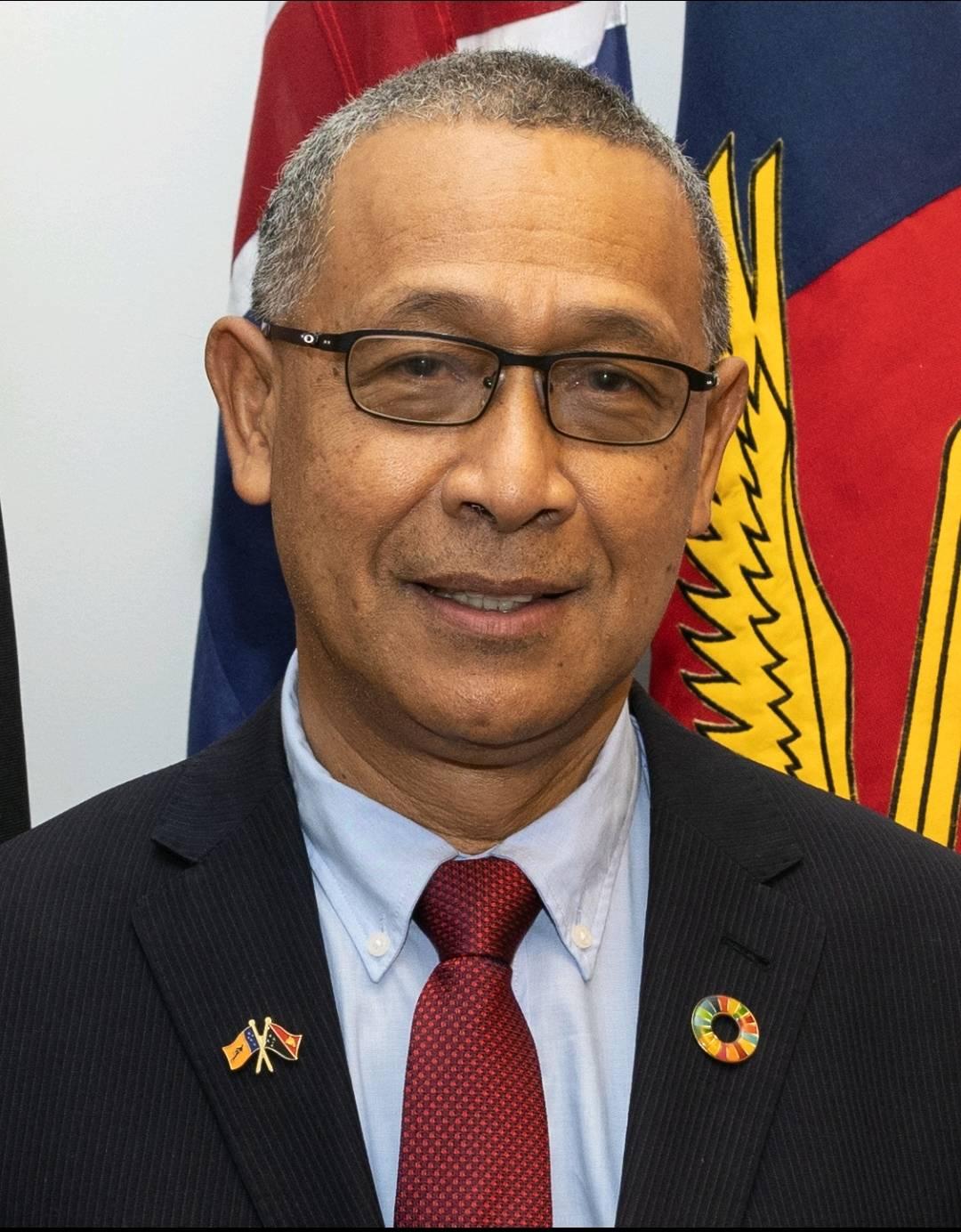
TREASURER Ian Ling-Stuckey has defended the Government’s allocation of K1 billion in flexible budget funding, arguing that contingency funds are a standard and necessary feature of responsible budgeting.
In a statement issued on 18 May, the Treasury Minister said criticism from East Sepik Governor Allan Bird over the allocation was misplaced, stressing that governments around the world maintain contingency reserves to respond to unexpected events and emergencies.
Ling-Stuckey said countries dependent on natural resources commonly set aside between three and six per cent of total expenditure for contingencies. With Papua New Guinea’s national budget standing at K30.9 billion, he said this would equate to between K920 million and K1.84 billion.
“Governor Bird need not be concerned with his criticism of the Government for having K1 billion in funds that are flexible and can deal with contingencies,” the Treasurer stated.
He pointed to the Government’s K1 billion fuel subsidy response following conflict in the Middle East as an example of why contingency funding was necessary. According to Ling-Stuckey, the international crisis and resulting fuel price pressures could not have been predicted when last year’s budget was prepared.
The Treasurer also rejected claims that the contingency allocation amounted to “slush funds”, insisting that strict approval and oversight processes govern the use of the money.
“As the Prime Minister has already clearly stated, these funds are not ones that can be used at the Prime Minister’s personal discretion,” he said.
Ling-Stuckey said expenditure approvals must go through National Executive Council processes, while arrears payments are subject to vetting systems established with support from the International Monetary Fund.
The Treasurer further argued that contingency allocations are consistent with accepted project management practices, citing the World Bank-supported Productive Partnerships in Agriculture Project in East Sepik, which he said included a 10 per cent contingency allocation.
Highlighting the Government’s broader fiscal record, Ling-Stuckey said the Marape-Rosso administration had increased national expenditure from K16.1 billion in 2018 to a projected K32.2 billion by 2027, while reducing the budget deficit from 8.9 per cent of GDP during the COVID-19 period in 2020 to an expected 1.1 per cent in 2026.
He also claimed Papua New Guinea was on track to record its first budget surplus since 2010 in 2027.
“The Marape-Rosso Government is ready to stand on its record of responsible budget repair and reconstruction,” he said.