


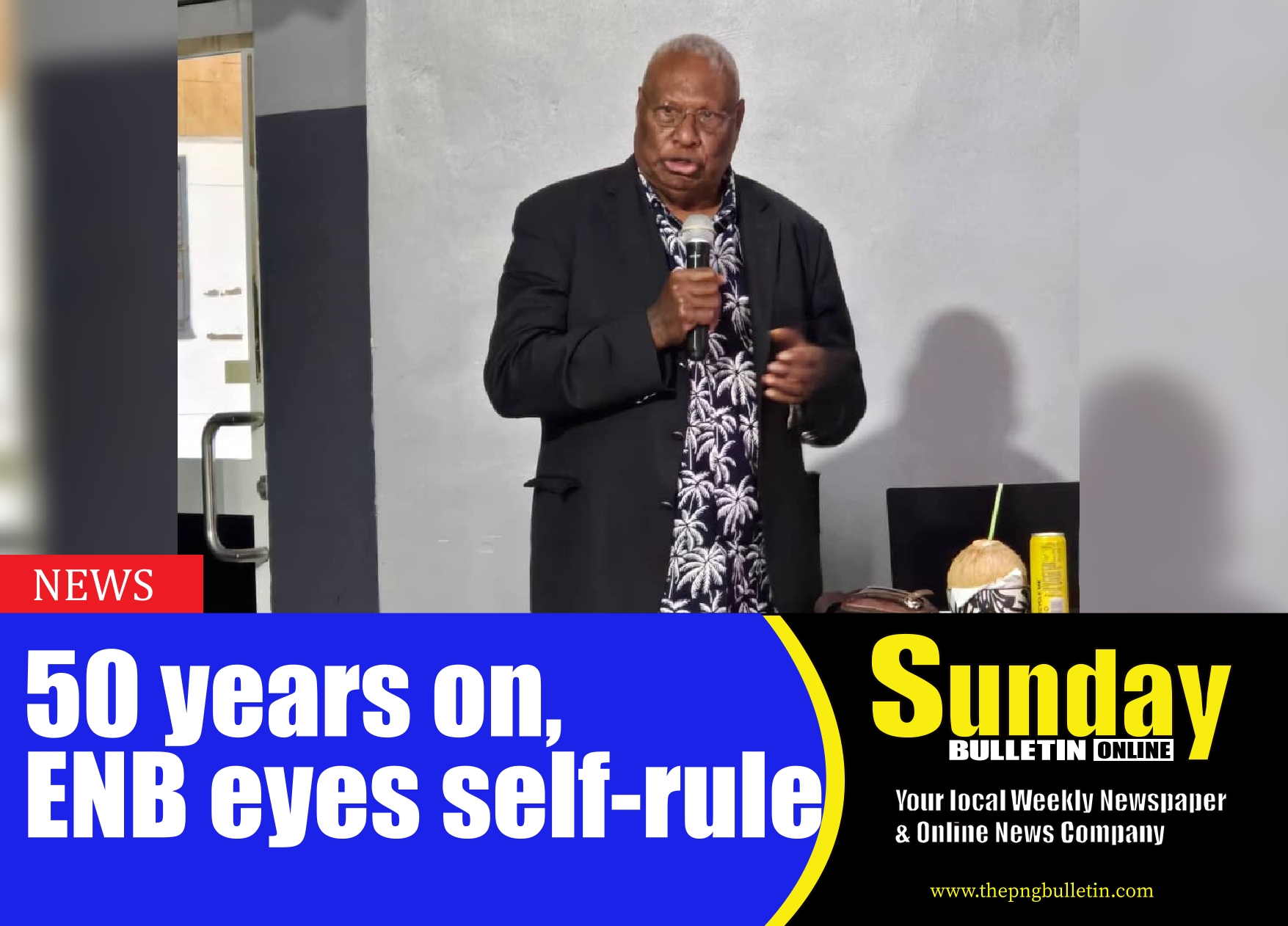
By WASITA ROYAL in East New Britian
AS the country approaches its 50th Independence anniversary, East New Britain (ENB) leaders and entrepreneurs are reigniting calls for provincial autonomy, citing past successes under decentralization and praising the return of veteran statesman Sir John Kaputin (pictured) as a pivotal moment for the province.
Sir Kaputin, a leading figure in PNG’s political and economic history, arrived in ENB yesterday with his wife, Lady Laila, after accepting an invitation from the provincial government to share his expertise on governance and self-determination.
His visit has sparked reflections on ENB’s past self-reliance and renewed demands for greater fiscal control.
Alongside fellow nationalist Fr. John Momis, Sir Kaputin embodied the anti-colonial spirit that shaped PNG’s early independence era—a philosophy that continues to inspire ENB’s push for autonomy today.
Mr. Oscar August, a primary school teacher in ENB, praised Sir Kaputin as a visionary leader who “put ENB on Australia’s agenda—and even the world’s,” crediting him with pioneering initiatives such as the National Superannuation Fund (NASFUND), Kwila Insurance, and the Melanesian Alliance Party.
“He broke barriers, fought for justice, and protected Tolai land rights,” August said, calling him a model of leadership.
Eliakim Pue, a young entrepreneur, shared these views but tied them directly to ENB’s autonomy movement. “When we had the provincial government system, ENB prospered,” Pue said.
“We collected VAT internally and funded our own budgets. But when other provinces struggled, the system was centralized—now, Port Moresby controls how much of our own money we can use.”
Pue and other leaders argue that ENB’s past success—driven by agriculture, local ownership of plantations, and efficient revenue collection—proves the province is ready to regain control.
“Before LNG, before Panguna dominated the economy, ENB showed we could govern ourselves,” Pue added.
Sir Kaputin’s return has reinvigorated these discussions. As one of the architects of PNG’s original decentralization policies—scrapped in 1995—his expertise is seen as invaluable.
Drawing from East New Britain’s long, rich history of self-determination, entrepreneur Elias Kamara stressed that autonomy would be the “perfect gift” for ENB on PNG’s 50th anniversary.
Provincial leaders welcomed Sir Kaputin with an enthusiastic, “Welcome home!”—a tribute to his lasting influence.
His visit is expected to include meetings with ENB officials on restructuring governance, with many hoping it will speed up solid progress toward autonomy.
As PNG reflects on five decades of independence, ENB’s message is clear: the time for self-determination is now. With a legacy of proven success and a statesman like Sir Kaputin back in the fold, the province is ready to reclaim its future.