


By ORCHY REX
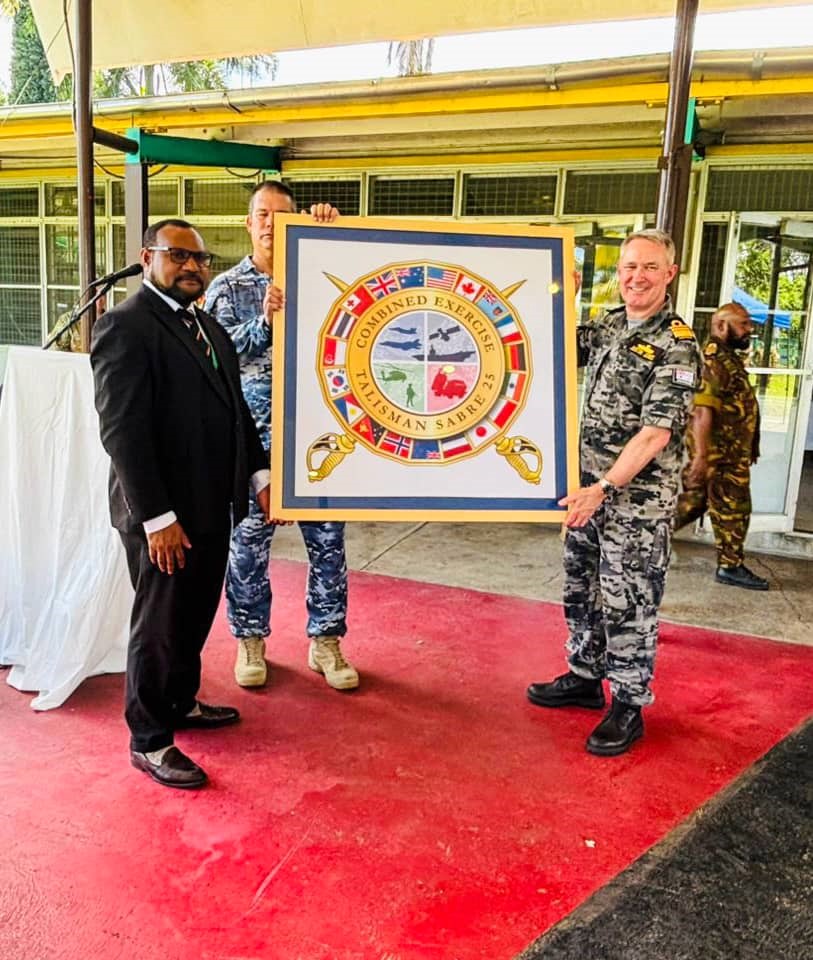
The 11th iteration of the multinational military training operation, Exercise Talisman Sabre 2025, officially concluded today with a closing ceremony held in Lae, Morobe Province.
After three weeks of high-intensity military drills, strategic operations and joint warfighting exercises across Australia and Papua New Guinea (PNG), over 40,000 military personnel from 19 participating nations and two observer countries will now return home.
Exercise Talisman Sabre remains the largest bilateral combined training activity conducted between the Australian Defence Force (ADF) and the United States Armed Forces. The exercise is a cornerstone of the enduring alliance between the two countries and showcases a growing commitment to work alongside regional partners to promote peace and stability in the Indo-Pacific.
The final leg of this year’s exercise saw troops from PNG, Australia, and the United States execute a Joint Personnel Recovery operation across multiple training locations between Lae and Wewak. The successful mission highlighted how the three defence forces can effectively collaborate to locate, recover, and protect personnel in challenging scenarios.
Notably, this was the first time that a component of Exercise Talisman Sabre was hosted outside of Australia, signaling a historic milestone for the PNG Defence Force (PNGDF) and the expanding regional focus of the trilateral alliance.
PNGDF Commander, Rear Admiral Philip Polewara, acknowledged the significance of the occasion, especially as PNG marks 50 years of Independence.
“Papua New Guinea has been proud to host a component of Exercise Talisman Sabre in our 50th year of Independence,” he said.
“It has been an opportunity to demonstrate both the strength of our defence partnership with Australia and the United States, and the skills and capabilities of the Papua New Guinea Defence Force.
“Working in partnership demonstrates our shared commitment to a peaceful and stable Indo-Pacific region. This Exercise ensures regional stability, strengthened partnership and capacity building. The lessons learnt will be carried forward in the spirit of cooperation,” Rear Admiral Polewara said.
Chief of the Australian Defence Force, Admiral David Johnston, echoed these sentiments and praised the collaborative efforts shown during the training exercise.
“Exercise Talisman Sabre reflects a shared commitment to enduring relationships between trusted allies and partners, and a peaceful, stable and sovereign Indo-Pacific,” he said.
“This year’s iteration has shown how Australia can integrate closely with international partners and positively impact how we respond to a rapidly evolving strategic environment.
“Australia and PNG have a long history of standing shoulder-to-shoulder to respond to security challenges in our region and share a mutual understanding that we are stronger, safer and more resilient when we work together.
“We thank the participating nations for their contributions to the largest Exercise Talisman Sabre ever, and in making it an invaluable training opportunity for all involved.”
Admiral Samuel J. Paparo, Commander of the US Indo-Pacific Command, highlighted the exercise’s success in advancing military cooperation and regional readiness.
“Over the course of this year’s exercise, we achieved remarkable milestones, refining joint operational capabilities, integrating cutting-edge technologies, and enhancing our ability to conduct complex land, air, amphibious, and maritime operations seamlessly,” Admiral Paparo said.
“These accomplishments reflect the distinct professionalism of the combined force and our shared commitment to advancing security, freedom, and prosperity across the Indo-Pacific. “As we look ahead to potential challenges, Talisman Sabre is a testament to our readiness to respond united in purpose and action,” he concluded.