


By ORCHY REX
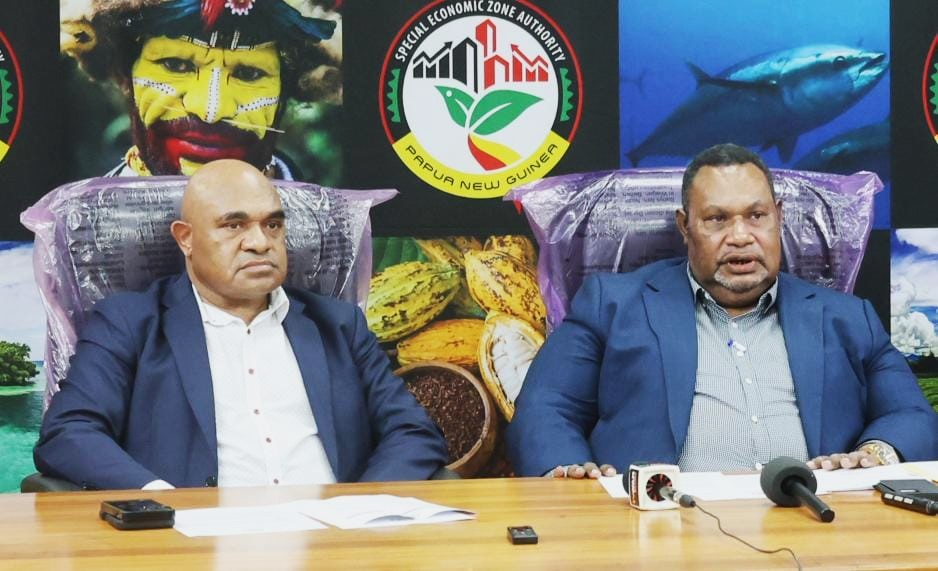
The Special Economic Zones Authority (SEZA) Board has granted a 12-month provisional developer licence to Kumul Petroleum Holdings Limited (KPHL) for the development of the Central Province Industrial Park (CPIP) at Caution Bay.
This marks a key milestone in Papua New Guinea’s economic diversification agenda, with the CPIP expected to generate jobs, promote downstream industrial activity, and boost regional development.
However, the license comes with strict financial and compliance conditions. The SEZA Board has deferred tax and non-tax incentives until KPHL satisfies several requirements, including submission of:
• Audited financial statements (2021–2023);
• Certified 2024 management accounts;
• A detailed Stage 1 funding plan approved by the KPHL board;
• A letter of financial commitment; and
• Clarification of agreements with Caution Bay Development Limited (CBDL).
SEZA Chairman Dr Lawrence Sause emphasised that transparency and financial discipline are essential to build investor confidence.
“We welcome this milestone for the Central Province Industrial Park and commend KPHL for taking the lead,” Dr. Sause said. “At the same time, the Board has a legal duty to ensure transparency and fiscal discipline. We will only grant incentives when minimum financial disclosures and compliance standards are satisfied.
“This is how we build investor confidence and public trust,” he added.
KPHL Managing Director Wapu Sonk acknowledged the SEZA decision, saying the national oil company was committed to meeting all compliance requirements.
“We basically went out to develop the project on the basis of its own economics, a training facility and a fabrication facility to start with,” Mr Sonk said.
“Kumul Petroleum Holdings alone is investing US$145 million in Stage 1, and we’re confident that with this provisional SEZ license, we will attract more heavy and light industry partners in Phase 2 and 3.”
He said the CPIP model was built on lessons from past major resource projects where foreign skilled labor dominated.
“We’ve proven at Idubada Tech that short, targeted training of 3 to 4 months is enough to get Papua New Guineans into permanent jobs. We don’t need to bring in overseas workers like we did with PNG LNG or Santos.”
The US$481.7 million (PGK 1.85 billion) CPIP project is divided into two stages. KPHL will fully fund Stage 1 (US$145 million), while Stage 2 (US$336.7 million) will attract private and joint venture investment.
Economic benefits include reduced steel imports, support for local supply chains, and market access to the US$278 billion global steel pipe industry. Stage 1 is forecast to deliver a net present value of US$209 million, with a payback period of just three years.
The project also prioritises local community engagement, infrastructure development, and skills transfer through partners like Laba Holdings and training programs aligned with Papua LNG and other resource projects.
KPHL has 12 months to comply with SEZA’s conditions. Upon compliance, SEZA may convert the license to a full developer licence or activate incentives under the current provisional status. If successful, KPHL will become only the fourth SEZ licence holder.
Dr Sause confirmed that only costs incurred after full compliance will be eligible for exemptions or relief, and that incentives would not apply retrospectively.
“The rules are clear. We must ensure integrity of the SEZ program while creating an enabling environment for investment,” he said.