


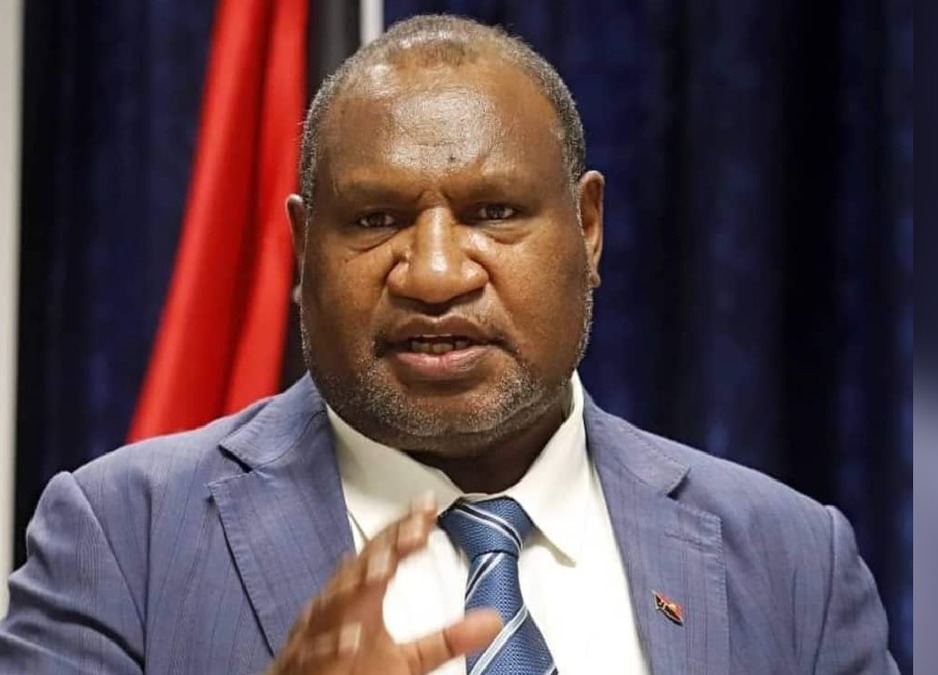
Prime Minister James Marape has welcomed today’s conclusion of the long-running Paraka case, describing it as a significant milestone in the fight against corruption and a reminder that no one is above the law.
Mr Marape, who has been a state witness in the matter since 2013, broke his public silence to reflect on the lessons learned and to reaffirm his government’s determination to strengthen systems, eliminate abuse, and safeguard public funds.
“When I first arrived at the Department of Finance as Minister in August 2012, I found a system that had been seriously eroded,” he said.
“The department had become a target for paper-pushers and white-collar opportunists who treated it like a money-making machine for the ruling class.
“From day one, I made it my mission to restore order, streamline processes, and cut off avenues for abuse.”
Among the reforms introduced during his time as Finance Minister were the transition from paper-based to electronic transactions, and new measures to reduce discretionary influence in claim settlements.
These reforms, formally launched in 2018, laid the foundation for stronger financial governance.
“As Prime Minister, I am now directing my government to go even further,” Mr Marape said. “We will embrace artificial intelligence and ICT platforms in procurement, ensuring that contracts are awarded strictly on merit, not influence. By computerizing systems and using AI, we can improve efficiency, close the gate on corruption, and eliminate decades of abuse.”
Reflecting on the Paraka case itself, Prime Minister Marape clarified his instructions at the time: “My directive to Finance officers was always clear — verify the claims, and only pay what is genuinely due. If a claim was not valid, then it had to be stopped immediately. The word ‘settle’ did not mean automatic payment; it meant resolving the matter according to the facts.”
The Prime Minister emphasised that while ministers may come and go, the public service remained. Entrenched corruption within parts of the bureaucracy must be rooted out once and for all.
“This judgement comes as Papua New Guinea approaches 50 years of independence,” he said. “It is a timely reminder that no matter how long it takes, justice will prevail. No one can escape accountability if matters are properly investigated and prosecuted.”
Mr Marape also spoke candidly about the risks he faced during his time as Finance Minister, particularly between 2013 and 2015, when he took decisive action to stop questionable and fraudulent payments.
“In standing firm against these illegal claims, I faced serious threats,” he said. “In 2015, a kidnap threat was made against my family, forcing me to relocate my children overseas for their safety while I continued my work in Port Moresby. These were the personal costs of upholding the law without fear or favor.”
He said these threats highlighted the entrenched interests at stake whenever corrupt practices are challenged. “Despite the stress, I remained committed to ensuring that only genuine claims were processed, while false ones were stopped.”
Now that the case has concluded, the Prime Minister has directed police to go beyond the paper trail and begin tracing the money trail.
“The Paraka matter was processed through the courts on the basis of documents and paper trails, but the real question is: where did the money go?” he said. “It is likely that many individuals, not just Mr Paraka, benefited from this loss of public funds through assets, businesses, land, and transfers, both within PNG and overseas.”
He reminded the nation that calls for an Independent Commission Against Corruption (ICAC) dated back to the 1980s.
“It is no coincidence that my government finally passed the ICAC law in 2020. Without fear or favor, I am now instructing police to follow the money trail — beginning with Paraka and extending to all similar cases.”
Mr Marape pointed to recent legal reforms as vital tools in this work. “My government has amended the Proceeds of Crime Act so the State can recover properties and assets acquired through illegal means. I want this work ramped up as we enter our 50th year of independence. This will send a strong example: rightful claimants will be paid, but fraudulent claims will never be tolerated.”
The Prime Minister confirmed that the Finance Inquiry Report, which had been long in waiting, would be tabled in Parliament in October.
He said this would serve as a clear message to finance officers across the country: “We cannot instruct or facilitate illegal payments. We must only pay what is lawfully owed, and always follow due process.”
He stressed that the fight against corruption is not just about prosecuting wrongdoers but about building systems that prevent abuse.
“We are negotiating hard to get more resources from our natural wealth, but what use is that if the money is lost to corruption? As we mark 50 years of nationhood, let us resolve to protect every toea for the benefit of our people.”