


By ORCHY REX
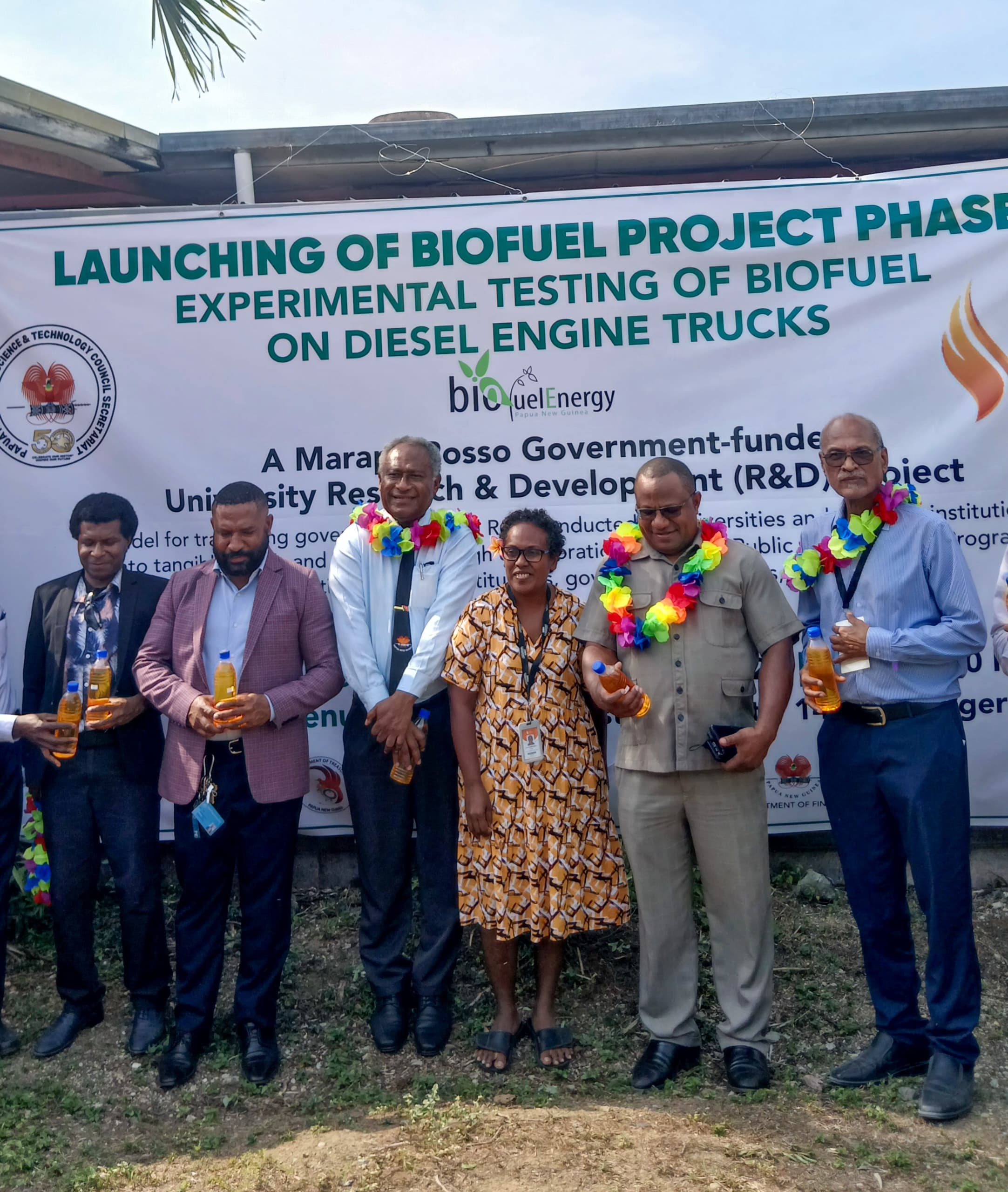
The Government has reaffirmed its commitment to innovation, research and renewable energy by allocating K400,000 to support the next phase of the Pacific Adventist University (PAU) Biofuel Research and Development Project.
Minister for Higher Education, Research, Science and Technology, Kinoka Hotune Feo, presented a K200,000 cheque on behalf of his ministry while the National Energy Authority matched the commitment with another K200,000, dedicated to advancing the commercialization of biodiesel in Papua New Guinea.
Speaking at the official launch of the phase three commissioning of the project, Minister Feo described the initiative as a “milestone in PNG’s path to a green economy”.
“This project is a testament of how innovation and research can transform waste into wealth,” he said.
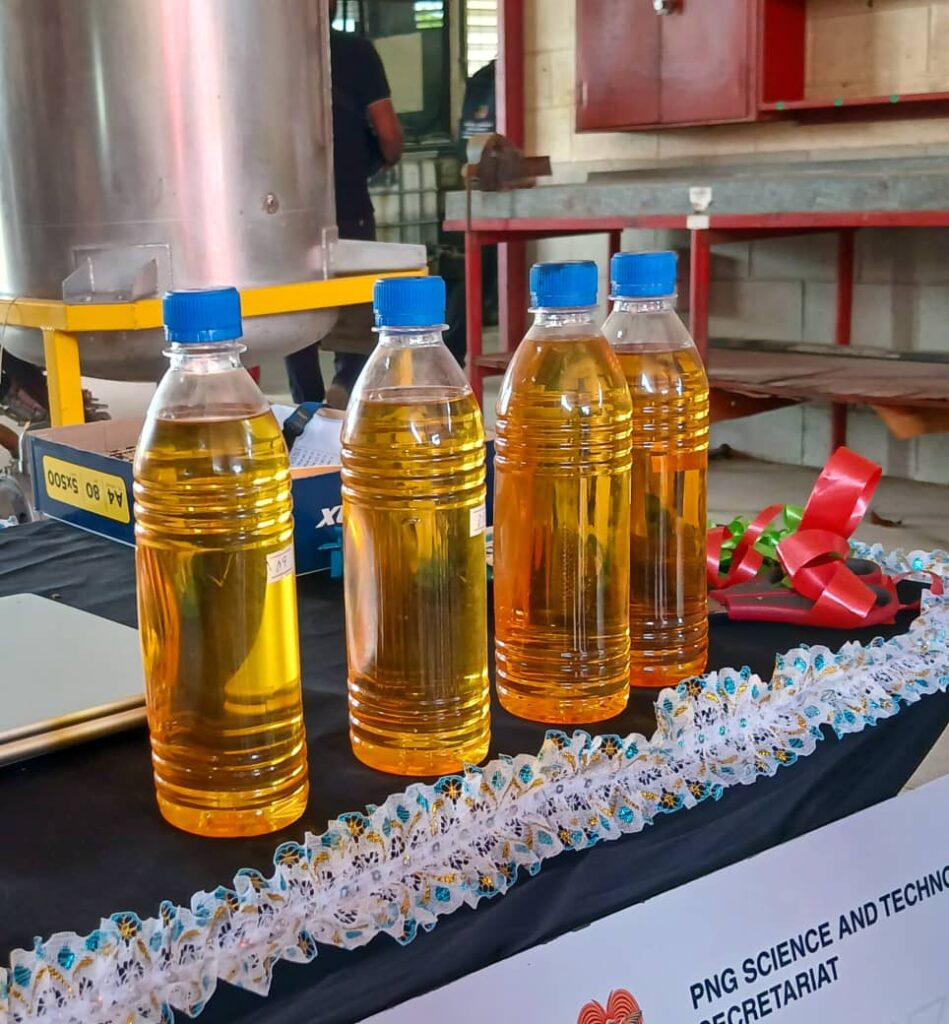
“Used cooking oil that once polluted our waterways is now being turned into a cleaner, greener fuel that reduces emissions and supports our economy.”
“Our Government’s Development Strategic Plan 2010–2030 advocates for renewable energy, and this project fits squarely within that vision.”
“Investment in science, technology and innovation is not an option for PNG, it is a necessity if we are to grow our economy and reduce greenhouse gases.”
The Minister also urged city residents, catering services and restaurants to collaborate with PAU in collecting used cooking oil to sustain the project’s supply chain.
“I strongly appeal to households, restaurants and catering services to sign up with PAU and dispense their used cooking oil. Together we can reduce environmental pollution and make this project a national success,” Mr Feo said.
The PAU Biofuel Project, which began in 2013, has progressed through facility development and laboratory testing to its current stage of engine performance testing. The aim is to produce biodiesel that meets the international ASTM D6751 standard and eventually establish a PNG-specific biodiesel standard through NISIT.
Project Pead and Lecturer in the School of Science and Technology, Linta Qalopui, described the launch of phase three as “a very important milestone”.
“This stage is about proving whether our biodiesel works in diesel engines such as trucks and generators,” she said.
“If this phase doesn’t happen, we won’t know the true quality and performance of our fuel.”
“Biodiesel burns cleaner because of its high oxygen content, it reduces carbon dioxide emissions and the engine actually ‘loves’ it more than petroleum diesel.”
“Our goal is to recycle waste oil that people throw away and turn it into a product that supports our economy and protects our environment.”
Ms Qalopui stressed that the project was not only about alternative fuel production but also about environmental responsibility.
“I believe what we throw into the environment will one day come back to our plate,” she added. “This project is about ensuring we take responsibility for our waste and contribute to the global fight against climate change.”
Since its inception under the leadership of Dr Fifaia Matainaho, the project has been funded by the PNG Science & Technology Council Secretariat in partnership with PAU.
With additional government support and policy backing from the National Energy Authority, the project team is now working toward standardization and the development of a national biodiesel policy.