


By FREDRICK JEJERI
An elementary school located on the border of Nawaeb and Huon Gulf districts in Morobe Province is preparing to adapt to ongoing changes in Papua New Guinea’s education system.
Naromangki Elementary School, established in 1999, currently has a student population of 137, with students drawn from both Huon Gulf and Nawaeb districts.
Through the commitment and dedication of its school board and administration, the school has steadily progressed over the years.
The school has successfully transitioned from bush-material classrooms to permanent buildings.
Despite receiving only small government subsidies, effective financial management has enabled the school to invest in long-term infrastructure development.
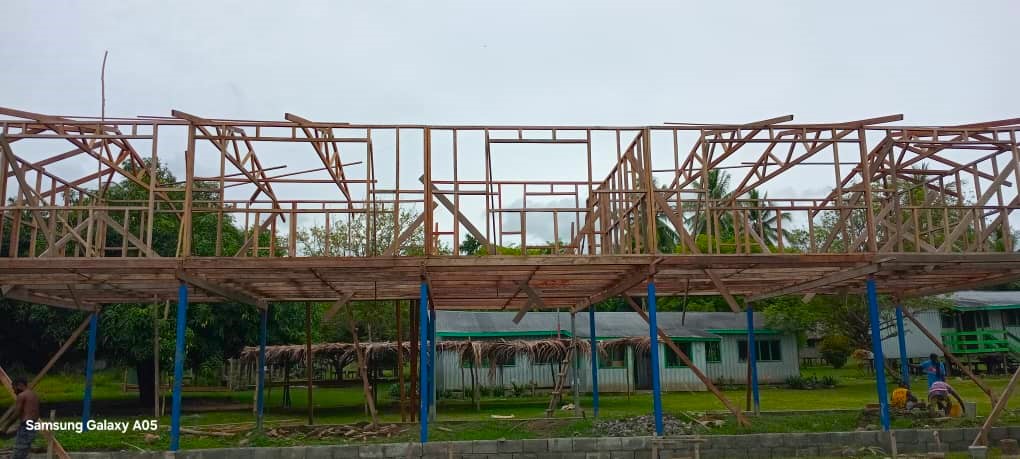
The planned upgrade to modern school buildings will allow the school to accommodate a growing student population while introducing electronic learning systems.
The school also plans to use its own subsidies from 2026 and 2027 to further install appropriate learning materials and digital equipment in order to keep pace with the latest learning systems.
In addition, the school has installed a full solar power system and computer facilities to support administrative work, benefiting both the school and the surrounding communities.
Teacher-in-Charge Satibe Som said the school continues to improve every year and is responding to national education reforms. He said subsidies allocated for 2024 and 2025 have been combined, with a budget of K50,000 set aside to construct a four-in-one, double-storey classroom building.
“This development will enable Naromangki Elementary School to operate as an Early Childhood Learning Centre in line with the changing education system,” Mr Som said.
He urged Huon Gulf MP Jason Peter and Nawaeb MP Theo Pelgen to give attention to early learning centres, noting that such institutions play a critical role in grooming and developing human resources from the infant stage, who later become key contributors to national development.