


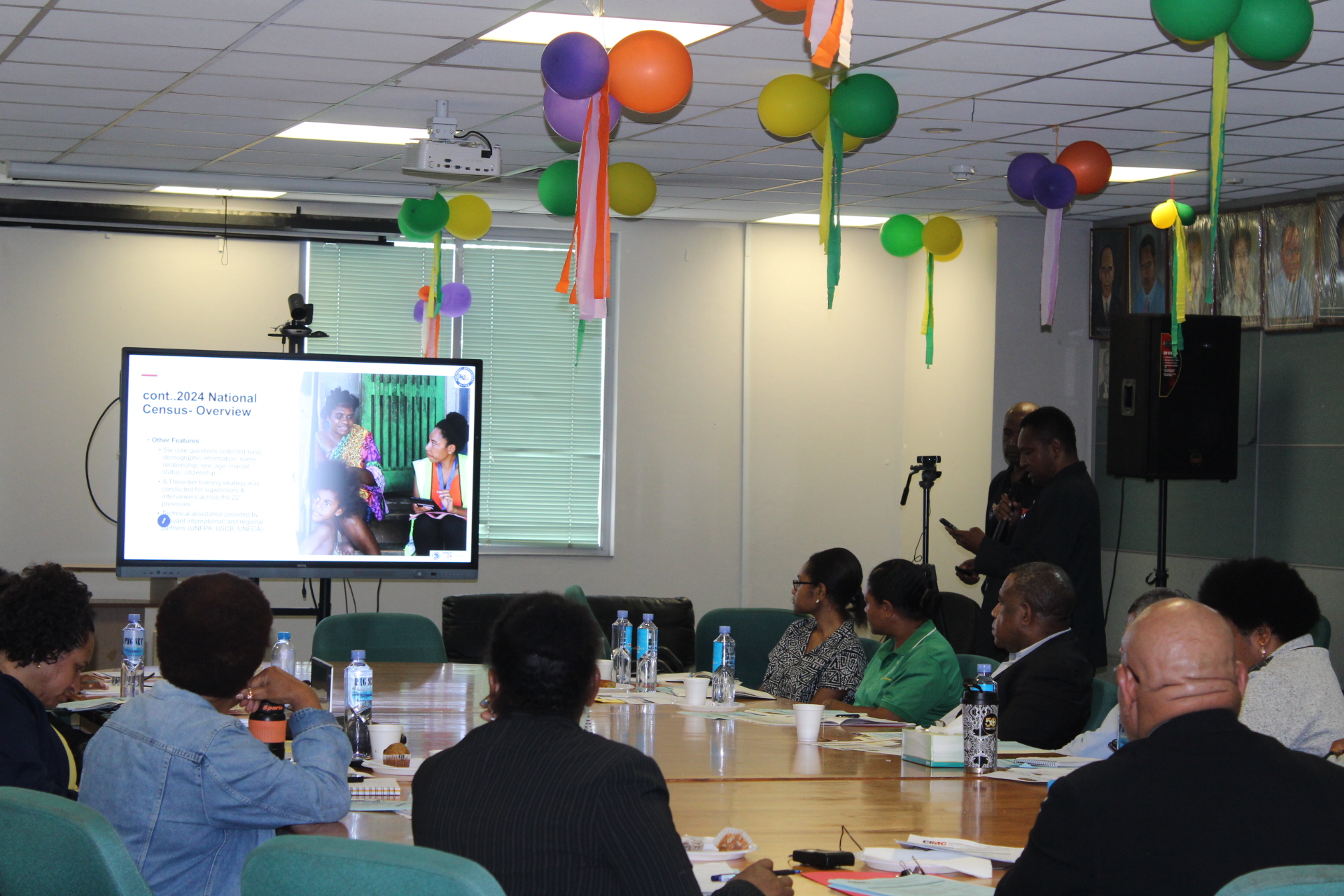
THE Consultative Implementation and Monitoring Council (CIMC) has started its first quarterly health sector dialogue for 2026, reinforcing the government’s “Year of Reset” focus under the PNG Reset@50 reform agenda.
The meeting, held on February 25 at the National Department of Health (NDoH) Conference Room in Waigani, brought together key government agencies, development partners, civil society and private sector representatives to address persistent gaps between health policy formulation and on-the-ground delivery.
Stakeholders emphasised accountability, integrity in public service and the need to address social determinants of health, which are estimated to contribute to about 70 per cent of health-related challenges in Papua New Guinea.
Alarming population trends
Presentations by the National Statistical Office and NDoH highlighted rapid population growth revealed by the 2024 Census.
PNG’s population has grown from 2.5 million in 1975 to 10.2 million in 2024, with nearly 4.2 million people-about 41 per cent-under the age of 13. The national annual growth rate now stands at 2.6 per cent, equivalent to about 224,000 people each year.
Urban centres are expanding even faster, with the National Capital District recording a growth rate of 5.7 per cent annually, followed by Morobe Province at 3.1 per cent.
Given these trends, participants stressed the urgent need for population management measures, including stronger investments in family planning services and nationwide awareness campaigns.
Heavy disease burden
The meeting also reviewed the country’s tuberculosis (TB) and HIV/AIDS burden. Between 2020 and 2024, PNG recorded 226,712 confirmed TB cases, with only 82 per cent of patients currently on treatment. On average, 126 new TB infections and 25 TB-related deaths occur daily.
HIV/AIDS figures remain equally concerning, with about 30 new infections reported each day and 11,000 new cases recorded in 2025 alone. Routine immunisation coverage continues to fall well below the national target of 95 per cent.
Dr Margaret Karl from the National TB Program said the daily toll of TB and HIV infections underscores the need for a coordinated, whole-of-society response.
Key recommendations
To improve outcomes, the committee endorsed several recommendations:
- Population-based funding to align government allocations with verified 2024 Census data.
- A high-level TB/HIV summit in June 2026 to secure political commitment and domestic financing.
- Stronger inter-agency coordination, particularly in research and data sharing between NSO, NDoH and development partners.
- Enhanced community engagement through partnerships with provincial and local governments, churches, NGOs and the private sector.
The meeting was chaired by Deputy Secretary for Health Ken Wai on behalf of Health Secretary Pascoe Kase. Mr Wai urged stakeholders to unite under the 2026 theme, “Reframing Our Health Approach = Healthy Community and Healthy Mindset,” stressing that early diagnosis and shared community responsibility are critical to easing the long-term economic and social costs of disease.
CIMC was established under NEC Decision No. 46/98 and is mandated to facilitate inclusive, multi-sectoral dialogue on national development priorities.